





Participants: Abdel Bizid, Daniel Bombaert, Alan Brown, Andrew Herbert,
Beatrice Henricot, Gerald Hinchon, Denzil Morgan, Bob Tallyn
After years of planning we finally delivered our inaugural tour of Mongolia, with the best itinerary possible in a short timeframe. Overall, we did very well, hitting most of our intended targets in the dry and windy conditions, highlighted by the superlative, 15 minute views of a nervously stationary male Black-billed Capercaillie, quickly followed by our first Chinese Grasshopper Warbler. Moving westwards, our first great saline lake was heaving
with birds – Brown-cheeked Rail, Paddyfield and Pallas’s Grasshopper Warblers and ‘Mongolian’ Pallas’s Buntings before reaching the Khangai Mountains, a tour highlight, with singing Hodgson’s Bushchats, proper Pallas’s Buntings, ‘Khangai’ Rosy Finches, Altai Accentor, a surprise Black-throated Accentor and a splendid encounter with eight vocal Altai Snowcocks. Heading south into the fringes of the Gobi Desert, Pallas’s Sandgrouse were common and conspicuous, truly wild Mute Swan, Saxual Sparrow, Henderson’s Ground-jay, Oriental Plover, Wallcreeper and Mongolia’s single breeding endemic, Kozlov’s Accentor were all enjoyed.
A special mention to the mammals observed on the tour too – four species each of both jerboa and ground- squirrel, Great Gerbil, Asian Wild Ass, Mongolian and Goitered Gazelles, Siberian Ibex, an inquisitive Sable and finishing with with Przewalski’s Horse.
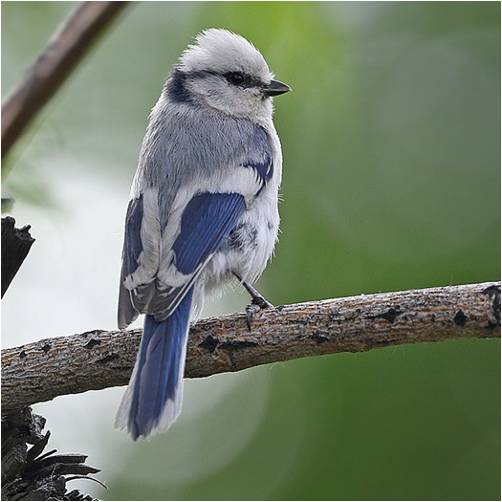
After arriving into Genghis Khan International Airport, it soon become apparent just how this revered historic warrior still lives and breathes through Mongolian folklore, airports, monuments and even vodka brands! A brief walk around the hotel in the late morning by a few who didn’t need to catch up on some much- needed sleep after a weary Aeroflot flight recorded Azure Tit, Amur Falcon, Azure-winged Magpies, a Barred Warbler for Alan, and migrant Pallas’s Leaf Warblers. The tour proper started immediately after lunch, with the nearby pool providing us with a pleasant introduction to the water-birds we would become accustomed to over the next couple of weeks including breeding Whooper Swan, Demoiselle Crane and elegant White-winged Terns daintily picking prey from the water surface. The first birding site most birders visit is the willow and scrub along the Tuul River, and we were no different. Bordering the southern edge of Ulaan Baatar, the sprawling, polluted
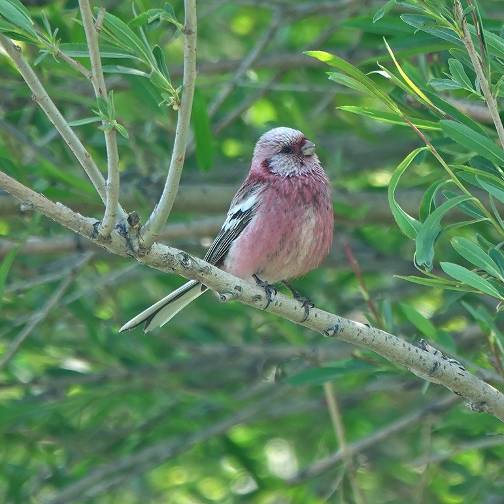
capital of Mongolia, which contains nearly half of the population of the country – a mere 1.4 million people. We only need 20 minutes to clean-up on the targets, as we ended up finding two nests occupied by White-crowned Penduline-tits, several pairs of Azure Tit and a stunning singing male Long-tailed Rosefinch. An adult male Amur Falcon was circling over the city, while a surprise was a Hawfinch dropping down from the canopy to take a drink, oblivious to our presence just metres away made for an excellent start as we waited for the adventure to begin.
Azure Tit and White-crowned Penduline-tit, Tuul River
Up bright and early we made our way east, through Ulaan Baatar and into the open plains, which would become a very familiar sight over the course of the next two weeks, as would striking Mongolian Larks, Asian Short- toed Lark, Horned Larks, aggressive Isabelline Wheatear that chase anything that dares venture into their territories and pairs of elegant Demoiselle Cranes. Our first stop was more mammal than bird as we enjoyed our first Mongolian Gerbils, followed by a surprise Mongolian Gazelle duo, wandering above the road. Gun Gaalat has long been known as a productive birding site, and the lake gave us our only Stejenger’s Scoter of
the tour – seven of them, and a lone drake Falcated Duck. The main lake and marshy pools held thousands of
birds, much of which is familiar to the European birders among us – Pied Avocet, Citrine Wagtails, single Temminck’s Stint, Garganey and more White-winged Terns with a handful of Whiskered Terns. We arrived in the heat of the day at our secluded camp right on the edge of an extensive area of Taiga forest, already setup for us by our wonderful crew who always went on ahead to prepare things for us. The afternoon was spent
walking (and walking…) in the searing heat with little to show for our efforts, Gerry got onto a very brief Black-
billed Capercaillie – the reason for our visit here – but it saw us before we saw it. The odd passerine appeared, starting with a pair of courting Brown Shrike at camp, followed by a stunning Siberian Rubythroat, then Taiga Flycatcher, Willow Tit, Tree Pipit, Daurian and Eurasian Redstart, and later on a fine Three-toed Woodpecker taking it out on a dead tree. Walking back in the evening we got an excited call from the driver, parked a long way back who had found a female capercaillie, a mad dash ensued, though the bird didn’t hang around forever allowing most, but not all of us to see it, making for a frustrating end to the day, though it was only a female! The wind picked up in the evening, blowing a gale, with a Ural Owl heard distantly a couple of times.
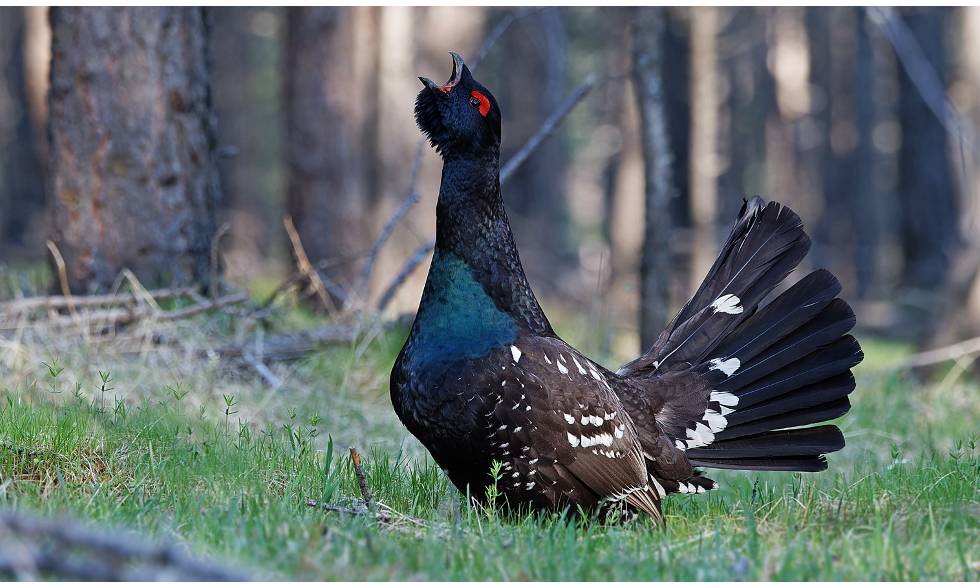
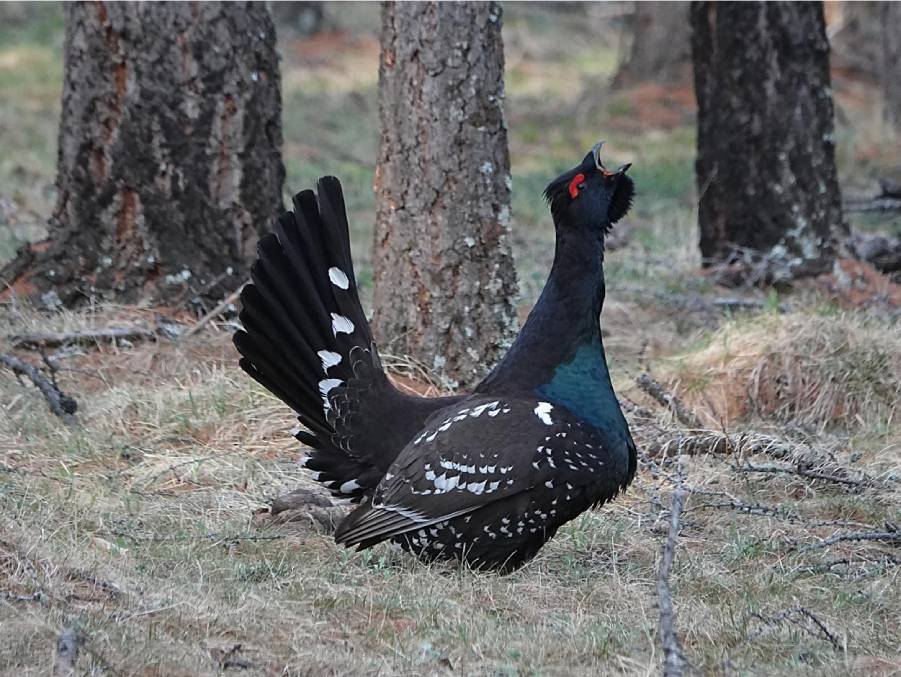
Up and out early with the gale still howling away, though early on we picked up a male capercaillie flying through the canopy (!), and away. We carried on walking here-and-there, as optimism slowly drained until we looked to our side and in astonishment, there was a male Black-billed Capercaillie sat totally stationary in an attempt to conceal itself three metres up a conifer, but in full view! Excited whispers kept the bird alert, but not too alert as it dared not move, giving us outrageous views for 15 minutes, as it started looking from side-to- side before finally disappearing into the forest, allowing us to finally let out all of the excitement! Just as we reached the vehicles to look at each others photos and celebrate, a speculative attempt at Chinese Grasshopper Warbler, as the habitat looked alright, revealed a bird already ready-and-waiting for us! Over the next while we enjoyed repeated views as it sat up and sang, or crept about, mouse-like in front of us. One of the latest returning migrants of a species so difficult to see anywhere away from this area of Mongolia. We could return for breakfast, and as the gale was still blowing strong we decided to up camp early and head to a different area of forest. On the way we stopped at an area of scrub, still with the gale swirling all around us making birding not particularly enjoyable, or productive. But still, we plugged away, several Pine Bunting and Common Whitethroat appearing, a Monk Vulture just overhead peering down at us, and most pleasingly was a singing male Yellow-breasted Bunting that oddly preferred to sit on the ground in the densest bushes due to the wind before finally sitting up for an extended period, being blown left-and-right as he attempted to sing. As great as it was to see such a beautiful bird, it’s also a rather sobering sighting as this bird was once positively abundant over much of north-east Asia but due to immense levels of trapping during migration it is now Critically
Endangered and missing from most of its historical range – the tip of the iceberg of all these eastern migratory buntings that have all suffered catastrophic declines.
Our different area of forest, in the scenic Terelj area held a few more birds in general but it’s still amazing just how quiet the Taiga forest actually is here in Mongolia. An afternoon and pre-breakfast walk was in very
pleasant, albeit windy conditions and yielded several new birds – Oriental Cuckoo, Yellow-browed Warbler, more Three-toed Woodpeckers, abundant Willow Tits and Pine Buntings, Dark-sided Flycatcher and great views of both Red-throated and Eye-browed Thrushes. In the deciduous valley bottom a pair of friendly Lesser Spotted Woodpecker even began feeding on the ground, Two-barred Leaf Warbler sang its heart out just in front of us, and Eurasian Redstart was a common sight, while a Mandarin Duck was found on the river.
Hodgson’s Bushchat and Chinese Grasshopper Warbler
It was now time to head west, arriving at Bayan Lake in the mid-afternoon for a superb afternoons birding. The reed-fringed pools were bursting with life both in and over the water, marshy edges and surrounding grasslands. Richard’s Pipits were a common sight, performing their display flight frequently overhead, Asian Short-toed Lark were also numerous, and would be for the duration of the tour while a pair of Mongolian Short-
toed Lark also appeared – a surprisingly scarce bird when you actually look for them, now it’s split from Greater. White-winged Terns dashed across, back-and-forth, a species we never tired of watching, Eastern Marsh Harriers were regularly flying by and three pairs of White-naped Crane, perhaps the world’s most attractive crane, were active and vocal and several pairs of Swan Geese included at least two broods, while 9 brick-red Asian Dowitcher rested just across from us. Plenty of ducks also included a fine pair of Slavonian Grebe and several Red-crested Pochard. The reedbed provided the most excitement however, Reed Buntings, Oriental Reed and Paddyfield Warblers were common and conspicuous while several Pallas’s Grasshopper Warblers sang largely out of view, the Bearded Reedlings however, were both numerous and conspicuous. As
the air started to cool, an attempt to see any of the calling Brown-cheeked Rails proved rather laughable with
just Daniel and James getting views – something to look for in the morning!
The rails kept some of us up most of the night, as they screeched all night long near our marsh-side camp, making us more determined as we wandered through the marsh in our waders. We had amazing views of the previous days warblers, including song-fighting Pallas’s Grasshopper Warblers and numbers of Bearded Reedling once again. Finally, luck was on our side as we all had great views of Brown-cheeked Rail, just in time for a marsh-side breakfast. Checking the dry Achantherum grass away from the lake we soon located several singing male ‘Mongolian Buntings’, an undoubted and distinctive should-be-split race of Pallas’s Bunting, and is probably an endangered taxon, as it favours Manchurian grasslands that are now largely heavily degraded and reduced drastically in size. Having had our fill here we headed south to Bayankhongor, the last ‘city’ we would see for over a week. A lunch-stop at Sangiin Dalai lake brought us next to a colony of Rock Sparrow, another Asian Dowitcher, our first Black Stork, and loads of song-flighting Blyth’s Pipit, a nice comparison to the mornings Richard’s Pipits. A total of 86 Monk Vulture en-route was noteworthy, with three groups sat around carcasses. The Soviet-styled hotel and Bayankhongor was nothing to shout about, but did make us look forward to heading back into the wilderness the following morning!
‘Mongolian Bunting’ and Pallas’s Bunting
4wd packed-and-loaded we headed northwest, into the heart of the Khangai mountains. It was an exciting experience driving 350km along dirt roads the entire way. Stopping on the way for Pere David’s Snowfinch, a common bird along this route, Saker, Monk Vulture, Steppe Eagle and Upland Buzzards all appeared at some point, while a single lake held a pair of distant Black-throated Diver. Occasional stops to work out where we were going exactly were required so we jumped out and had occasional scans, picking up our first Brown Accentors and White-winged Snowfinch. Finally, in the mid-afternoon we arrived at our destination, Khukh Lake, situated at 2600m and in the middle of nowhere, it’s a grand sight with rolling hills surrounding the vast lake and wilderness. Keen to get out and make the most of our time here we had a brilliant hours birding, locating four of our six targets here in quick succession. First was a pair of Eversmann’s Redstart feeding among the grass and boulders, then a splendid male Hodgson’s Bushchat, the main reason for a visit here, was found singing from a lichen-covered boulder. Venturing a little higher we soon located a single Altai Accentor then a pair of ‘Khangai Rosy-finch’, a very distinctive, silvery-pink taxon from the Asian Rosy-finch complex and endemic to this mountain range.
Next morning, in gale-force conditions that would follow us for the next week unfortunately, we climbed up a hillside in search of Altai Snowcock, which we found relatively easily, though distantly as a pair were feeding and calling on a distant ridge. With this in the bag we continued along the lakeshore for the morning. A pair of Black-throated Diver were close inshore, in full breeding plumage. ‘The’ bushchat was still there, accompanied by a female, before we located a pair of Pallas’s Bunting, a nice comparison of this, the upland Siberian nominate taxon to the grassland birds a couple days previous. Further along the lakeshore we scoured the
bushes in difficult conditions but pulled up an impressive list – breeding Dusky and Hume’s Leaf Warblers, two more Pallas’s Bunting pairs, another Eversmann’s Redstart, Güldenstädt’s Redstart, great views of Willow Grouse flushed twice, a brief male Merlin overhead, but the biggest surprise was a Black-throated Accentor we
found – presumably the first record of the species in Mongolia away from its Altai breeding post. The afternoon was wet and windy, and another area we checked had no insect life and hence, no birds, just loads of Tarbagon
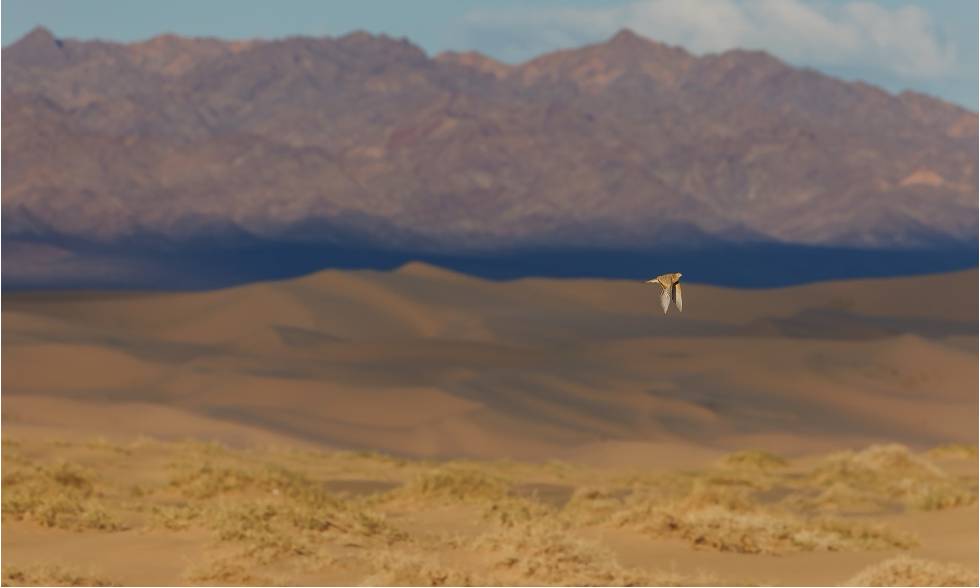
Marmots! Those that went up to enjoy the spectacular views from the top of the hills enjoyed closer snowcocks, Altai Accentor and rosy-finches. A final morning along the lakeshore brought us back to the usual male bushchat, still busy defending his territory, with a second male nearby. Above them, at least eight Snowcock put on a magnificent performance, gradually making their way down the slopes to offer wonderful scope views as they flew back-and-forth, chasing each other, running up the hillsides, tails cocked and pumping, it was some sight amidst the amazing scenery. With a long, and relatively unknown drive south and into the northern fringes of the Gobi we headed off in the mid-morning. Birding on the way was quiet, bar the thousands of larks flushed from the roadside, yet more Pere David’s Snowfinch before finding our first of many Pallas’s Sandgrouse. We arrived at the northern shore of Boon Tsaagan Lake in the heat of the afternoon. We abandoned our first camp-site as the mosquito’s were out in force. Mongolian and Pallas’s Gulls lined the shoreline, as White-winged Terns peppered the fringes and Kentish Plovers were abundant. Heading to the river-mouth we passed yet more groups of Sandgrouse and set-up camp. Spending the evening at the river- mouth, an adult Pallas’s Fish Eagle circled overhead as we sifted through the hoards of gulls and water-birds, failing to locate any Relict Gulls that might be around. Still, we enjoyed the large numbers of Swan Geese, yet more Asian Dowitchers, hundreds of Eurasian Spoonbill, 200 Caspian Tern, beautifully plumaged Pallas’s Gulls and a whole range of breeding water-birds. We were back at sunrise until the late morning, repeating the same procedure with similar results. Additional species included Ferruginous Duck, pair of Red-necked Phalarope and even three Smew (including a drake). An immature Pallas’s Fish Eagle made us question where this species
breeds – presumably on the distant crags given the complete lack of trees for hundreds of miles. As it turned out, the river-mouth is ‘owned’ by some thuggish looking local rich men, so we got to enjoy quite a shouting match between our crew and theirs for some time before things somehow calmed down! Heading east, we stopped for lunch by a waterhole, complete with our first Mongolian Finches. In the late afternoon we reached the much smaller Kholbooj Lake, which was surprisingly quiet. We did, of course, have more Asian Dowitchers
(it’s obviously a bumper year for them), noisy Avocet yelping continuously overhead as their chicks fed on the opposite shoreline and the odd Swan Goose dotted about. As the gulls were noticeable by their absence we opted to camp at the nearby Orog Lake, a huge, 40km long lake. At camp we noticed a Steppe Grey Shrike
twice passing by with food – we would have to find its nest at some point during our stay here.
‘Khangai Rosy-finch’ and Altai Accentor
We had a day and a morning here, and covered much of this huge lake. Gulls were once again thin on the ground, though an odd 1st winter Black-headed Gull in suspended moult got the pulses at least vibrating for a time as we clutched straws. Mute Swans were surprisingly well numbered, we probably had in excess of 7, and maybe into double figures by the end. For the purists amongst us it was a lifer (including for James, at long last!), and a spectacular encounter was watching a pair fly off being chased by an aggressive Whooper Swan, which sent the male tumbling in the air. On the water itself, the usual variety of ducks surprisingly held little of note. Whiskered Tern was found among the throng of White-winged, and we enjoyed yet more Gull-billed and Caspian Terns, 56 pairs of Kentish Plover, and no shoreline would be complete without another Asian Dowitcher! In the surrounding grassland one vehicle lucked out with an Asian Badger scuttling across the road in front of them, while the rest of us had Tolai Hare and Mongolian Gerbils! Along the south shore the rockier terrain held our only Little Owl, a couple of Long-legged Buzzards along with the usual suspects. Back at camp, our short walk found where the Steppe Grey Shrike had been taking its prey, with a minimum of six fledglings
being accompanied by at least one of the parents, though the pair of Henderson’s Ground-jays, just metres away were superb, even for those that have seen them before.
The water-bird section of the tour was now over, as we headed south again, venturing into the Gobi. Our lunch stop was at ‘The White Cave’, the past home of Neanderthal’s, unfortunately we just had to make do with a roosting Eurasian Eagle Owl, Lesser Kestrels and some Pied Wheatear, and another pair of Ground-jay nearby.
It was a long afternoons drive with few birds but stunning scenery, especially when the huge Khongoryn Els –
sand dunes –came into view, which can reach as high as 300m. We finally had a night in a Yurt camp, and enjoyed both showers and dinner inside a building, and use up all available electrical points to charge up all batteries, phones and mp3 players! Some of us opted for a night-walk, which exceeded all expectations as we
found four species of jerboa – singles of huge Balikun, Gobi, Five-toed Pygmy and several Thick-tailed Pygmy Jerboas at ultra close range (or even in the hand, or hat!). Later a couple of us found Large-eared Hedgehog curled up in the camp grounds.
Our targets were quickly thinning out in the desert so it was a short mornings birding as we visited a small colony of five breeding pairs of Saxual Sparrow close to the yurts then on to see a pair of Asian Desert Warbler
feeding in the scraps of vegetation that call home. Moving on we ventured into a grazing area for mammals –17 Asian Wild Ass and 36 Goitered Gazelle loitered around here, the stony terrain making it a safe haven for them here as hunters are unable to race after them here.
Henderson’s Ground-jay©Denzil Morgan and Wallcreeper
Yolyn Am – ‘The Valley of the Lammergeier’ is a narrow, craggy mountain range rising steeply out of the desert and our base for our final (YAY, I can hear from some of us!) nights camping. White-winged Snowfinches dropped down to the valley floor to welcome us, feeding on our lunch hand-outs, and true to form, Lammergeier’s floated low overhead. A Saker nest held three chicks before we visited a scenic gorge that
contained a load of tourists – our first sighting of the tour! Kozlov’s Accentor, that bundle of colour, character and charisma, and also Mongolia’s only breeding endemic (that is the one thing it does have going for it) was soon sighted, feeding next to the path, our first of several. Alashan Ground Squirrel, a localised species was found among the Pallas’s Pika and Mongolian Gerbil colonies. Further down we found Himalayan Beautiful Rosefinch, more snowfinches, Golden Eagle, Lammergeier and a group of Siberian Ibex wandering impossibly
down a vertical cliff-face with impressive dexterity – while watching the male in the distance a Wallcreeper landed next to him, giving direction for a Wallcreeper on a distant rockface is not easy, fortunately, to save the straining we found another that decided to feed on a tiny rock right next to the path at eye-level, offering the best views any of us have had of this truly charismatic species.
A night-drive offered much promise but delivered so little, unless you have a liking for Red Foxes, of which we found nine! Back inside the gorge we enjoyed more accentors, Water and Blyth’s Pipit’s and, the birding must have been slow, as we managed to finally identify a Midday Gerbil (yellow vs dark claws!). Heading to a different valley we located a vocal Chukar and yet more Lammergeier before it was time to head out of the mountains and back into the flatlands. We visited a small apple grove to see a Long-eared Owl nest, that contained five healthy looking, large chicks. Amazingly, despite it being mid-June there were still migrants here
– Siberian Chiffchaff and Pallas’s Warblers, presumably why the Daurian Shrike’s had made this place their
home! The biggest bonus was a Daurian Starling, particularly for Denzil, a long-time bogey bird finally laid to rest.
Letting the midday heat cool down somewhat before we headed out to the steppe we finally found a handful of Oriental Plover, including a male that burst into its wonderful display, twisting high in the air before settling down just in front of us. We finished the day off with the monstrously large Great Gerbil, that took some of us a long time to locate due to James slightly over-emphasising the true size of this rather non-descript rodent!
A bird-free early morning as we took the short flight north from Dalanzahgad to Ulaan Baatar and checked into our hotel in time for some late morning birding in the garden. Amazingly, we found a Chinese Grasshopper
Warbler – obviously a late migrant – in a willow. How times change, at the beginning of the tour we found several other migrants here and birds were conspicuously getting ready to breed but now it was all quiet, a single Azure Tit showed extremely well, and we located another pair of Lesser Spotted Woodpeckers, feeding young, and our only White-backed Woodpecker of the trip.
Our final birding session was spent at Khustain Nuruu National Park, one of three localities in Mongolia where the Przewalski’s Horse has been reintroduced. The only truly wild horse that survives today, and has never been domesticated, it was last sighted in the wild in 1966 before the reintroduction program began, with 320 now being found inside the park. We saw about 30 of them, and we told all about their plight, history and future intentions by a local PhD researcher. Bird-wise, we saw a few things; Golden Eagles swirling around once
more, Meadow Bunting was new for the list but, most excitingly was our fourth ground-squirrel – the localised Daurian Ground-squirrel which we made a special effort to see amongst the numerous Long-tailed. Yes, the park isn’t too rich in birdlife! After a final fill of the larks, including the favourite Mongolian Lark it was time to head back to Ulaan Baatar and toast to our success and no more camping!
Oriental Plover and Kozlov’s Accentor
For information regarding our tours to Mongolia please click here. Alternatively please contact us via e-mail or phone +44 1332 516254 regarding organising a custom tour to Mongolia.
Bird of the Tour
1 Black-billed Capercaillie
2 Altai Snowcock
3 Hodgson’s Bushchat
4 Henderson’s Ground-jay 4= Kozlov’s Accentor


© 2026 Tum-Eco Tour Co.,Ltd. All right reserved. Developed by Mind Agency