



After a six year break due to the global pandemic, Birdtour Asia were back in Mongolia, and itreminded us what an incredible, unique destination this is forbirds, mammals, and incredible scenery.
Mongolia had been experiencing a relatively late cold snap which had consequences, mainly good, suchas late lekking Black- billed Capercaillie and exciting falls of Siberian migrants around the country. The zenith of the avian highlights were the lekking Black-billed Capercaillie, with other top picks including Oriental Plover, Mongolian Ground Jay, breeding Relict Gull,
Pallas’s Sandgrouse, Azure Tit, Altai Snowcock, Saxaul Sparrow, Hodgson’s Bushchat, and Asian Dowitcher–and not forgetting Mongolia’s only breeding endemic, the charismatic Koslov’s Accentor.
Whilst the tour’s main focus is on birds, it is always pleasing when participants share genuine interests in other life forms.
Mammals always have potential to impress in Mongolia–and this year they did–with 36 species seen! The standout headliner was the two Snow Leopard in the Gobi Mountains, with a superb supporting cast of Saiga, Argali, Przewalski’s Horse, Mongolian andGoitered Gazelle, Corsac Fox, Siberian Ibex, Asiatic Wild Ass, and numerous ground squirrels, jerboas, and other rodents.
Despite the cold start to the tour and the expectedly variable weatherof Mongolia, along with the country’s average altitude
being greater than 1,500 metres – welost no birding time to the weather.
After international arrivals at the recently opened Chinggis Khaan International Airport early on the first day, we were soon
on the road headingtowardsKhustain Nuruu NationalPark. The term ‘on the road’would prove to be very aptthroughout–
this tour by itsvery nature includes a great deal of overland travel – a largeproportion ‘off road’. Thedrivers’ excellentdriving skills and the quality food preparation by the travelling kitchen staff made for a safe and comfortable tour, the majority of the nightsspent camping.
En routeto Khustain Nuruu we werewitness toour first views of the endless landscapesthat would be familiar forthe next two weeks. Several stops were required as we soaked in our first Mongolian Larks, Amur Falcons, Demoiselle Cranes and
we watched in awe as an 18 strong multi-family party of Mongolian Gazelle raced past under our noses – apparently their spontaneous bursts of speed over the steppe are training drills for the young. Another welcome and impressive sight was our first Monk Vultures, theywould be recorded almost daily with atleast 150 seen duringthe tour.Followingthe one-and-only siesta of the tour, during whichtime it conveniently rained, we set off to the grass covered steppe on the sloping mountain sides of Khustain Nuruu National Park. This park is home to the largest re-established populations of Przewalski’s Horse (or Takhi as they’re locally known) in their former native range, and we were treated to numerous encounters. Several of the Takhi harems included new born foals. Khustain Nuruu is one of only three localities in Mongolia where Przewalski’s Horse has been re-established. The only truly wild horse that survives today that has never been domesticated, It was last sighted in the wild during1966 before there-establishment programbegan, with approaching500 individualsnow being found insidethis park.
Other mammals wereconspicuous in the park,not least the many TarbaganMarmot scurrying for cover, several rangales of Wapiti, and both Long-tailed and Daurian Ground Squirrels, identified by careful study of their foot hairs!
The birding highlights in the park were a pair of Daurian Partridge, a Short-toed Snake Eagle overhead, and a totally unexpected pair ofJapanese Quail sat out in the open for all to admire.
The Ger has been used for thousandsof years in Central Asia, and especially Mongolia to facilitate a nomadic life, they were used by Chinggis Khan throughout his lifeand crusades. Gers are portable, collapsible, circular rigid tentsthat arenow used
widely as homes and holiday cottages. They are indeed ideal, very spacious and practical–at Khustai they come with electricity forall your charging needs and aftera comfortable nightwe commenced our westward journey with several stops were planned atthe intervening wetlandsand lakes, or nuurs, as they are known in Mongolia.
Regular fuel stops allow us all to stretch our legs and see what is about – often gerbils or other rodent and the occasional
invertebrate–and yes, a few birds. Invertebrates were few-and-far between throughout the tour, partly due to the unseasonably cold weather no doubt. Very few butterflies were seen in the open landscapes, and we recorded not a single Odonata throughout. One such stop today allowed close scrutiny of a horde of Mongolian Gerbil, complete with their black
nails and a Bombus sibiricus –a beautifulbumble bee – nectaring on a milkvetch,Astragalusscaberrimus.
Lakes, vast or modest, are a prominent feature of the itinerary, our first appointment was with Bayan Nuur. Bayan Nuur provides a waterfowl paradise, eighteen species were noted including Swan Goose, Eastern Spot-billed Duck, and Ferruginous Duck. These were supported by White-naped Crane, Hen Harrier, Pacific Golden Plover, Ruff, and earlier than
expected Pallas’s Sandgrouse – what a bird they are! At one point whilst observing the marsh, a couple of participants called out ‘Temminck’s Stint’ and a couple of others called ‘Long-toed Stint’! Which was it? Both! The observers on the right could see one, those on the left the other, and all observers had their views of the other bird obscured by a single small tussock
just a fewmetres in front of us – a classic two-bird-theorymoment.
The lakeside vegetation here is home to the lydiaerace of Pallas’s Reed Bunting – a probable future split as ‘Mongolian
Bunting’ – and several were found. In the reedbed Paddyfield Warblers performed and Bearded Reedlings flitted. A Black- faced Bunting and a couple of Dusky Warbler moving through the reeds were evidence of continuing migration.
Travellingwest welunched at Ogii Nuur and checked the large congregation ofwater-birdsthere. Our first Asian Dowitchers were a tad distant and a couple of good padders were the White-tailed Eagle resting alongside a sedge of Common Crane and an inconspicuousthird calendar year Common Gull loafing amongst the Black-headed Gulls. It washere that we became
to realise that there was a large overland passage of White-winged Terns underway – a feature we were to witness at several subsequent sites.
Another necessary stop during the cross country drives, as well as fuelling, was to micturate. The chosen spot for the final micturition of the day was a random waterhole where a splendid Black-faced Bunting proved very confiding along the shore.
We were to record 18 Black-faced Buntings across ten sites during the tour and on reflection the presence of numerous Siberian migrants wasprobably due to thelate cold spell.
We arrived at our camp at 1,930 masl in the Khangai Mountains intime for a late evening vigil where a calling Ural Owl was tracked down and then the remarkable mechanical sound of a drumming Swinhoe’s Snipe over the nearby forest edge marsh
grabbed and held our attention – a rare sight on the birding circuit, and especially pleasing given the difficulty in separating
the species otherwise, from Pintail Snipe in the field – no need to scutinise the shape of the outertail feathers today! After a very long day we all retiredto our tents with a massive air of anticipation for what may lay ahead in the morning.
The Khangai Mountains are hometo a healthy population of the most sought-after bird ofthe tour: Black-billed Capercaillie.
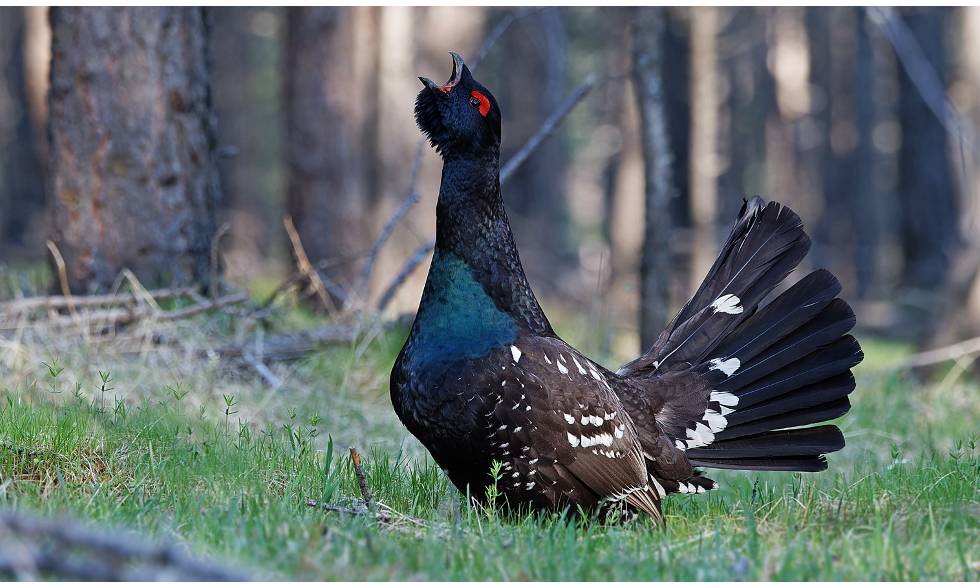
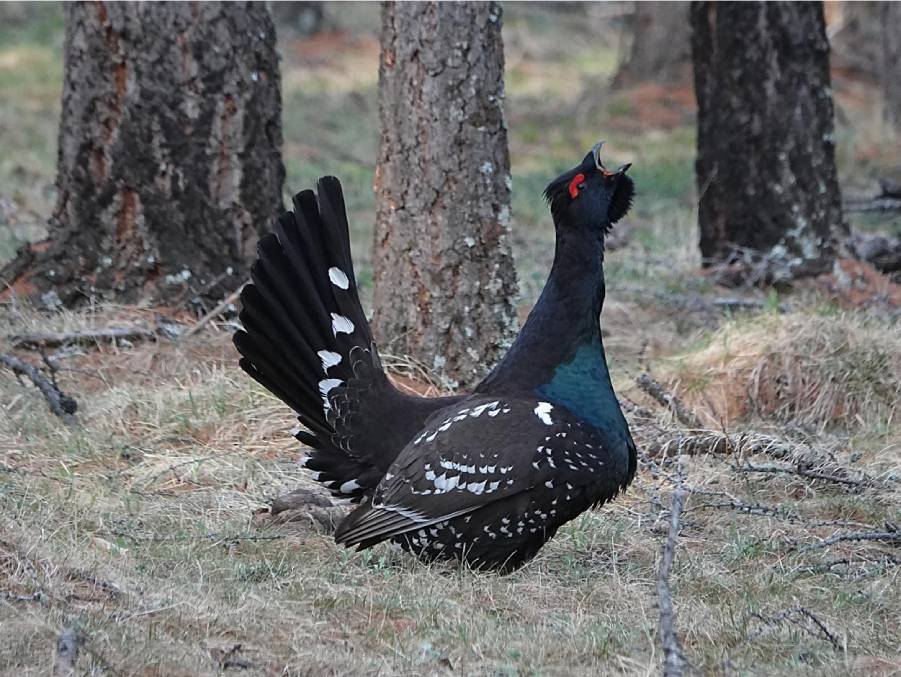
At dawn we were in position in a known lekking area – and almost immediately we found an impressive male strutting his stuff. We watch for some time whilst he meandered through the Siberian Larch Larix sibiricaneck stretched, “klicking and klokking” from his syrinx and resonating deep down in his belly. Shafts of sunlight piercing through to the forest floor were intercepted by his chest and reflect back a unique bronzy capercaillie green, a colour almost impossible to capture on a memory card, but forever etched in everyone’s memory. We were not expecting them to be lekking so late into the month, but the cold snap had worked immeasurably in ourfavour today!
These forests host many familiar European species, mixed with the extra desirable Siberian counterparts. Throughout the
day we birded at various locations with immense success. The biggest surprise were the sightings of Pallas’s Rosefinch –including a stunning male, perhaps even breeding here. Other finch species seen were several Hawfinch, flyover Red
Crossbill, Eurasian Siskin including stunning males, and an incredible male Brambling. Another two-bird-theorymoment was when some of us viewing downhill spotted a male Daurian Redstart and those stood down slope viewing up, shouted
‘Eversmann’s Redstart’! A male, itwas soon tracked down and enjoyed by all – and to everyone’s delight. Daurian Redstarts outnumbered Common Redstart two to one during the day. Tree Pipits outnumbered both Olive-backed and Blyth’s Pipits. A pair of Spotted Flycatcher appeared to be on territory and a Mistle Thrush foraging the forest floor were great trip ticks. Mistle Thrush do not occur much further east than this. A double figure count of Red-throated Thrush included a pair attending their nest already.
The mammal highlight was the dark regional form of Eurasian Red Squirrel, which froze two-thirds up a larch, maybe in a defensive response to the Red Fox that sauntered below. Five species of woodpecker were noted during the day including at least six Black and ten Eurasian Wryneck, most of which weresinging.
As per the previous evening, our camp was centre of attention at dusk. The Ural Owl was again calling and seen briefly. The Swinhoe’s Snipe gave a virtuoso performance transfixing us for 30 minutes, during which time three Eurasian Woodcock put in an appearance. This was the end to Day 3 but we had packed in so much that it seemed like we had been in the field a month.
The following morning dawned with another male Eversmann’s Redstart in ourcamp. The forests were asalive as yesterday, another Black-billedCapercaillie did his stuff onthe forest floorreinforcing ourfirst impressions ofjust howspectacular this
species is. Five woodpecker species today included an Eurasian Three-toed for some of the group. A secretive Bluethroat and canopy dwelling Long-tailed Bushtitswere added to the list.
We departed the forest and started our incredibly scenic drive south to Khukh Nuur with very varied weather! Several stops allowed us to enjoy our first Bearded Vultures, Eurasian Crag Martin, and Siberian House Martin, a swirling Pacific Swift spectacle (what evocative birds they are!), and all topped by a confiding group of Ortolan Bunting.
We passed the expansive Terkhiin Tsagaan Nuur, it was more then 50% frozen – a sign ofthings to come.
We reached Khukh Nuur – and continued on! The cold snap persisted here, indeed we were engulfed by a severe blizzard. Our distinguished local knowledge knew a comfortable solution. We spent the night in a local community centre to avoid
inhospitablecamping conditions– we felt sorry for the poor birding group who were camping by the lake.
Rising early from our snug lodging we retraced our tracks back to Khukh Nuur. Our first port of call was the lake shore where
Altai Snowcocks were ‘scoped on the ridge above – remarkably well camouflaged – especially so onthe frost-covered terrain.
The lower lakeside slopes were surprisingly quiet, probably due to the sub-zero temperatures.Howevera few migrants were arriving or passing through, a couple of Dusky Warbler (some of the 50 or so we found during the tour), several Citrine Wagtail, more than 20 Water Pipit, and two more attention grabbing Ortolan Bunting. Presumablydue to the late emergence
of spring, the Mongolian Gull colony held just a few prospecting individuals and there was no apparent breeding activity in swing from the Bar-headed Geese present.
With the main targets still eluding us, we moved to a nearby hillside and within the next three hours had seen all:
Güldenstädt’s Redstart, Hodgson’s Bushchat, Altai Accentor (and Brown Accentor), the sushkinirace of Asian Rosy Finch –colloquially known as Khangai Rosy Finch, and nominate Pallas’s Reed Bunting.All providing multiple and astonishing views in the most resplendent of settings.
With such success we departed soon after midday allowing us to accomplish a significant portion of the journey to Ikhes Nuur where another avian highlight (hopefully!) awaited us. The ability to camp literally anywhere in Mongolia allows for a very flexible itinerary should it be required. This evening our chosenspot was close to Taigan Nuur which allowedus to feast upon another impressive gathering of waterfowl. This lake seemed a favourite of Common Goldeneye with more than 30
present – the highlight however was the monochromepersonata‘Masked’ Wagtail which foraged along the damp surrounds. This beautifulsubspecies of White Wagtail is generally found a few hundred kilometres west ofhere at this time ofyear.
As we entered June on day six of the tour, we had already managed to cover around 50% of the 600km from Khukh Nuur to Ikhes Nuur. Of the remaining 300km, 80% was on the recentlysurfaced roads which saved considerabletravel time. Heading off-road again returned us togood habitat and we watched a pair of Greater Sand Plover on territoryon the stony plain, and whilst transversing a gorge and high pass wenoted our first Eastern Black Redstarts.
Ikhes Nuur is one of very few known breeding locations for the Relict Gull and we had been anticipating this day with great excitement. We observed around 45 adults coming and going to a freshwater channel at ranges down to a discreet 50 metres. The sight of these birds in full breeding dress was one to behold and though we did not witness any confirmed breeding activity (the lake being so vast, we did not head to the usual breeding colony), the occasional couple would head toss or neck stretch whilst pair bonding. Another everlasting memoryfor all present, and totally justifying the long journey.
The saline nature of this lake means it does not attract masses of waterbirds, but we did have another target here. We are right at the eastern edge of the range of Western Yellow Wagtail, and here the race present is the gorgeous, and highly
threatened white-headed luecocephala. We found two beauties as we walked back over the dumbles to the camp – Rob and James were more than a little gripped!
On a tiny creek, two diving grebes momentarily provided our third two-bird-theory of the trip, but eventually both surfaced simultaneously, a stunning duo of breeding plumaged Slavonian and Black-necked Grebes.
Situated to thesouth and east of Ikhes Nuur is Sharga Nature Reserve – home to the Saiga. This bizarre Critically Endangered antelope, most closely related to Springbok, once grazed from western Europe through to eastern China, but now only survives in pockets from here to western Kazakhstan, have huge bloatednostrils, allowing themto filter out dust whenherds
running, as they are so tightly packed together – something we were able to the witness, as they sped off reminiscent of pigs. We headed that way, with plans to camp in the heart of the Saiga habitat. The habitat isvery sparsely vegetated stony steppe, ‘Mongolian’ Saiga home range covers many square kilometres and there is no guarantee to locating them, but we
exceeded all expectations by spotting more than 100 individuals during the evening and the following morning – given the total Mongolian population is fewer than 5,000, we felt extremely fortunate.
Our next three days would be dedicated to crossing a north-western portion of the Gobi. We would visit several lakes and wetlands in search of more waterfowl and also scour the desert for some of its special denizens. It would also be an opportunity to locate numerous migrating land birds, often in out of context spots. Any planted areas in the settlements we
passed through would hold migrants – it was exciting every time we checked such a location.
By the early evening of day seven we were scanning spots around the shore of the vast Ramsar Wetland, Böön Tsagaan Nuur. At 252 km2 of surface water, it is rather too large to scan the far shore but it is possible to drive around the lake edge and pause at many spots. This lake probably attracts the largest congregations of water-birdson the tour. At thefirst section of shore that wechecked we completed the ‘Pallas’s’ heptad. We saw Pallas’sFish Eagle and Pallas’s Gull, and to go together
with the Pallas’s seen earlier – Bunting, Sandgrouse, Leaf Warbler, Grasshopper Warbler, and Rosefinch – we had seen all
bird species which commemorate Peter Simon Pallas (22 September 1741 – 8 September 1811); all but one described by him.
In the late evening we took the opportunity to spotlight. Two migrantGrey Nightjarin camp were unexpected. Four gerbilor jerboa species were spotted too, including Midday Gerbil at midnight, and a couple of bat species were detected including Northern Bat.
The following day we toured the freshwater wetlands from Böön Tsagaan Nuur to Orog Nuur, and Kholboolj Nuur. We witnessed significant numbers of Red-crested Pochard, Great Crested Grebe, Great Cormorant, and White-winged Tern. Notable numbers of Eurasian Spoonbill, Gull-billed, Caspian, and Black Terns were seen, along with an Eastern Spot-billed Duck and three male Falcated Duck. An array of shorebirds included rusty-red Asian Dowitcher, Ruddy Turnstone, Little
Stint, Curlew Sandpiper, Dunlin, Broad-billed Sandpiper, and Red-necked Phalarope. We were briefly distracted by a handsome Mongolian ToadStrauchbufo raddeiat our feet.
The following day was another of birding on the go. Many stops were undertaken from the beginning until the end of the day. This strategy is somewhat necessary due to the distances covered but also effective due to the nature of the species sought and habitat wended. Desert areas with considerable vegetation, particularly Saxaul or Tamarisk have the potential to yield the desired species, as do watering holes or springs. Following these leads we were rewarded with excellent sightings of Mongolian Ground Jay, Saxaul Sparrow, and Asian Desert Warbler. Wealso stopped at a known Eurasian Eagle Owl roost, which was eventually spied deep in a cave in the cliff face.
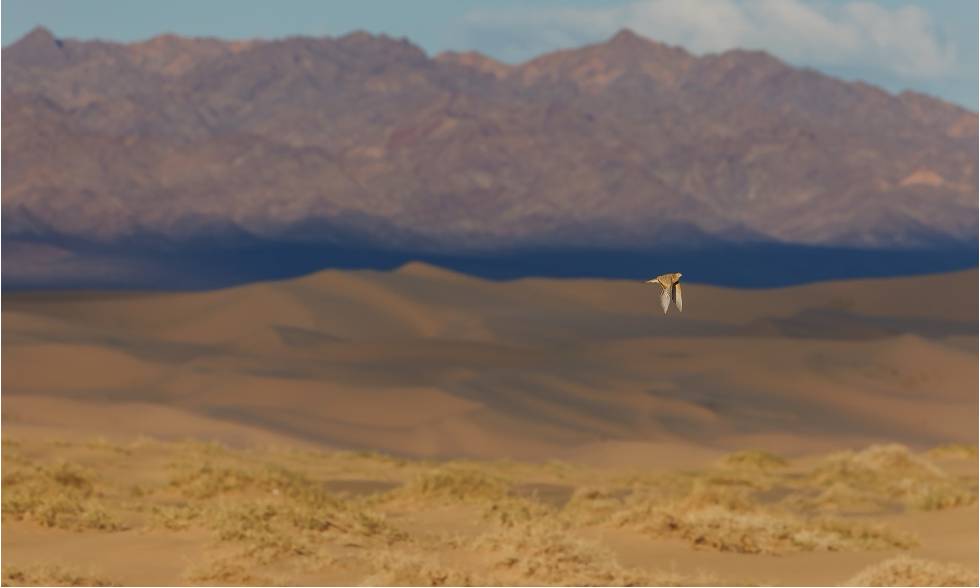
From our overnight stay at the Khongor Els with its mighty fine sand dunes, we continued east across the Gobi to more mountainous terrain. We would spend this and the next day in the vicinity of Yolyn Am. Before departure a pre-breakfast perambulate allowed us to view the impressive dunes, find another Asian Desert Warbler, and a pair of pallidirostrisGreat Grey Shrike. This area is also favoured by the awe inspiring Pallas’s Sandgrouse, many were watched passing by. Once on the road, with fewer targets remaining, our goal was to arrive at Yolyn Am in time to clean up within the day. The sparsest
of this steppe is home to the Asiatic Wild Ass, known locally as the Kulan – we had two distant observations of six. Both species of gazelle were alsopresent in this same area.
Despite just a few stops for refuelling and checking a couple of migrant traps, it was mid-afternoon when we arrived atYolyn Am, and we found the impressive gorge as popular as ever, attracting literally countless tourists. ‘The Valley of the Lammergeier’ is an accessible site that holds a clutch of species difficult tofind elsewhereon the tour. Fortunately the birding and terrain are not arduous and we spent several very pleasant hours enjoying ourselves here. This is the prime location to locate Mongolia’s one-and-only breeding endemic and at our very first stop we found a confiding pair of Koslov’s Accentor, a very barred Barred Warbler, plusour first Himalayan Griffons. White-winged Snowfinch was a target species for someon
the tour, we had not seen one on the deck and it was already day 10, so the pressure was on. And …… relax …. here White-
winged Snowfinch is both numerous and very, very confiding – the only issue withviewing them was the person’s feet next to you blocking the view. Walking into the scenic gorge we notched off the species we were searching for, both Himalayan Beautiful Rosefinch and Godlewski’s Bunting visited the stream. Migrants were evident in the gorge, mostly feeding on the short cropped, open ground: four Phylloscopuscomprised several Two-barred, Dusky and Greenish, and over 20 Pallas’s Leaf, along with a lone Little Bunting. Siberian Ibex were subsisting on both sides of the gorge, and a couple of Alashan Ground Squirrels were seen. And yes, several Bearded Vultures, aka Lammergeier, were patrolling the crags.
The most memorable momentof the tour materialised just past dawnnext day, we were back inthe mountains and aghast!
Peering down from the cliffs were two Snow Leopards, one of which would do nothing but stare us out – the leopard won, eventually. We were in the very fortunate position to be accompanied by a local Snow Leopard legend who monitors these
beasts in Mongolia, very ably assisted by local rangers. We were simply dumbfounded – everyone soaking in the moments.
As time passed a few words were uttered and the odd giggle could be detected – what an incredible opportunity for all present. The cats were very relaxed with our presence hence we manoeuvred to a different vantage point, actually viewing down on to them. It would have been impossible to ever tire of this date with destiny, but we did eventually bid our feline farewells and head northfor another potential mind-blowing occasion.
It wouldbe amiss not to briefly mention thebirds seen in the vicinity of the Snow Leopards, including Rock Sparrows actually on the same ledge! Alongside repeat views of Mongolian Finch and Godlewski’s Bunting we also registered our first Chukar and Rufous-tailed Rock-thrush.
What could follow that? Well, for one gentleman on tour his dream bird (and to be fair it is rather special) was next on the agenda. Apparently hehas spoken of nothing else for the past several months. Heading north to an extensive area ofsparse grasslands we set about the search. An elegant white-headed breeding-plumaged male Oriental Plover is just about the
ultimate shorebird –and with its potential to make it to northwest Europe now confirmed–thus making it even more desirable. We soon found such a beautifulspecimen and all enjoyed super views on theground and in flight. Whata morning! We were actually now ahead of schedule, despite having visited additional sites to those intended on the itinerary. So what now? Well, howabout a couple more additionalsites.
Splitting our lengthy journey back to Ulaanbaatar allowed us an attempt for another impressive mammal. Prior to that we passed through Dalanzadgad the capital of Ömnögovi aimag (South Gobi province). At the eastern section of the town is a
linear park – with lots of migrant potential and a rare breeding bird for Mongolia. We spent a short while here whilst the vehicles were re-fuelled and wererewarded witha great list: Dusky (>10), Radde’s (1), Pallas’s Leaf (>20), Arctic (3), Greenish (2), and Thick-billed (1) Warblers, single Eyebrowed and Dusky Thrushes, Asian Brown Flycatchers (3), Isabelline Shrike, Olive-backed Pipit, Common Rosefinch (8), Black-faced Bunting, and in the last trees we checked a pair of Desert Finch and a female Daurian Starling.
We overnighted in a couple of local gers at the homestead of the park ranger in Baga Gazriin Chuluu, with a Little Owl serenading us from the stockade.
Baga Gazriin Chuluu is an impressive granite outcrop in the otherwise flat steppe landscape. It holds a well-known population of the world’s largest and most imposing of wild sheep; the Argali. We located a maternal fold of four females and three lambs on one of the outcrops.
Shortly after this bonus viewing we were again heading north to thecountries capital. A very entertaining distraction atour lunch stop was the extensive colony of roadside Brandt’s Vole which included many pups: this species is an extremely important prey item for many birds of prey and mammalssuch as Corsac Fox and Pallas’s Cat.
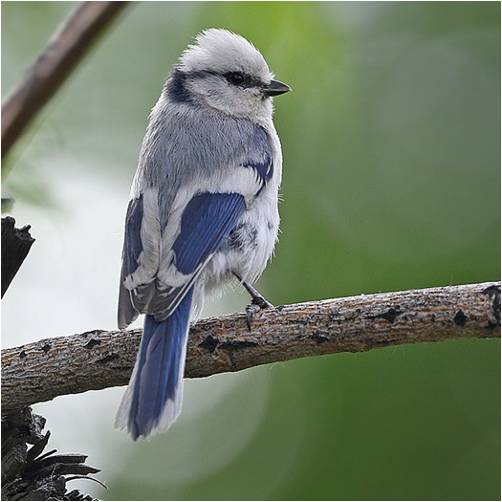
Ulaanbaatar lies on the Tuul River and we ventured to the riverbank and searched the riverine scrub south of the city successfully for White-crowned Penduline Tit. We alsolocated several other species that seem more regular around the city than out in the wider countryside; Mandarin Duck, Azure Tit, and White-cheeked Starling along with our only Oriental Turtle
Doves of the tour. In the evening we relaxed, enjoyed a hot shower that didn’t require an effort to reach, and reminisced on the journey so far in ourcomfortable hotel.
Our final two days of the tour would be focused on the forests of Gorkhi Terelj National Park. Unfortunately due to the aforementioned late spring our main target had not arrived on territory. No Chinese Grasshopper Warblers were found by
us nor any other tour group by these dates, and subsequently, reports of the first arrivals came on 11 June – a good week later than expected. Suitable compensation wasprovided bythe sound and sightof recently-arrived Lanceolated Warblers. A fewother trip ticks were also added including Eurasian Sparrowhawk, Eurasian Hobby, and Spotted Nutcracker.
Gorkhi Terelj National Park did also provide a few early butterflies; Fenton’s Wood White, Scarce Heath, Pale Arctic Clouded Yellow, Woodland Ringlet, Freija Fritillary, and another ‘Arctic’Oeneis urda. The habitats there were savoured by all, creeping through the pristine Taiga Forest wherethere are no trails tospoil the view was another memorable moment of the tour.
We were now in the final throws of the tour and engaged in the obligatory visit to the immense and extraordinary Genghis Khan Equestrian Statue. It truly is afantastic monument to the revered founder of the Mongol Empire.
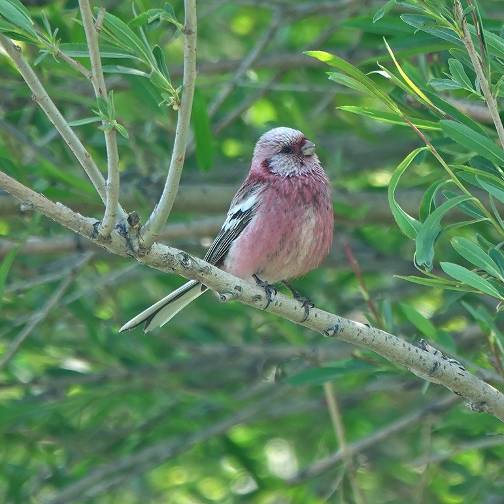
Our final birding outing was within the industrial heart ofwestern Ulaanbaatar where several waterfowl were reminders of our earlier travels and a co-operative pair of Siberian Long-tailed Rosefinch were a welcome final new bird of the tour for most. Thereafter weretired to our hotel and prepared for our flightshome the next morning.
Our route had taken us through eight of the 21 Mongolian aimags (provinces) and covered over 4,200 kilometres. We had recorded 239 species of birds and saw an impressive 29 species of wild mammal. What memories!
Bird of the trip
Mammal of the trip 1. Snow Leopard
Systematic List
ANSERIFORMES: Anatidae
Bar-headed Goose Anser indicus
Greylag Goose Anser anser
Swan Goose Anser cygnoides
Whooper Swan Cygnus cygnus
Common Shelduck Tadorna tadorna
Ruddy Shelduck Tadorna ferruginea
Mandarin Duck Aix galericulata
Garganey Spatula querquedula
Northern Shoveler Spatula clypeata
Gadwall Mareca strepera
Falcated Duck Mareca falcata
Eurasian Wigeon Mareca penelope
Eastern Spot-billed Duck Anas zonorhyncha
Mallard Anas platyrhynchos
Northern Pintail Anas acuta
Eurasian Teal Anas crecca
Red-crested Pochard Netta rufina
Common Pochard Aythya ferina
Ferruginous Duck Aythya nyroca
Tufted Duck Aythya fuligula
Stejneger’s Scoter Melanitta stejnegeri
Common Goldeneye Bucephala clangula
Goosander Mergus merganser GALLIFORMES: Phasianidae
Black-billed Capercaillie Tetrao urogalloides urogalloides
Daurian Partridge Perdix dauurica dauurica
Altai Snowcock Tetraogallusaltaicus
Japanese Quail Coturnix japonica
Chukar Partridge Alectoris chukar dzungarica CAPRIMULGIFORMES: Caprimulgidae
Grey Nightjar Caprimulgus jotaka APODIFORMES: Apodidae
Common Swift Apus apus pekinensis
Pacific Swift Apus pacificus pacificus CUCULIFORMES: Cuculidae
Oriental Cuckoo Cuculus optatus
Common Cuckoo Cuculus canorus canorus PTEROCLIFORMES: Pteroclidae
Pallas’s Sandgrouse Syrrhaptes paradoxus COLUMBIFORMES: Columbidae
Rock Dove Columba livia livia
Hill Pigeon Columba rupestris
Oriental Turtle Dove Streptopelia orientalis meena
Eurasian Collared Dove Streptopelia decaocto GRUIFORMES: Rallidae
Common Moorhen Gallinula chloropus chloropus
Eurasian Coot Fulica atra atra
Baillon’s Crake Zapornia pusilla pusilla GRUIFORMES: Gruidae
White-naped Crane Antigone vipio
Demoiselle Crane Grus virgo
Common Crane Grus grus PODICIPEDIFORMES: Podicipedidae
Great Crested Grebe Podiceps cristatus cristatus
Slavonian / Horned Grebe Podiceps auritus auritus
Black-necked / Eared Grebe Podiceps nigricollis nigricollis CHARADRIIFORMES: Recurvirostridae
Black-winged Stilt Himantopus himantopus
Pied Avocet Recurvirostra avosetta CHARADRIIFORMES: Charadriidae
Northern Lapwing Vanellus vanellus
Pacific Golden Plover Pluvialis fulva
Common Ringed Plover Charadrius hiaticula
Little Ringed Plover Charadrius dubius curonicus
Kentish Plover Charadrius alexandrinus alexandrinus
Tibetan Sand Plover Charadrius atrifronsschaeferi
Greater Sand Plover Charadrius leschenaultii leschenaultii
Oriental Plover Charadrius veredus CHARADRIIFORMES: Scolopacidae
Black-tailed Godwit Limosa limosa melanuroides
Ruddy Turnstone Arenaria interpres
Ruff Calidris pugnax
Broad-billed Sandpiper Calidris falcinellus
Curlew Sandpiper Calidris ferruginea
Temminck’s Stint Calidris temminckii
Long-toed Stint Calidris subminuta
Red-necked Stint Calidris ruficollis
Dunlin Calidris alpina
Little Stint Calidris minuta
Asian Dowitcher Limnodromussemipalmatus
Eurasian Woodcock Scolopaxrusticola
Swinhoe’s Snipe Gallinago megala
Common Snipe Gallinago gallinago
Red-necked Phalarope Phalaropus lobatus
Common Sandpiper Actitis hypoleucos
Common Redshank Tringa totanus
Marsh Sandpiper Tringa stagnatilis
Wood Sandpiper Tringa glareola
Spotted Redshank Tringa erythropus CHARADRIIFORMES: Laridae
Brown-headed Gull Chroicocephalus brunnicephalus
Black-headed Gull Chroicocephalus ridibundus
Relict Gull Ichthyaetus relictus
Pallas’s Gull Ichthyaetus ichthyaetus
Mew Gull Laruscanus
Vega [Mongolian] Gull Larusvegae mongolicus
Gull-billed Tern Gelochelidon nilotica
Caspian Tern Hydroprogne caspia
Little Tern Sternula albifronsalbifrons
Common Tern Sterna hirundotibetana
Whiskered Tern Chlidonias hybrida hybrida
White-winged Tern Chlidonias leucopterus
Black Tern Chlidonias niger GAVIIFORMES: Gaviidae
Black-throated Diver Gavia arctica arctica SULIFORMES: Phalacrocoracidae
Great Cormorant Phalacrocorax carbo PELECANIFORMES: Threskiornithidae
Eurasian Spoonbill Platalea leucorodia leucorodia PELECANIFORMES: Ardeidae
Eurasian Bittern Botaurus stellaris
Grey Heron Ardea cinerea cinerea
Great Egret Ardea alba modesta ACCIPITRIFORMES: Accipitridae
Bearded Vulture / Lammergeier Gypaetus barbatus
Himalayan Griffon Gyps himalayensis
Cinereous [Monk] Vulture Aegypius monachus
Short-toed Eagle Circaetus gallicus
Steppe Eagle Aquila nipalensis
Golden Eagle Aquila chrysaetos
Eurasian Sparrowhawk Accipiter nisus nisus
Eastern Marsh Harrier Circus spilonotus
Hen Harrier Circus cyaneus
Black Kite Milvus migrans
Pallas’s Fish Eagle Haliaeetus leucoryphus
White-tailed Eagle Haliaeetus albicilla
Upland Buzzard Buteo hemilasius
Long-legged Buzzard Buteo rufinus rufinus
Common Buzzard Buteo buteo burmanicus STRIGIFORMES: Strigidae
Little Owl Athene noctua plumipes
Eurasian Eagle-Owl Bubo bubo yenisseensis
Ural Owl Strix uralensis yenisseensis
BUCEROTIFORMES: Upupidae
Eurasian Hoopoe Upupa epops PICIFORMES: Picidae
Eurasian Wryneck Jynx torquilla
Eurasian Three-toed Woodpecker Picoides tridactylus crissoleucus
Great Spotted Woodpecker Dendrocopos major brevirostris
White-backed Woodpecker Dendrocopos leucotos leucotos
Black Woodpecker Dryocopus martius martius
Grey-headed Woodpecker Picus canus jessoensis FALCONIFORMES: Falconidae
Lesser Kestrel Falco naumanni
Common Kestrel Falco tinnunculus
Amur Falcon Falco amurensis
Merlin Falco columbariuslymani
Eurasian Hobby Falco subbuteo
Saker Falcon Falco cherrug milvipes PASSERIFORMES: Laniidae
Brown Shrike Laniuscristatuscristatus
Isabelline / Daurian Shrike Laniusisabellinusisabellinus
Great [Steppe] Grey Shrike Laniusexcubitorpallidirostris
PASSERIFORMES: Corvidae
Eurasian Jay Garrulus glandarius brandtii
Azure-winged Magpie Cyanopica cyanus
Eurasian Magpie Pica pica bactriana
Henderson’s / Mongolian Ground Jay Podoces hendersoni
Spotted Nutcracker Nucifraga caryocatactes macrorhynchos
Red-billed Chough Pyrrhocorax pyrrhocorax
Daurian Jackdaw Coloeus dauuricus
Rook Corvus frugilegus pastinator
Carrion Crow Corvus corone orientalis
Northern Raven Corvus corax kamtschaticus
PASSERIFORMES: Paridae
Coal Tit Periparus ater ater
Willow Tit Poecile montanus baicalensis
Azure Tit Cyanistes cyanus yenisseensis
Great Tit Parus major kapustini
PASSERIFORMES: Remizidae
White-crowned Penduline-tit Remiz coronatus PASSERIFORMES: Panuridae
Bearded Reedling Panurus biarmicus russicus
PASSERIFORMES: Alaudidae
Eurasian Skylark Alauda arvensis kiborti
Crested Lark Galerida cristata magna
Horned Lark Eremophila alpestris brandti
Mongolian Lark Melanocorypha mongolica
Asian Short-toed Lark Alaudala cheleensis beicki PASSERIFORMES: Hirundinidae
Sand Martin Riparia riparia
Eurasian Crag Martin Ptyonoprogne rupestris
Barn Swallow Hirundo rustica gutturalis
Common House Martin Delichon urbicum lagopodum PASSERIFORMES: Aegithalidae
Long-tailed Bushtit Aegithalos caudatus caudatus PASSERIFORMES: Phylloscopidae
Hume’s Leaf Warbler Phylloscopus humeii humeii
Yellow-browed Warbler Phylloscopus inornatus
Pallas’s Leaf Warbler Phylloscopus proregulus
Radde’s Warbler Phylloscopus schwarzi
Dusky Warbler Phylloscopus fuscatus
Common Chiffchaff Phylloscopus collybita tristis
Two-barred Warbler Phylloscopus plumbeitarsus
Greenish Warbler Phylloscopus trochiloides
Arctic Warbler Phylloscopus borealis PASSERIFORMES: Acrocephalidae
Oriental Reed Warbler Acrocephalus orientalis
Paddyfield Warbler Acrocephalus agricola
Thick-billed Warbler Arundinax aedon aedon
PASSERIFORMES: Locustellidae
Pallas’s Grasshopper Warbler Helopsaltes certhiola certhiola
Lanceolated Warbler Locustella lanceolata
PASSERIFORMES: Sylviidae
Barred Warbler Curruca nisoria
Lesser Whitethroat Curruca curruca halimodendri
Asian Desert Warbler Curruca nana
Common Whitethroat Curruca communis rubicola PASSERIFORMES: Sittidae
Eurasian Nuthatch Sitta europaea baicalensis PASSERIFORMES: Certhiidae
Eurasian Treecreeper Certhia familiaris daurica PASSERIFORMES: Sturnidae
White-cheeked Starling Spodiopsarcineraceus
Daurian Starling Agropsar sturninus PASSERIFORMES: Turdidae
Mistle Thrush Turdusviscivorus
Eyebrowed Thrush Turdusobscurus
Red-throated Thrush Turdusruficollis
Dusky Thrush Turduseunomus PASSERIFORMES: Muscicapidae
Spotted Flycatcher Muscicapa striata mongola
Dark-sided Flycatcher Muscicapa sibirica sibirica
Asian Brown Flycatcher Muscicapa dauurica dauurica
Bluethroat Luscinia svecica
Siberian Rubythroat Calliope calliope
Taiga Flycatcher Ficedula albicilla
Eversmann’s Redstart Phoenicurus erythronotus
Black Redstart Phoenicurus ochruros phoenicuroides
Common Redstart Phoenicurus p. phoenicurus
Daurian Redstart Phoenicurus auroreus
Güldenstädt’s Redstart Phoenicurus erythrogastrus
Rufous-tailed Rock-thrush Monticola saxatilis
Hodgson’s Bushchat Saxicola insignis
Siberian Stonechat Saxicola maurus maurus
Northern Wheatear Oenanthe oenanthe oenanthe
Isabelline Wheatear Oenanthe isabellina
Desert Wheatear Oenanthe deserti oreophila
Pied Wheatear Oenanthe pleschanka PASSERIFORMES: Passeridae
Rock Sparrow Petronia petronia
White-winged Snowfinch Montifringilla nivalis
Pere David’s Snowfinch Pyrgilauda davidiana
Eurasian Tree Sparrow Passer montanus
Saxaul Sparrow Passer ammodendri
House Sparrow Passer domesticus domesticus
PASSERIFORMES: Prunellidae
Altai Accentor Prunella himalayana
Brown Accentor Prunella fulvescens
Kozlov’s / Mongolin Accentor Prunella koslowi
PASSERIFORMES: Motacillidae Western Yellow [White-headed] Wagtail
Motacilla flava leucocephala
Eastern Yellow[Eastern] Wagtail Motacilla t. tschutschensis
Eastern [Machurian]Yellow Wagtail Motacilla tschutschensis macronyx
Citrine Wagtail Motacilla citreola citreola
Grey Wagtail Motacilla cinerea
White [Masked] Wagtail Motacilla alba personata
White [Baikal] Wagtail Motacilla alba baicalensis
Richard’s Pipit Anthus richardi
Blyth’s Pipit Anthus godlewskii
Tree Pipit Anthus trivialis trivialis
Olive-backed Pipit Anthus hodgsoni yunnanensis
Water Pipit Anthus spinoletta blakistoni
PASSERIFORMES: Fringillidae
Common Chaffinch Fringilla coelebs
Brambling Fringilla montifringilla
Hawfinch Coccothraustes coccothraustes
Mongolian Finch Bucanetes mongolicus
Asian Rosy Finch Leucosticte arctoasushkini
Common Rosefinch Carpodacus erythrinus grebnitskii
Himalayan Beautiful Rosefinch Carpodacus pulcherrimus argyrophrys
Siberian Long-tailed Rosefinch Carpodacus sibiricus
Pallas’s Rosefinch Carpodacus roseus
Desert Finch Rhodospiza obsoleta
Twite Linaria flavirostris altaica
Red Crossbill Loxia curvirostra curvirostra
Eurasian Siskin Spinus spinus PASSERIFORMES: Emberizidae
Pine Bunting Emberiza leucocephalos
Godlewski’s Bunting Emberiza godlewskii godlewskii
Ortolan Bunting Emberiza hortulana
Little Bunting Emberiza pusilla
Black-faced Bunting Emberiza spodocephala spodocephala
Pallas’s [Mongolian] Bunting Emberiza pallasi lydiae
Pallas’s Bunting Emberiza pallasi pallasi
Reed Bunting Emberiza schoeniclusharterti MAMMALS
Tolai Hare Lepustolai
Daurian Pika Ochotona dauurica
Pallas’ Pika Ochotoma pallasi
Five-toed Pygmy Jerboa Cardiocranius paradoxus
Northern Three-toed Jerboa Dipus sagitta
Gobi Jerboa Allactaga bullata
Siberian Jerboa Allactaga sibirica
False Zokor Myospalax aspalax ‘mole hills’
Brandt’s Vole Lasiopodomysbrandtii
Midday Gerbil Meriones meridianus
Mongolian Gerbil Meriones unguiculatus
Eurasian Red Squirrel Sciuris vulgaris
Long-tailed Ground Squirrel Urocitellus undulates
Siberian Chipmunk Tamiassibiricus
Tarbagan Marmot Marmota sibirica
Alashan Ground Squirrel Spermophilus alashanicus
Daurian Ground Squirrel Spermophilus dauricus
Pallid Ground Squirrel Spermophilus pallidicauda
Daubenton’s Bat Myotis daubentonii Note: bat identification is tentative
Northern Bat Eptesicusnilssonii
Common Serotine Eptesicusserotinus
Common Nuctule Nyctalus noctula
Savi’s Pipistrelle Hypsugo savii
Particoloured Bat Vespertilio murinus
Snow Leopard Panthera uncia
Red Fox Vulpes vulpes
Corsac Fox Vulpes corsac
Przewalski’s Horse Equusprzewalskii
Asiatic Wild Ass / Kulan Equushemionushemionus
Wapiti Cervus canadensis sibiricus
Goitered Gazelle Gazella subgutturosa yarkandensis
Mongolian Gazelle Procapra gutturosa
Saiga Saiga tatarica mongolica
Siberian Ibex Capra sibirica hagenbecki
Argali Ovis ammon darwini
LEPIDOPTERA
Fenton’s Wood White Leptideamorsei
Pale Arctic Clouded Yellow Colias tyche
Scarce Heath Coenonympha hero
Woodland Ringlet Erebia medusa
Freija Fritillary Boloria freija
Oeneis urda
ANURA
Mongolian Toad Strauchbufo raddei SQUAMATA
Gobi Racerunner Eremiasprzewalskii
Tuvan Toad-headed Lizard Phrynocephalus versicolor


© 2026 Tum-Eco Tour Co.,Ltd. All right reserved. Developed by Mind Agency