
Trip reports / September 2017
In Search of the Snow Leopard – Mongolia Trip Report, September 2017
Arne Secelle
IN SEARCH OF THE SNOW LEOPARD(S):
Snow Leopard & Pallas’s Cat Tour in South Gobi
Wednesday 6 th – Wednesday 20 th September 2017
Report by: Arne & Edith Local Guides: Tumen, Oyunaa, Ganaa & Badgal (Tum-Eco Tour)
HIGHLIGHTS OF TRIP:
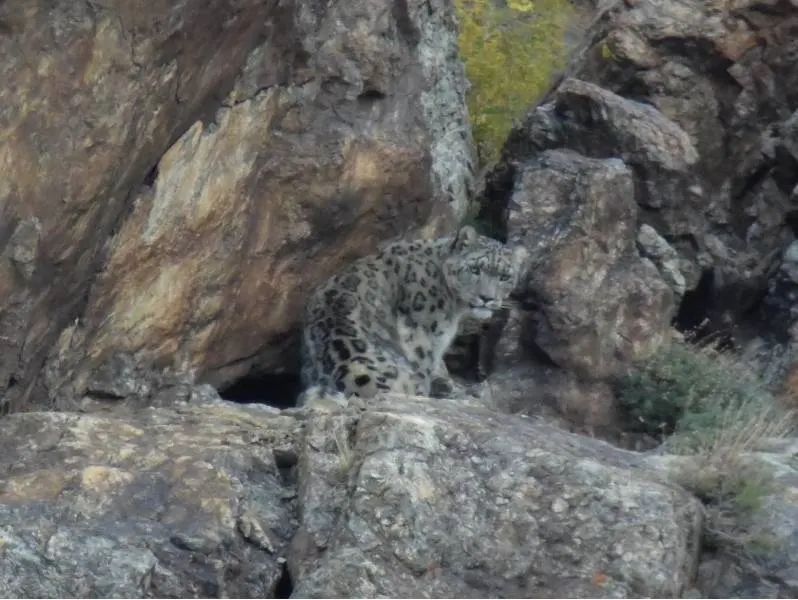
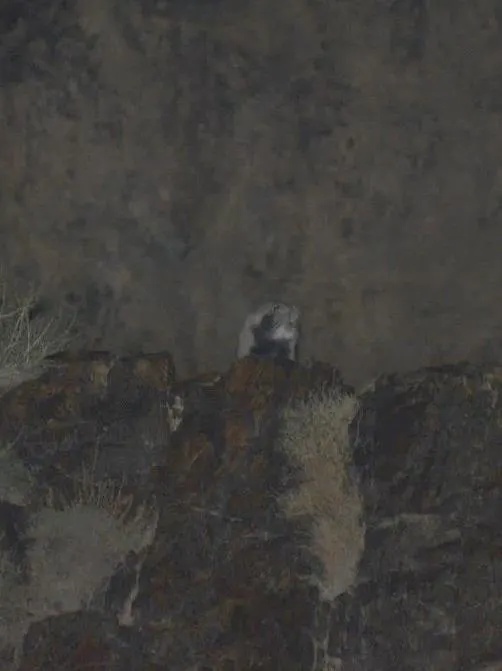
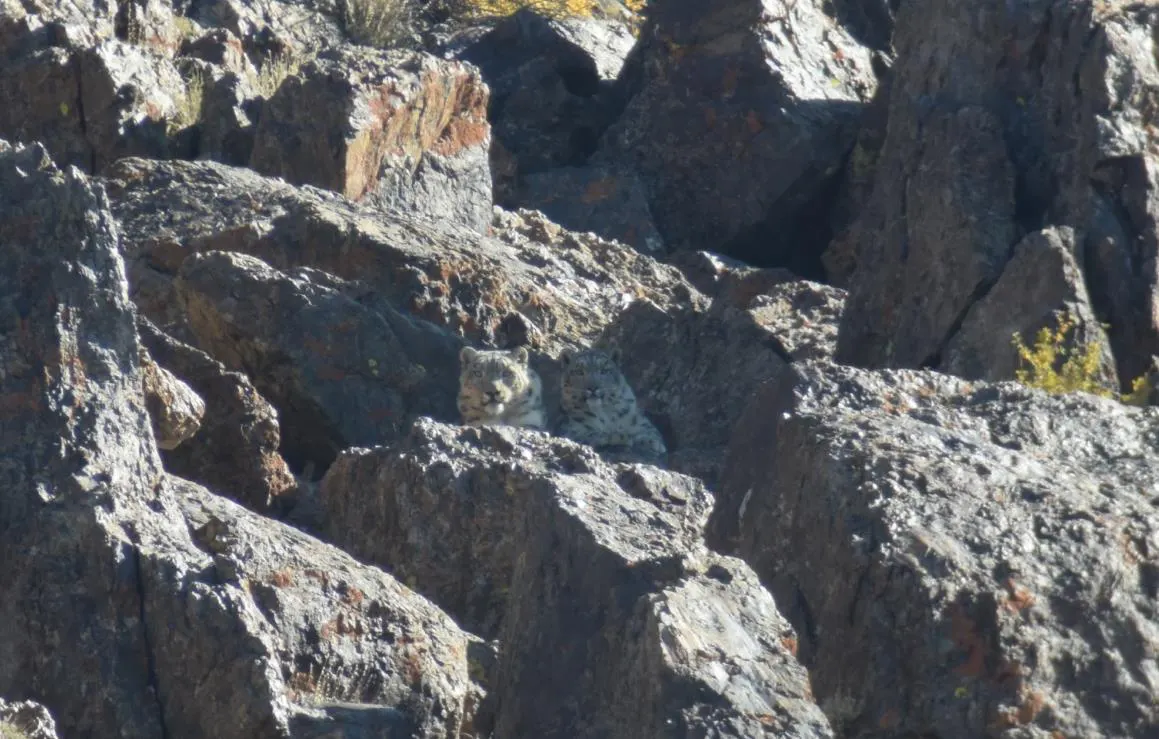
Snow Leopard: Five sightings, probably of the same animal, including two occasions with two animals together (probably a mother with her sub-adult cub from last year). Our first leopard was found within half an hour of searching on the very first afternoon!
Pallas’s Cat: Three live sightings, including one just 100 metres from the campsite (plus one sad roadkill on the way to Dalanzadgad).
Beech Marten & Steppe Polecat: Two very close, playful Beech Marten encounters and a Steppe Polecat apparently “hunting” together with a Red Fox.
Mongolian & Goitered Gazelle: Hundreds of very skittish Mongolian Gazelles and a few small groups of Goitered (Black-tailed) Gazelles.
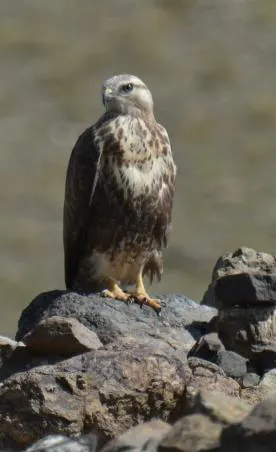
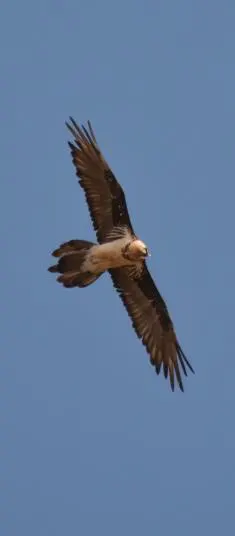
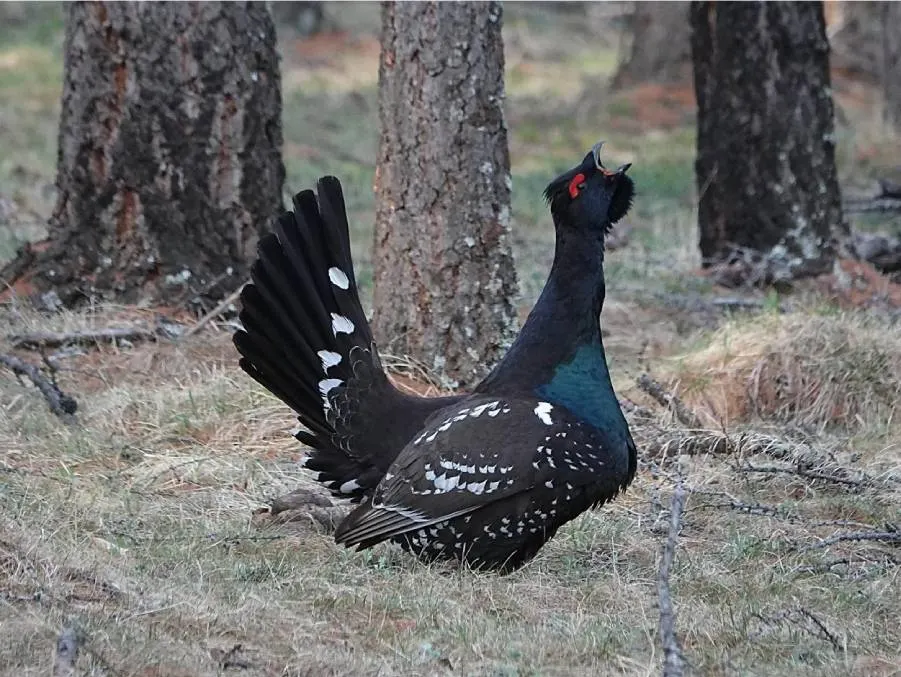
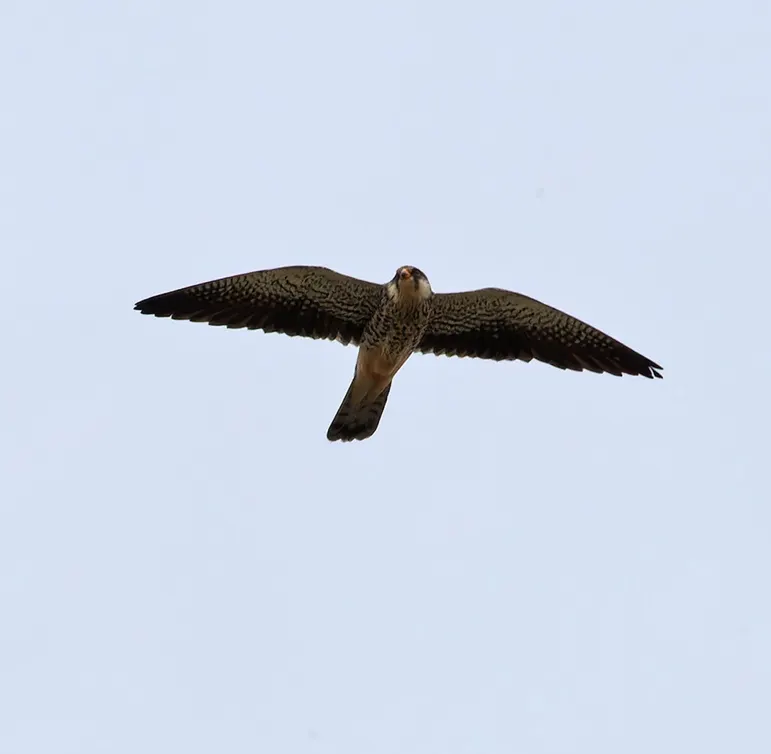
A good selection of birds including: Black Stork, Eurasian Spoonbill, Lammergeier, Himalayan Griffon, Cinereous Vulture, Steppe Eagle, Saker Falcon, Eurasian Eagle-Owl, Snowcock and Wallcreeper.
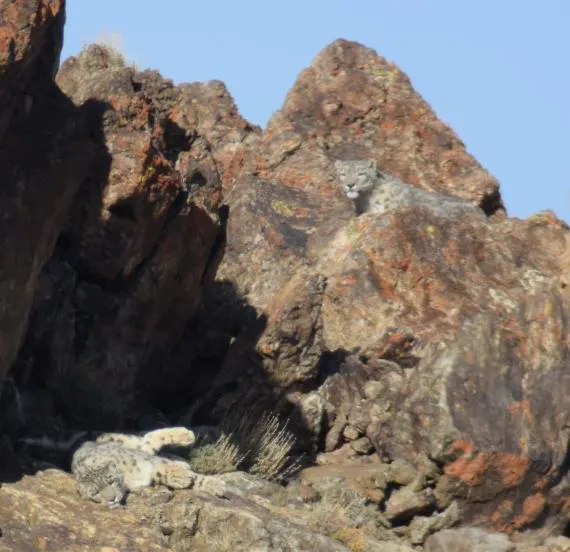
Two Snow Leopards in one view!
Tour Summary
This trip, organised by Tum-Eco Tour, was all about finding Snow Leopard in the mountains of the South Gobi, with Pallas’s Cat as the second target animal. We stayed in comfortable gers at a remote base camp, supported by a wonderful local team who looked after us with warmth, humour and very good food, even in primitive conditions.
Mongolian people are very good at changing their minds, not once but all the time, and there is another sense of time in Mongolia. Plans changed daily, but we soon got used to it and every change seemed to bring a new surprise. Despite lots of climbing, walking and spotlighting, we were rewarded with some of the best wildlife and nature moments we have ever had.
Was the tour a success?
Definitely. We saw Snow Leopard on five occasions, twice with two animals in the same view, and watched Pallas’s Cat three times, an animal that proved much harder to find than we had anticipated.
Ulaanbaatar (UB) to Dalanzadgad (DZ)
After an exciting flight from Amsterdam to Moscow (including an aborted landing) and a delayed connection, we arrived early in the morning of the 6th in Ulaanbaatar, where Tumen and Oyunaa were waiting for us. They took us on the 8 hour, 600 km drive through the Gobi desert to their hometown of Dalanzadgad.
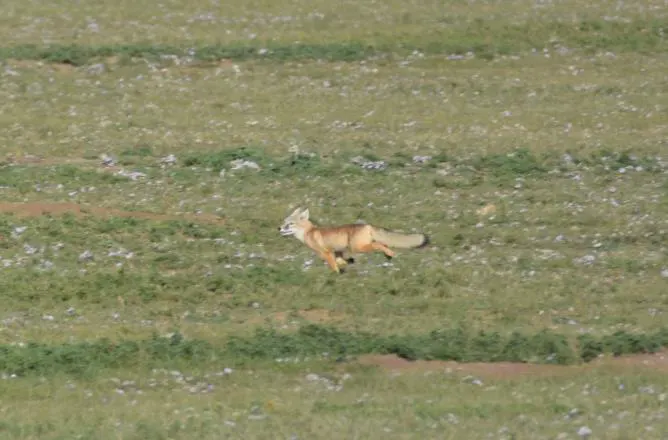
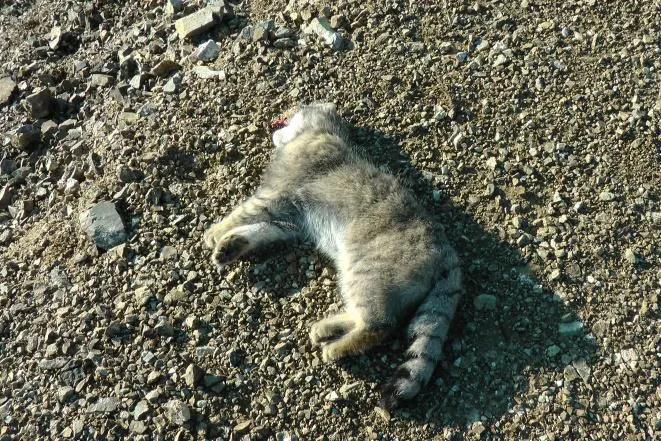
En route we spotted a vulture near a roadkill. On closer inspection the roadkill turned out to be a young Pallas’s Cat, one of our target animals. Further down the road, however, a Corsac Fox was alive and kicking. Spotting the many raptors and vultures kept us awake during the monotonous drive (Tumen drove very safely) and we wondered where the sheep, goats, horses and domestic camels could find water and enough food in such a desolate landscape.
A young Pallas’s Cat (roadkill) and a Corsac Fox, alive and kicking
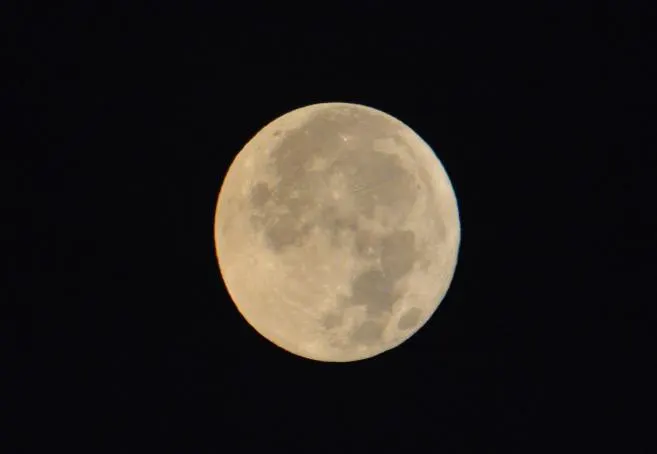
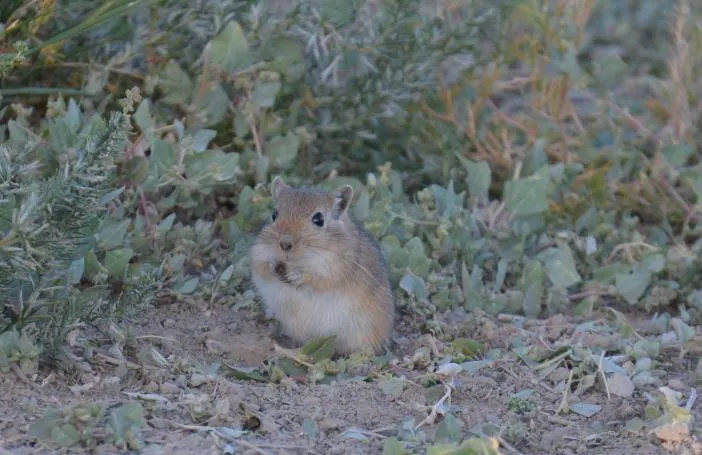
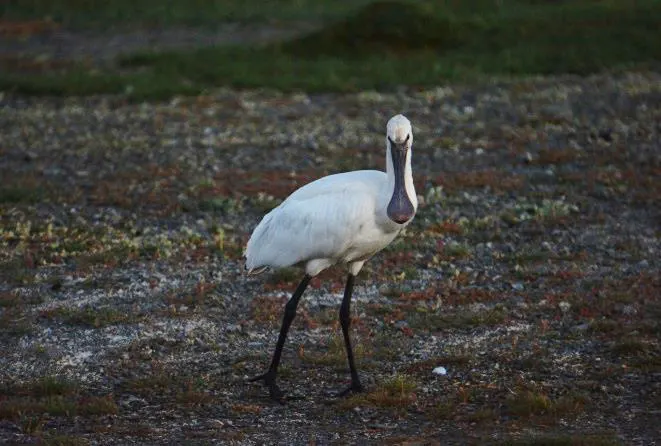
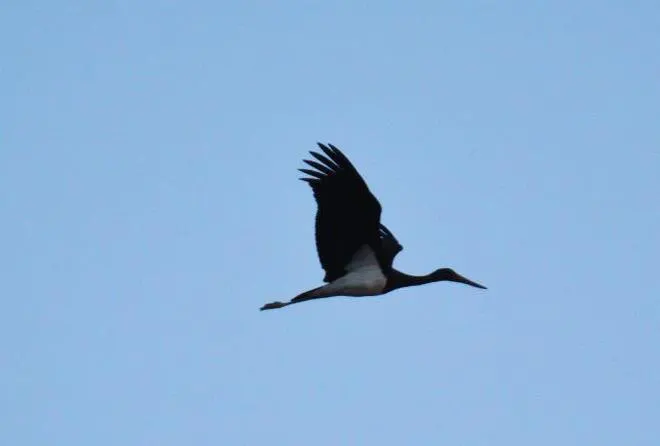
We arrived late afternoon in Dalanzadgad and after dinner took a short walk to the water behind Tumen and Oyunaa’s house, where we saw Mongolian Gerbils and a close Eurasian Spoonbill. Two Black Storks flew over, much to Tumen’s surprise. A good start! After a refreshing shower we went to bed under a full moon.
Mongolian Gerbil, a full moon, Eurasian Spoonbill and Black Stork
The Mountains & Base Camp
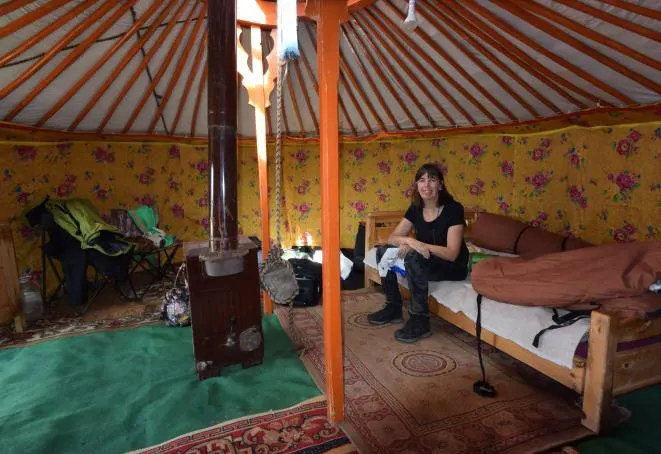
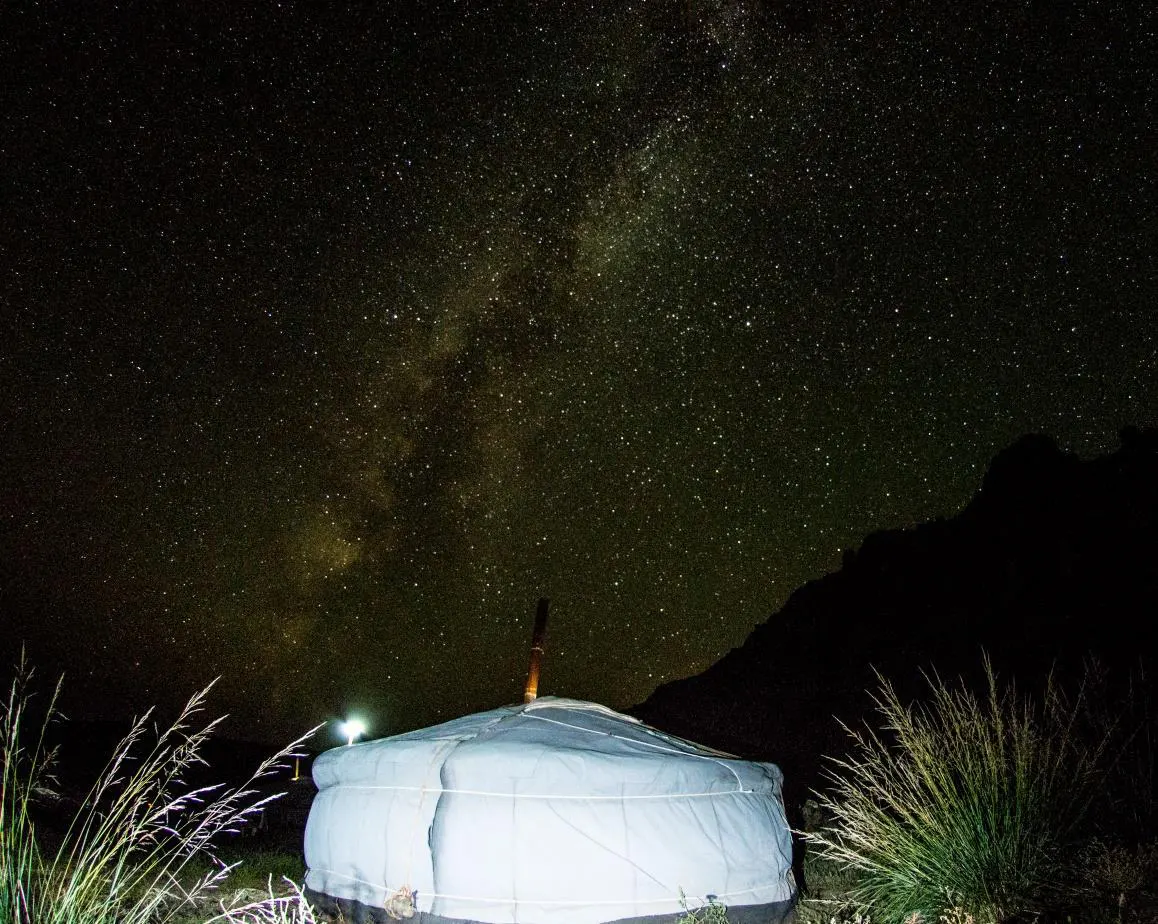
The next morning, after breakfast, we left in a Toyota Land Cruiser for our campsite. After 3.5 hours heading south on dirt tracks or no roads whatsoever, we arrived. The team had put up a ger for us that proved very comfortable and spacious, with a bed, table and chairs, washing basin and even a stove (which we used once on a chilly evening).
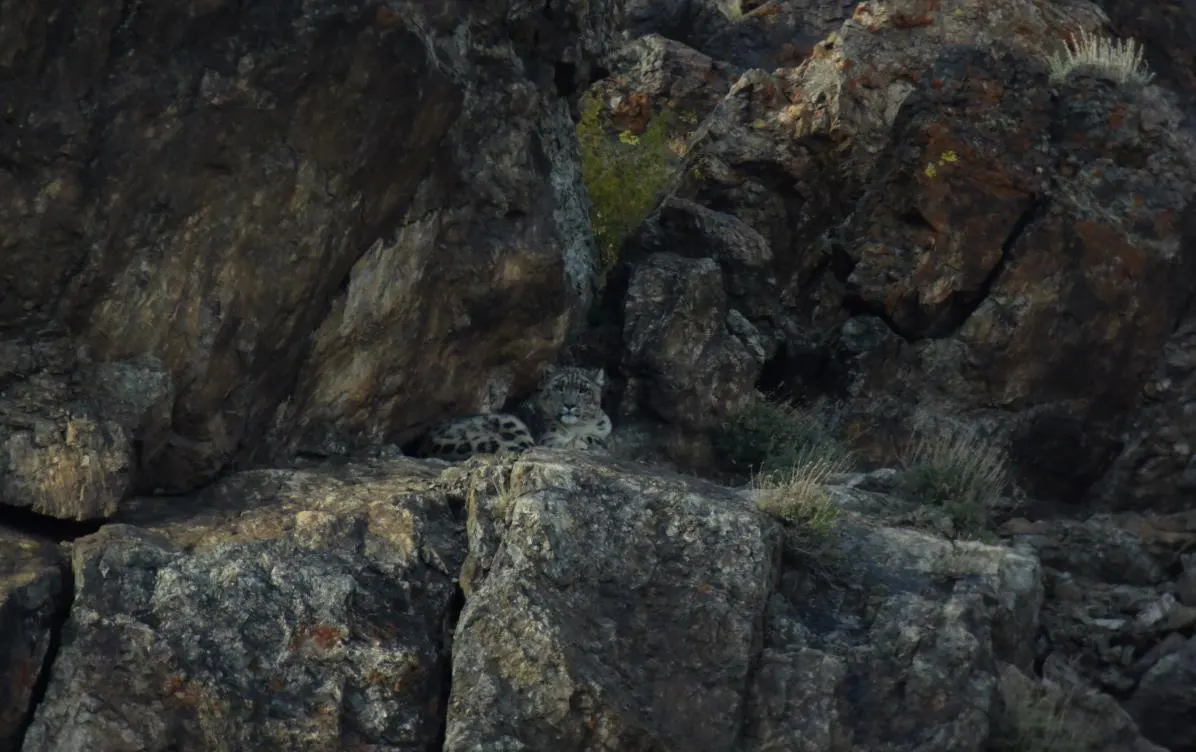
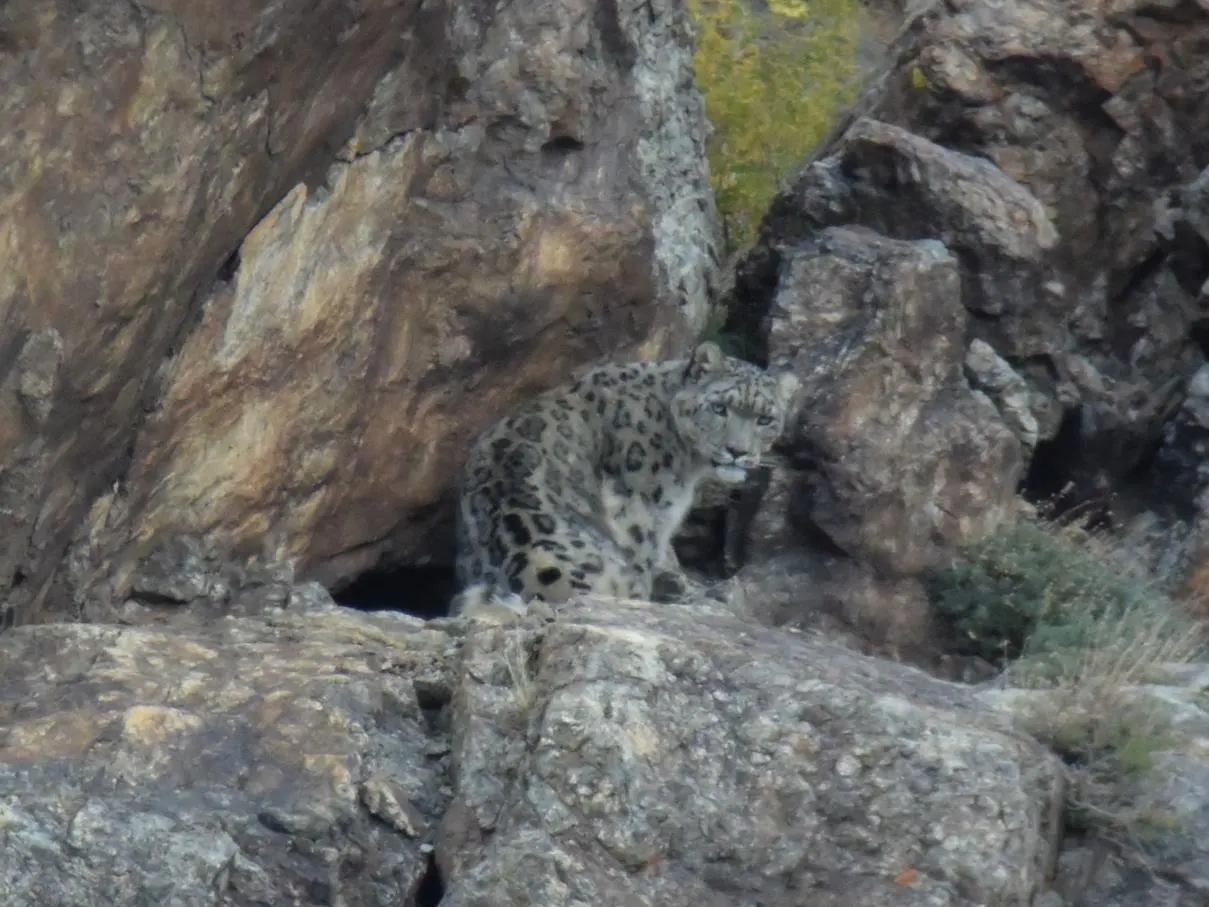
In the afternoon we drove to a mountain range where a Snow Leopard had been seen before and, sure enough, within the first half hour of searching we found what we came for: a magnificent Snow Leopard! Tumen suggested going a little closer, which meant climbing up the mountain, the first of many climbs. We had prolonged views of the cat lying on a high, steep, rocky mountain. He noticed us but seemed undisturbed and displayed typical cat behaviour: sleeping a lot, yawning from time to time and turning until he was comfortable enough to sleep a bit more. As it was getting dark, Tumen wanted to go back, telling us we would have more opportunities. Back at camp we saw the first of many Red Foxes.
A perfect camouflage: our first Snow Leopard
Our comfortable Ger and a Red Fox at camp
Horse Branding & Searching for Cats
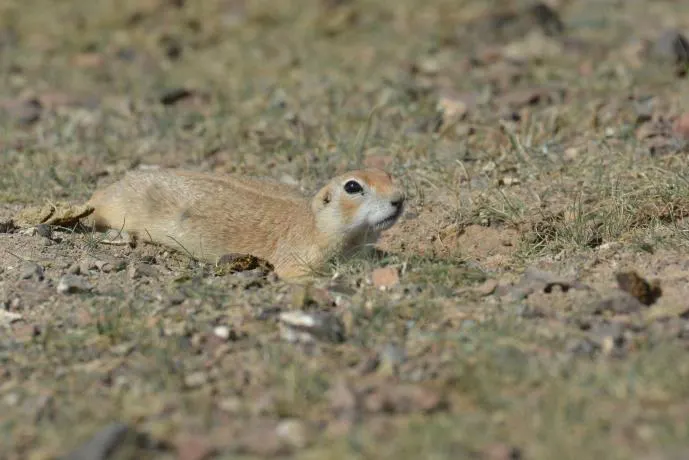
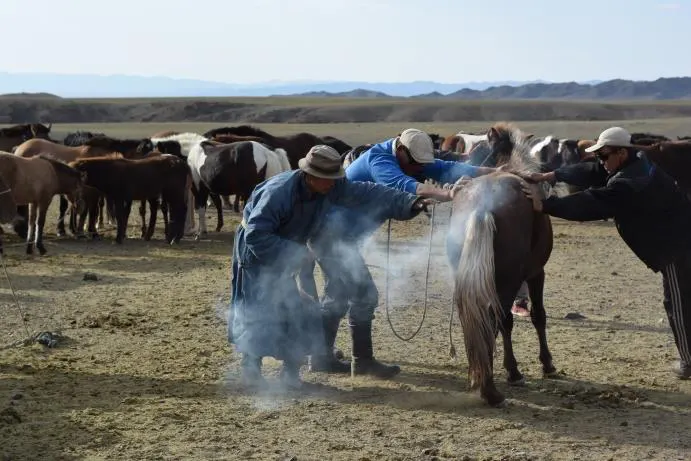
The next day we planned to return to the same spot but our guide had other plans. There was a festivity at the place of horseman Boldoo and Tumen wanted to say hello. It was not going to take long, but in the end we stayed all day. Not that we got bored: the festivities included branding young horses after catching them with a lasso, milking the mares and even riding a semi-wild horse! We were invited into their ger and offered fermented horsemilk, Mongolian and Russian vodka and Mongolian barbecue of goat meat. All the neighbours showed up in traditional clothing and helped with the catching and branding. We felt as if we had been catapulted into an episode of National Geographic. We also had a close view of a Pallid Ground Squirrel, but no Snow Leopard that day, nor for the next 9 days, despite testimonies of leopard attacks on goats and sheep everywhere we went.
Pallid Ground Squirrel and horse branding at Boldoo’s ger
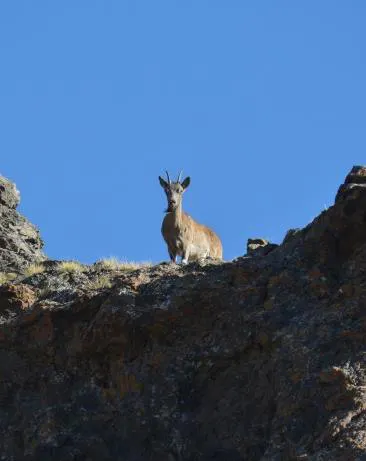
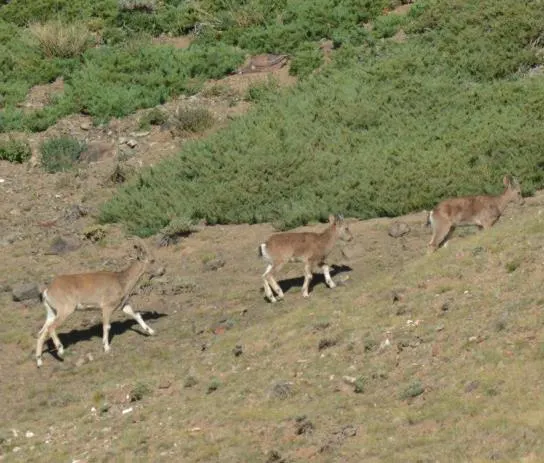
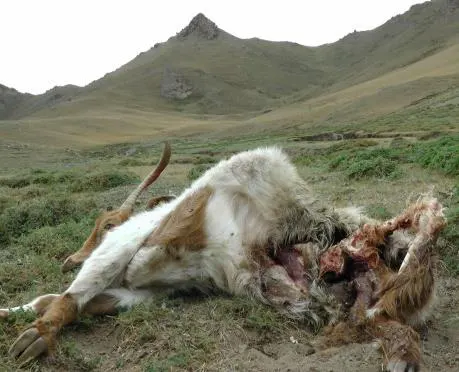
The following days we scanned different areas. One day we came across a half-eaten goat, apparently killed two nights earlier by a Snow Leopard. It became very clear that these nomadic people are, at present, keeping this Snow Leopard population alive with their livestock. Everywhere we heard the same stories, and we witnessed an attack first hand on one of our last nights. One owner had lost 24 animals to the Snow Leopard last winter. We did see Ibex, but their numbers are probably not high enough to maintain a healthy Snow Leopard population. Tumen is positive, however, because there is now a ban on hunting, so numbers of prey animals should go up.
Siberian Ibex and the half-eaten goat killed by a Snow Leopard
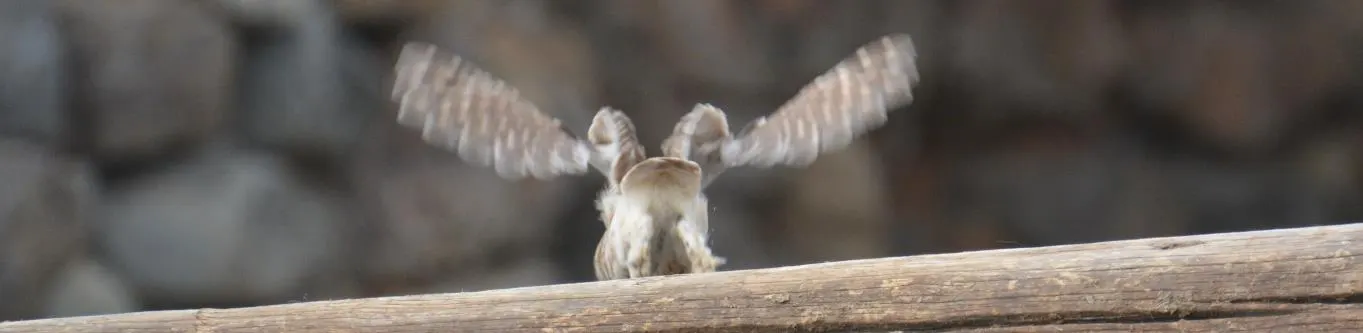
The first evenings we were put to sleep by the screeching of Eurasian Eagle-Owls, which were surprisingly common in the area, and we had some great views of this giant owl.
Pallas’s Cat
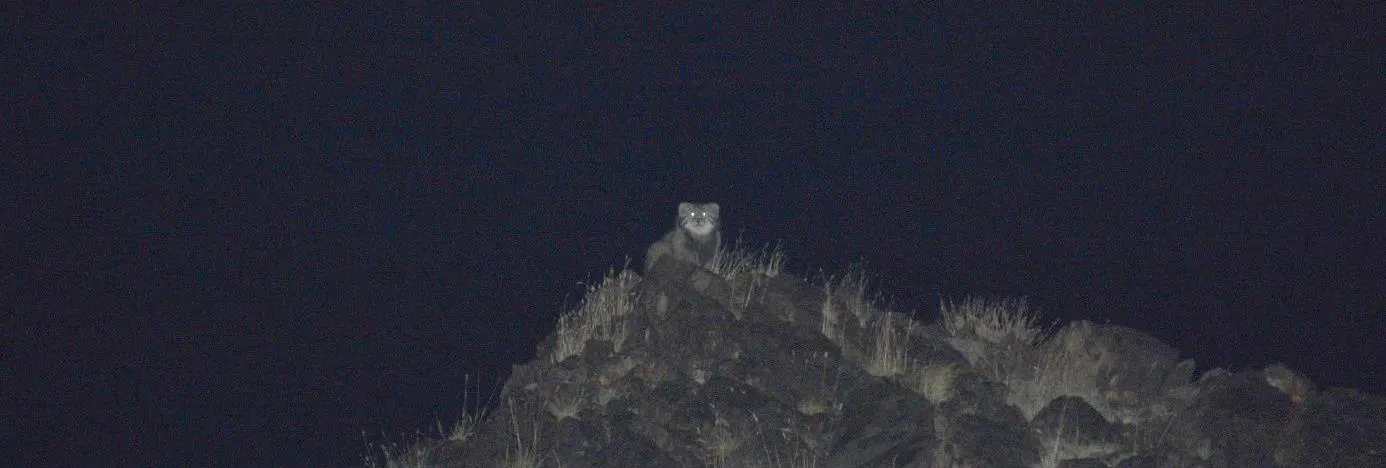
Tumen tried very hard to show us a Pallas’s Cat, which proved more difficult than anticipated. We drove to different hotspots and even took a local herdsman along who had seen a Pallas’s Cat with three cubs almost every day last summer, but with no sightings, only some footprints. We finally saw one on the 13th. It took a long drive to reach the area so we took a packed dinner and ate it at a campfire provided by Tumen. Then we started spotlighting and found the eyeshine we had hoped for: a Pallas’s Cat! These cats are said to often lie down when spotted and can be approached very closely, but this one kept moving higher and higher up the mountain and we followed as best we could on the steep slope in pitch darkness. Still, we were very happy to see this odd-looking cat alive this time.
Pallas’s Cat at night
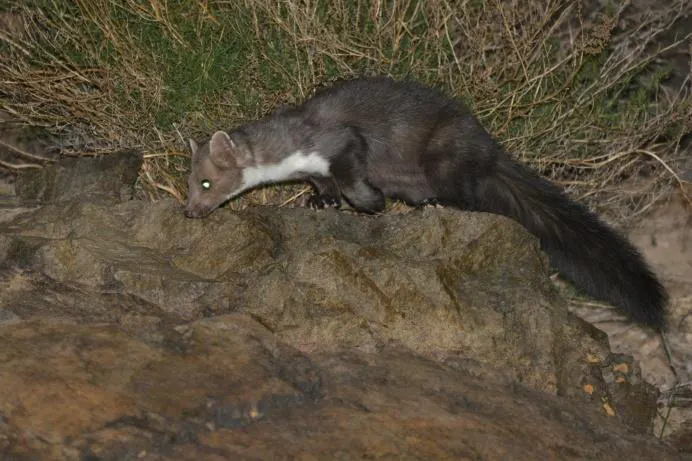
On the same night we had our second very close sighting of a Beech Marten (two different animals, as they were far apart). We could observe the playful nature of these animals and admired how agile they are on steep rocks. Both sightings were close to water and on steep rocks, maybe a coincidence, but Tumen said they like to be near water.
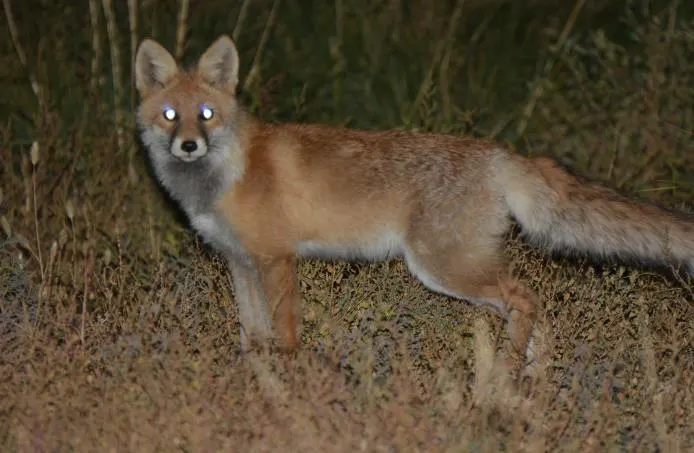
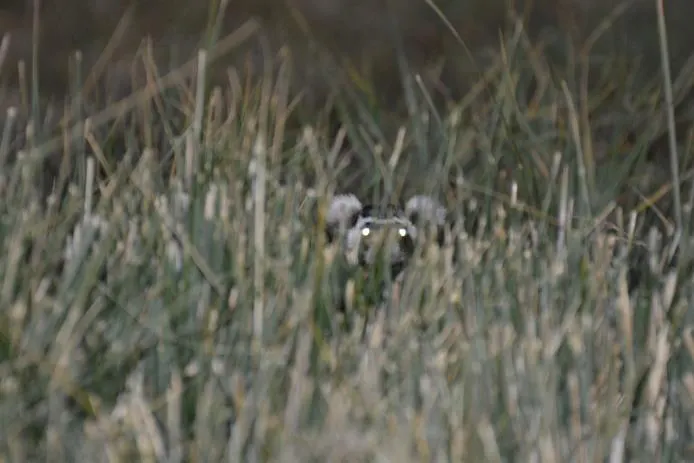
On the way back to the campsite across the plains we spotted two pairs of eyeshine. At first we thought they were two Red Foxes (we saw 8 in total that night) but closer inspection revealed a strange cooperation between a Red Fox and a Steppe Polecat: it looked as if they were hunting together! The polecat went into hiding very quickly but kept looking at us through the grass.
Beech Marten and Steppe Polecat
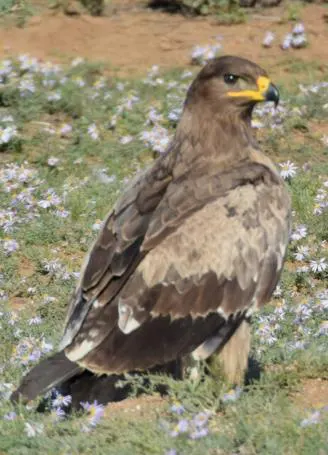
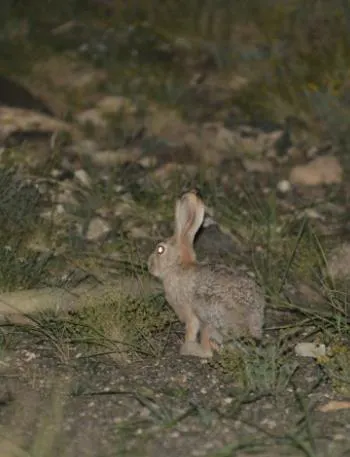
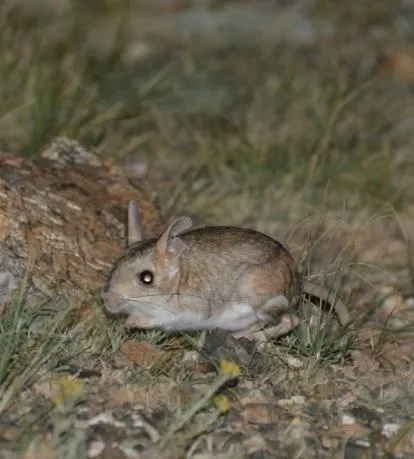
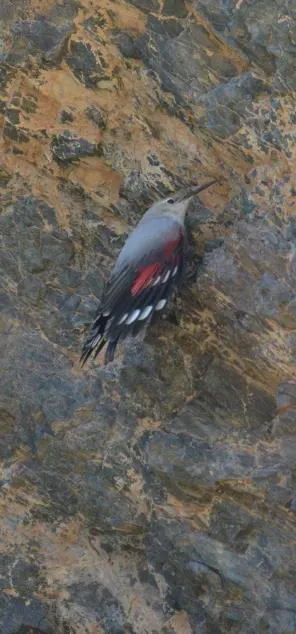
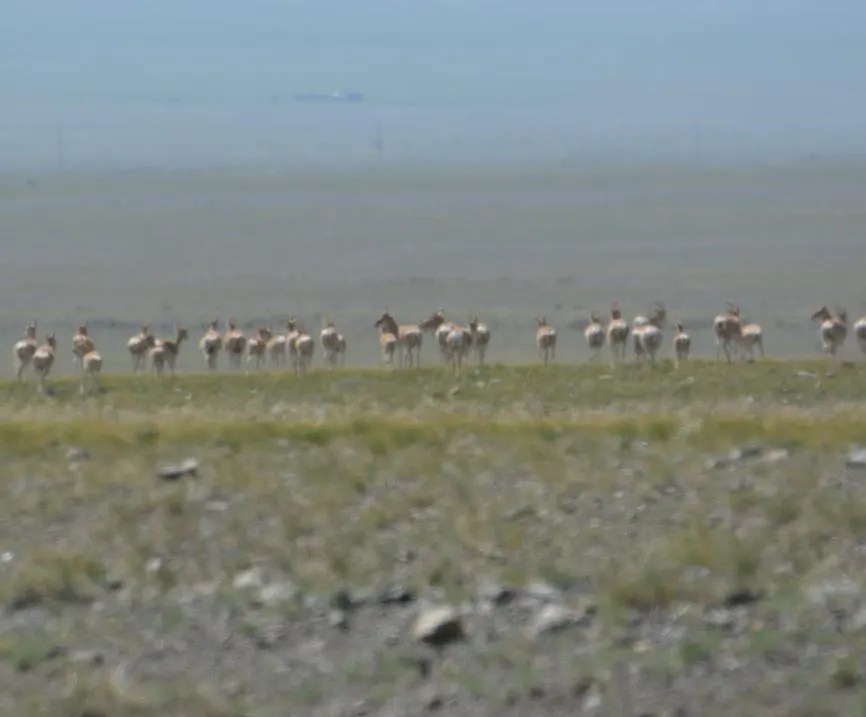
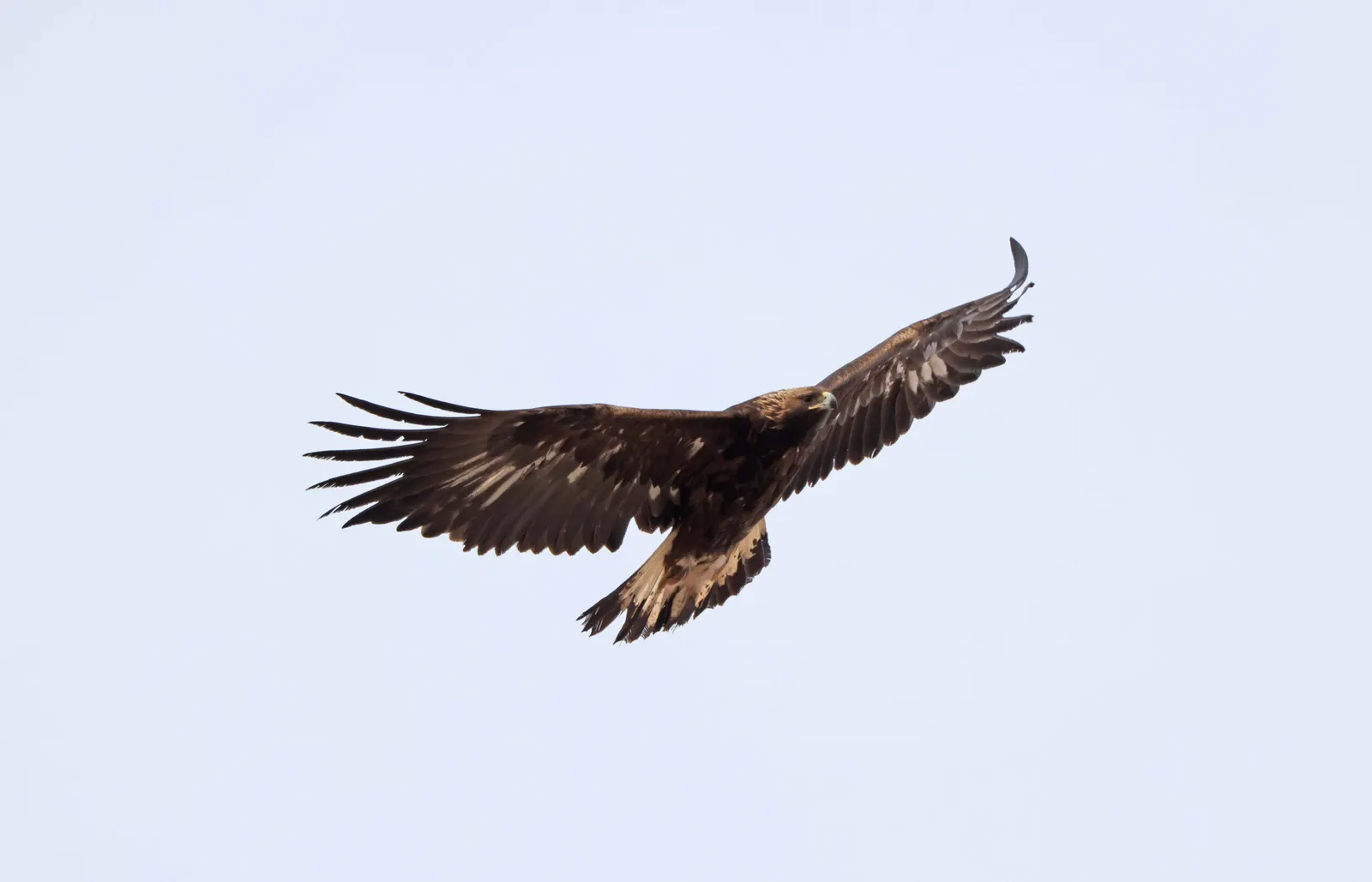
During the following days we scanned the hills and plains, seeing hundreds of very skittish Mongolian Gazelles and a few, even more skittish, Goitered Gazelles, plus many raptors: Golden Eagle, Steppe Eagle, Saker Falcon, buzzards, Cinereous Vulture, Lammergeier, Snowcock, Hill Pigeon and even a Wallcreeper (first sighting in this area). After dinner we spotlighted and found many jerboas, a Tolai Hare twice, many Red Foxes and, once, two pairs of eyes that ran off very quickly. Tumen and Ganaa suggested they could have been wolves, but we cannot confirm this.
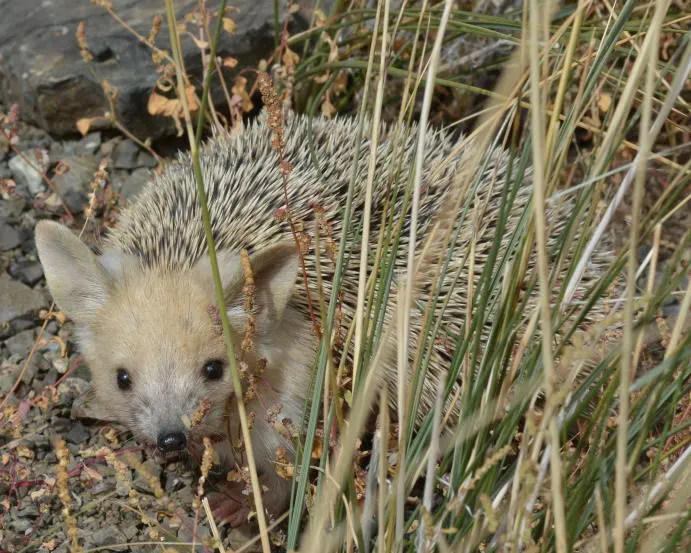
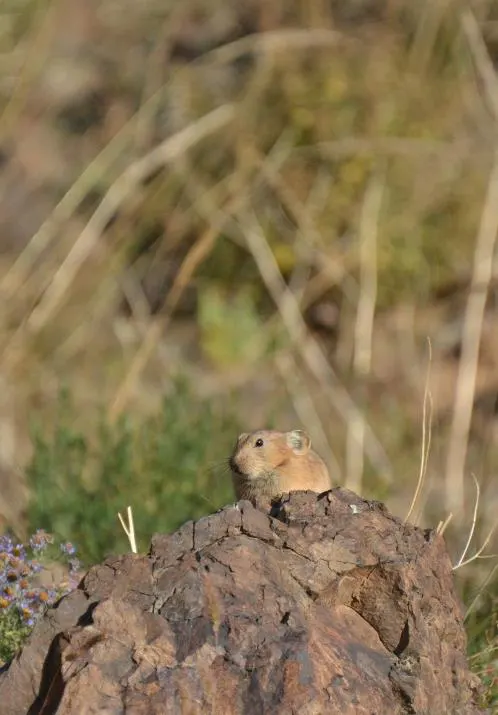
Steppe Eagle, Long-legged Buzzard, Tolai Hare, Balikun Jerboa, Lammergeier, Long-eared Hedgehog, Wallcreeper, Pika, Mongolian Gazelles and Eurasian Eagle-Owl
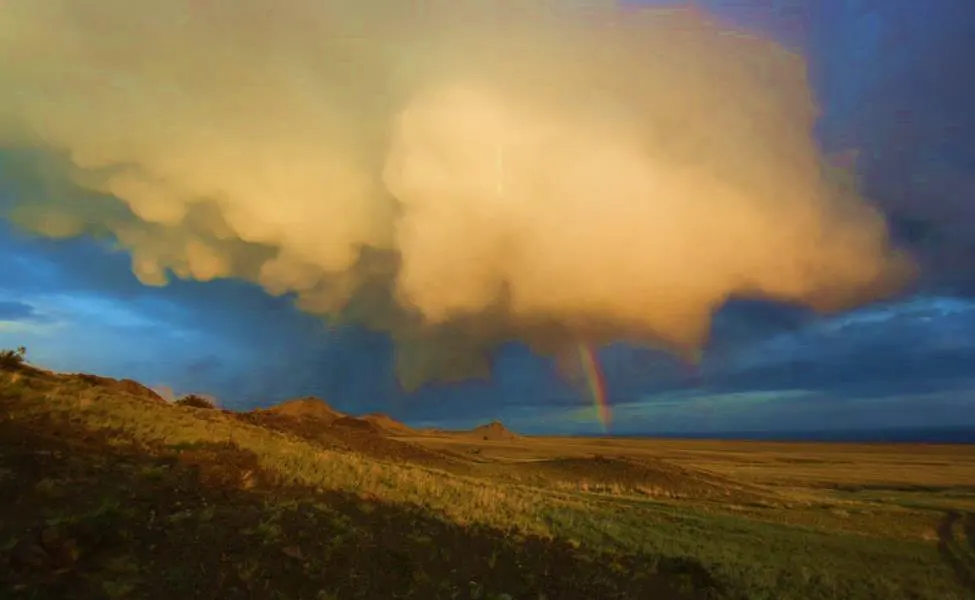
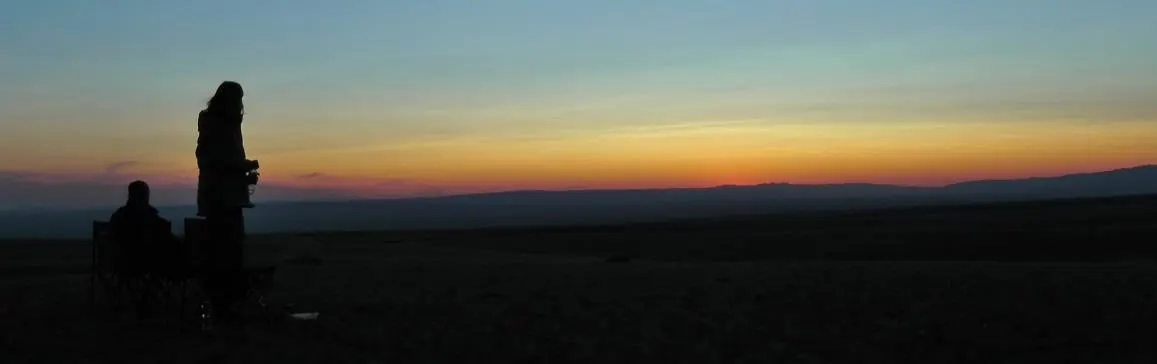
In between all of that we were “subjected” to views like this
The 16th and 17th: Snow Leopards at Last
One of my best nature walks ever was on the 16th. Ganaa and I left at 7 in the morning for the area where the leopard had been seen before: a 5-10 minute drive, then a rather strenuous walk uphill. Very soon we came across very fresh tracks of a Snow Leopard, fresh because they had not been there the day before. The idea that a Snow Leopard had walked here only hours earlier was exhilarating. We followed pugmarks, scratch marks and even still-wet urine markings for 20 minutes until we lost the trail where the track splits. We did not see the leopard that morning, but the feeling of anticipation will stay with me forever. On the way back we saw a Pallas’s Cat appear on a rock in the sunlight, but it was gone before I could take any pictures.
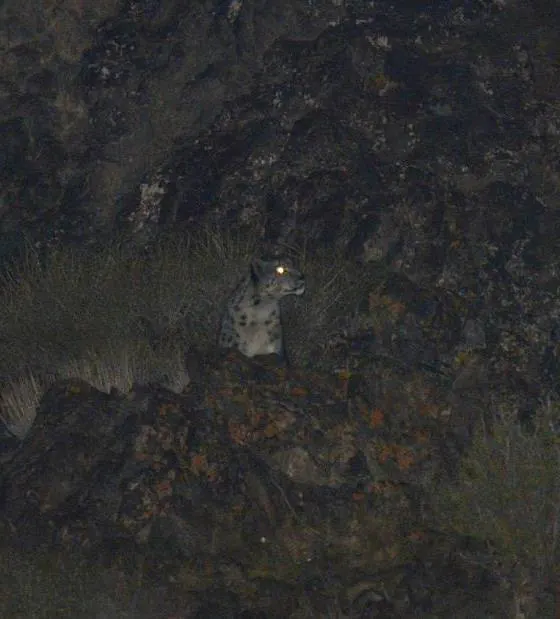
Later that day, after dinner (Oyunaa managed to prepare almost restaurant-level dishes in primitive conditions), my wife and I did some spotlighting on our own behind the gers and soon found another Pallas’s Cat, no more than 100 metres from the campsite, after all those days of searching everywhere else. Then we heard people running towards us: Ganaa and Badgal, totally out of breath. They had received a call from Tsenelmaa and Chuka that a Snow Leopard had been spotted near their ger. The evening before, a similar call had reported two Snow Leopards, but the only proof when we arrived was their dogs barking like crazy. Again Ganaa drove like a rally pilot to the scene. The locals were not sure where the leopard was and everybody was finding eyeshine everywhere; goats, sheep and even foxes were mistaken for the Snow Leopard, which made for a chaotic scene. Ganaa and I turned a corner and found the Snow Leopard a few metres higher up the hill, hiding behind a rock. It soon turned away and sneaked off like a true ghost of the mountains. What an amazing evening: a close Pallas’s Cat and a very close Snow Leopard only 2 hours apart.
Pallas’s Cat and Snow Leopard, both at night on the 16th
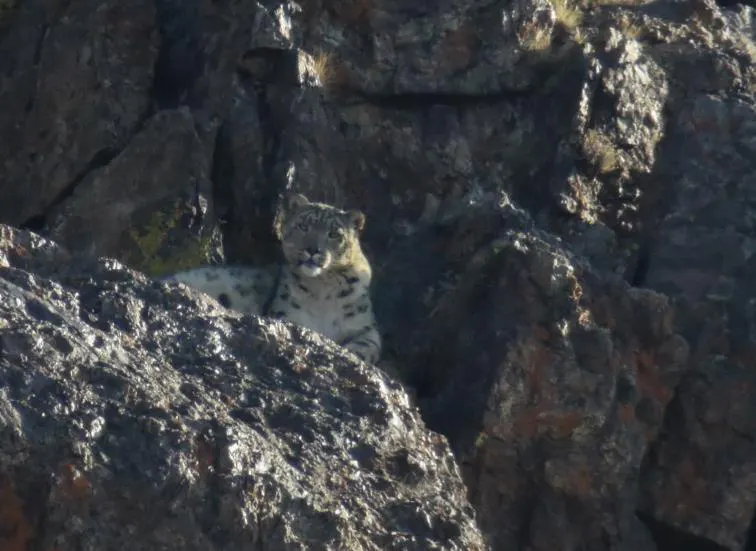
The next day we made the same morning walk and this time we did find the Snow Leopard, again. But even better things were to come in the afternoon. After enduring the ascent for a second time that day, we were welcomed once more by the leopard, on the appointment for the 4th time. After watching its blood-stained face and paws (proof of a kill the night before) for a few hours through my windswept scope, in very windy conditions and crouched down to avoid spooking it, suddenly another Snow Leopard appeared in my scope. Two Snow Leopards in one view! I couldn’t believe my eyes. The local people were right: there had been two Snow Leopards hunting their goats.
Snow Leopards in the rocks on the 17th
On our last day we did an ultimate morning scan of the same area and, unbelievably, found the two leopards again. When I saw them they were panting heavily. Ganaa showed me pictures he had taken minutes before of them walking the slopes. I dearly would have wanted to see this for myself, but I missed it because I hadn’t been able to keep up with Ganaa on the way up. Nevertheless it was a beautiful way to end our trip to Mongolia.
By the time I got back to camp my wife had packed our things and we were ready to go. Everything was loaded into the jeeps, the gers were dismantled and stowed on Ganaa’s old Russian truck, and nothing was left, as if we had never been there.
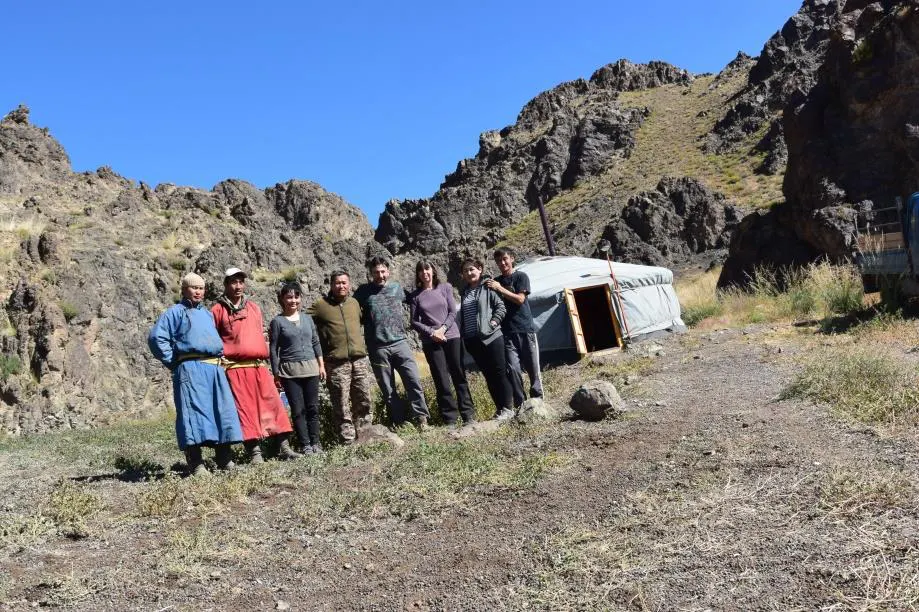
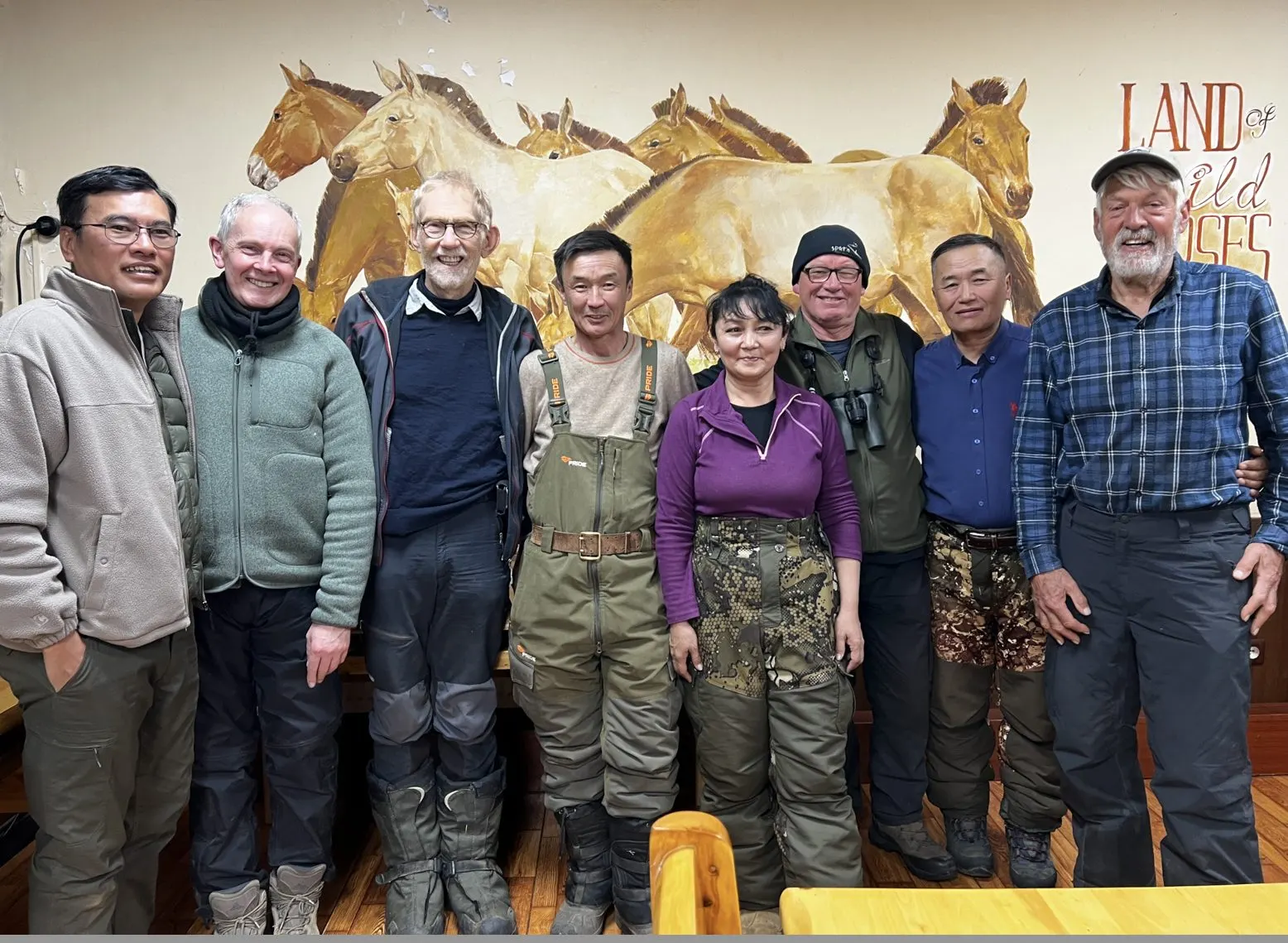
Left to right: Boldoo, Badgal, Oyunaa, Tumen, Arne, Edith, Bujmaa, Ganaa. To everyone who helped show us 2 Snow Leopards: баярлалаа!
We recorded a total of 17 species of mammal and 29 birds on this tour (many more birds were seen, but only those identified are listed).
All photos were taken by Arne & Edith.
Summary of daily itinerary
DAY
DATE
Short itinerary & highlights
1
Wed 6th Sep
Arrival UB airport – Drive to Dalanzadgad (600 km, 8 hrs)
Highlights: Pallas’s Cat (roadkill), Corsac Fox, Mongolian Gerbil, Eurasian Spoonbill, Black Stork.
Overnight Tumen & Oyunaa’s home, Dalanzadgad
2
Thu 7th Sep
DZ to Mountain Base Camp (3.5 hrs)
Highlights: Snow Leopard found within half an hour of searching! Red Fox.
Overnight Ger Base Camp
3
Fri 8th Sep
Horse branding festivity at Boldoo’s ger
Highlights: Pallid Ground Squirrel, traditional Mongolian hospitality.
Overnight Ger Base Camp
4-7
Sat 9th – Tue 12th Sep
Scanning different areas for Snow Leopard and Pallas’s Cat
Highlights: Half-eaten goat killed by Snow Leopard, Siberian Ibex, Eurasian Eagle-Owl, Beech Marten, Mongolian Gazelle. Pallas’s Cat footprints.
Overnight Ger Base Camp
8
Wed 13th Sep
Long drive to Pallas’s Cat area – packed dinner and spotlighting
Highlights: Pallas’s Cat, second Beech Marten, Red Fox with Steppe Polecat.
Overnight Ger Base Camp
9-10
Thu 14th – Fri 15th Sep
Hills and plains by day, spotlighting by night
Highlights: Mongolian & Goitered Gazelle, Golden & Steppe Eagle, Saker Falcon, Lammergeier, Wallcreeper, Tolai Hare, jerboas, many Red Foxes.
Overnight Ger Base Camp
11
Sat 16th Sep
Morning tracking walk, evening spotlighting
Highlights: Fresh Snow Leopard tracks, Pallas’s Cat (morning & evening), Snow Leopard at night near herders’ ger.
Overnight Ger Base Camp
12
Sun 17th Sep
Morning and afternoon ascents
Highlights: Snow Leopard with blood-stained face and paws, then a second Snow Leopard: two in one view!
Overnight Ger Base Camp
13-15
Mon 18th – Wed 20th Sep
Final morning scan – camp dismantled – return journey
Highlights: Both Snow Leopards again, panting heavily after walking the slopes.
Checklist
The mammal and bird lists below include only the species the guests identified with certainty. Many more birds and some small rodents were seen but could not be identified for sure.
Total number of mammals recorded: 17 species
Snow Leopard Panthera uncia
Five sightings, probably of the same animal, and two occasions with two animals together (probably a mother with a male sub-adult cub from last year).
Pallas’s Cat Otocolobus manul
Three live sightings (plus one dead on the road).
Long-eared Hedgehog Hemiechinus auritus
One animal.
Tolai Hare Lepus tolai
Two sightings while spotlighting.
Daurian Pika Ochotona dauurica
Many.
Pallas’s Pika Ochotona pallasi
Many.
Pallid Ground Squirrel Spermophilus pallidicauda
Several, including a close view at Boldoo’s ger.
Grey Hamster Cricetulus migratorius
One.
Mongolian Gerbil Meriones unguiculatus
A few, behind Tumen and Oyunaa’s house in Dalanzadgad.
Balikun Jerboa Allactaga balikunica
Several while spotlighting.
Corsac Fox Vulpes corsac
One on the drive to Dalanzadgad.
Red Fox Vulpes vulpes
More than 10, including 8 in a single night.
Steppe Polecat Mustela eversmanii
One, apparently hunting together with a Red Fox.
Beech Marten Martes foina
Two very close sightings, both near water and on steep rocks.
Goitered (Black-tailed) Gazelle Gazella subgutturosa
A few times, in small groups of up to 4 animals.
Mongolian Gazelle Procapra gutturosa
Many, with hundreds of very skittish animals on the steppe.
Siberian (Asiatic) Ibex Capra sibirica
Several.
Total number of birds recorded: 29 species
Black Stork Ciconia nigra
Eurasian Spoonbill Platalea leucorodia
Common Snipe Gallinago gallinago
Eurasian Woodcock Scolopax rusticola
Chukar Partridge Alectoris chukar
Snowcock Tetraogallus sp.
Hill Pigeon Columba rupestris
Lammergeier (Bearded Vulture) Gypaetus barbatus
Cinereous Vulture Aegypius monachus
Himalayan Griffon Gyps himalayensis
Steppe Eagle Aquila nipalensis
Golden Eagle Aquila chrysaetos
Long-legged Buzzard Buteo rufinus
Eurasian Sparrowhawk Accipiter nisus
Saker Falcon Falco cherrug
Eurasian Eagle-Owl Bubo bubo
Surprisingly common in the area, with great views of this giant owl.
Little Owl Athene noctua
Eurasian Magpie Pica pica
Red-billed Chough Pyrrhocorax pyrrhocorax
Rook Corvus frugilegus
Northern Raven Corvus corax
Wallcreeper Tichodroma muraria
First sighting in this area.
White’s Thrush Zoothera aurea
Red-throated Thrush Turdus ruficollis
Black Redstart Phoenicurus ochruros
White Wagtail Motacilla alba
Yellow Wagtail Motacilla flava
Rock Bunting Emberiza cia
Godlewski’s Bunting Emberiza godlewskii
Tum-Eco Tour
1-19, Dalan, Dalanzadgad, Southgobi, Mongolia
Mobile: +976-99074355 / +976-99852645
Website: www.wildlifemongolia.com
Facebook:
Email: tumen106@yahoo.com
First published on wildlifemongolia.com. Text and photos by the report's author.