
Trip reports / June 2014
Mongolia Birding & Wildlife Trip Report – June 2014
Dimitar Petrakiev
Mongolia 12th – 25th June 2014
Day 1 – 12.06 We met in the morning at Chingiz khan airport after our long but spectacular journey over European Russia to Moscow and then over the vast steppes and remote taiga of Siberia. We were greeted by our two drivers – Nagi and Taiwan and our guide for the first day – Bogi and went straight into the driving nightmare of the sprawling Mongolian capital. After short lunch stop at an excellent Indian restaurant in the edge of the city centre, we headed east towards Gun Galuut National Park. On the way we spotted our first Mongolian birds – Pacific swifts, Black-cheeked kites, Amur falcons, Red-billed choughs, Demoiselle cranes, Daurian Jackdaws – some of these birds were going to accompany us almost through the whole trip. At a small pass we stopped to enjoy better views of the Daurian jackdaws, along with some Carrion crows and Ravens. Quick check of the coniferous forest around revealed Black woodpecker trying to make it’s way through a telegraph pole. Arriving at Gun Galuut we saw our first Mongolian larks – what a stunner – this localized member of the Melanocorypha genus is close relative to the more familiar Calandra and Bimaculated lark, but has unmistakable flight with contrasting white wings and rufous plumage. Horned larks of the brandti ssp. were numerous and the first Asian short-toed larks announced their presence with their curly flight songs. At the main lake we had White-winged scooters, Swan geese and some more familiar members of the Anas genus – Gadwall, Wigeon, Mallard, Shoveler, Garganey and Teal. In the next lake we added some waders – Stilts, Avocets, Little ringed plovers, Black-tailed godwits, Wood and Common sandpipers. The pleasant surprise was a single Pacific Golden Plover in the far end. A small party of Mongolian gulls were roosting in a small bay. The light towards the end of the day was perfect and we didn’t want to leave, but we had more distance to negotiate. On the way we added Black vulture and Upland buzzard to our raptor list. In the late afternoon we arrived at Terelj lodge – a lovely Ger camp style lodge located in a picturesque valley at the edge of the famous Terelj national park taiga forest. Before dinner we had great views of Long-tailed ground squirrels and Daurian picas around the camp grounds.
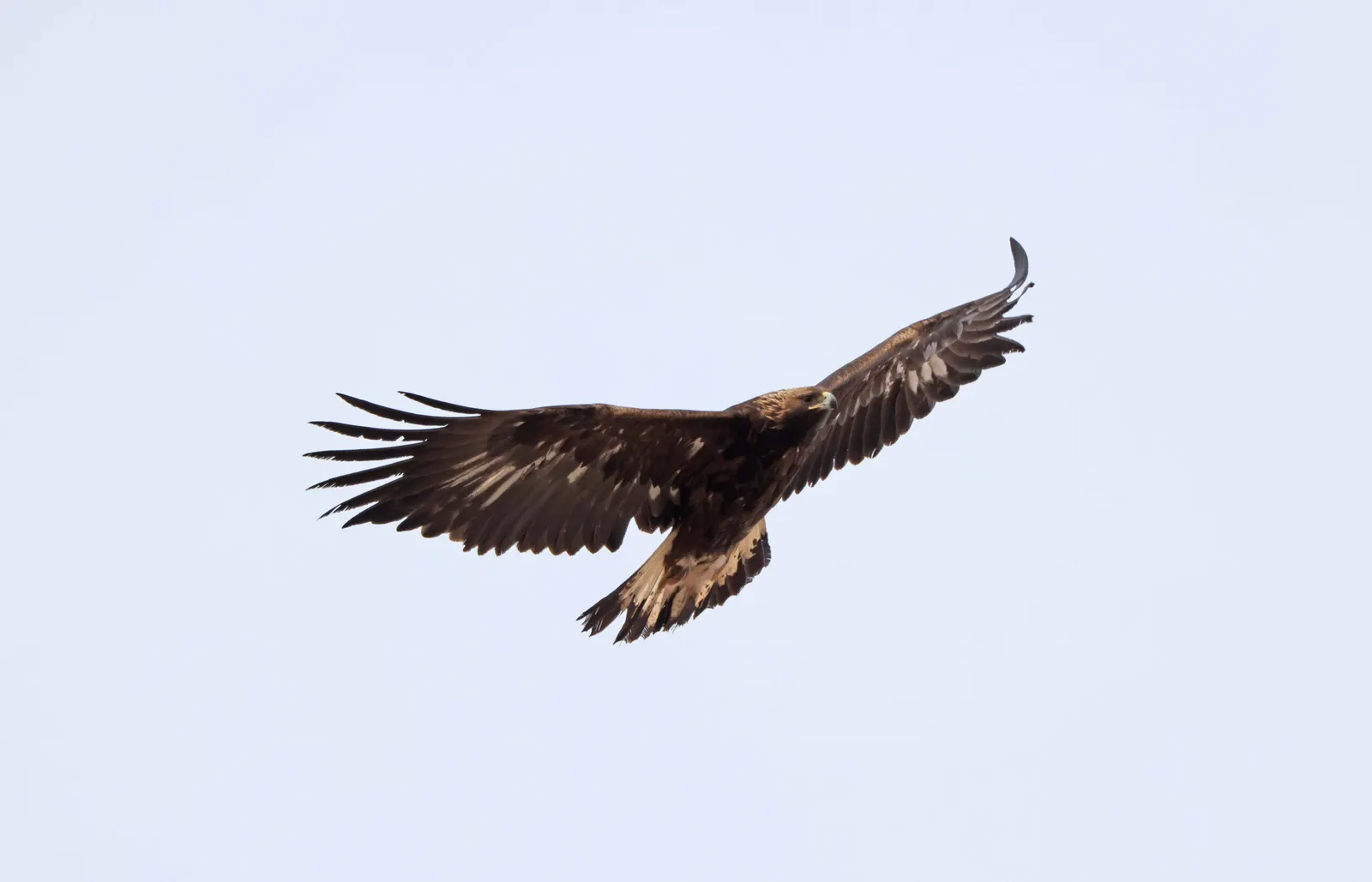
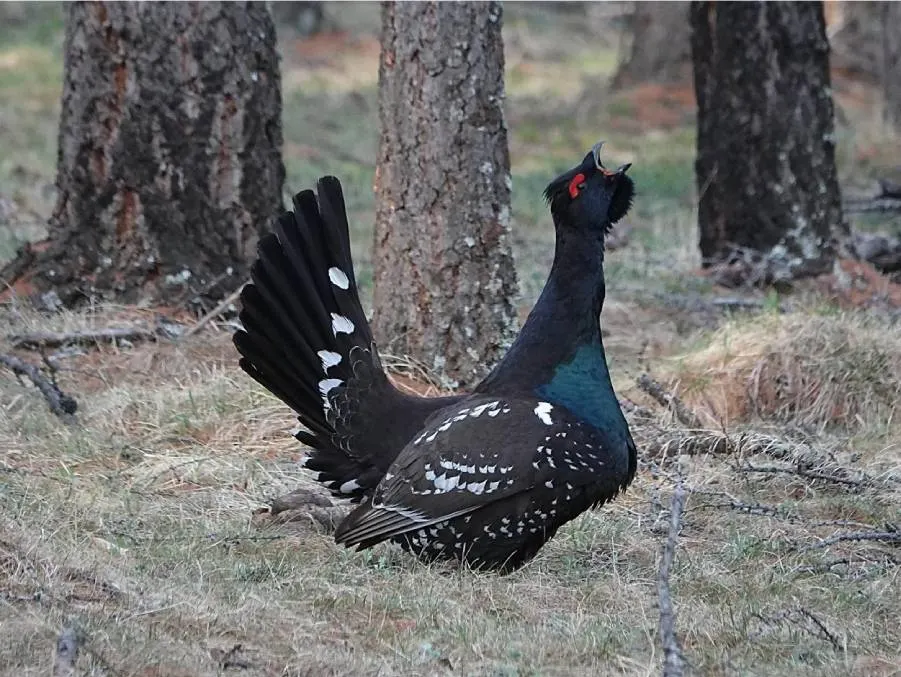
Day 2 – 13.06 Before breakfast we met our local guide Pujee and said goodbye to Bogi. A short walk around the lodge produced several Pine buntings, Common rosefinch, Isabeline and Pied wheatear and a nice Brown accentor singing from the nearby rocks. In the woods we had brief sighting of Grey headed woodpecker, Olivebacked pipit and a Wryneck. After breakfast we assembled the vehicles and headed to the famous Capercaillie Mountain, although we did not put much hope on it as it was way after the lekking has finished for this notoriously difficult to spot birds. On the way one of the vehicles had Grey-headed woodpecker feeding at closed distance and the other a full frame Steppe eagle for photography. The target birds for this area proved to be difficult, as it was long after migration and breeding has finished and most of the birds were already at their breeding grounds in the North or already feeding chicks and therefore being quiet. However we had lovely views of Daurian redstarts, Olive-backed pipits, Nuthatches, Common and Oriental coocoo and our only thrush for the trip – Nauman’s was heard several times. After lunch we checked another area of the taiga were we caught up with Taiga flycatcher, Yellow-browed warbler and a very cute Siberian chipmunk. Both areas that looked good for Chinese bush warbler were checked but with no avail.
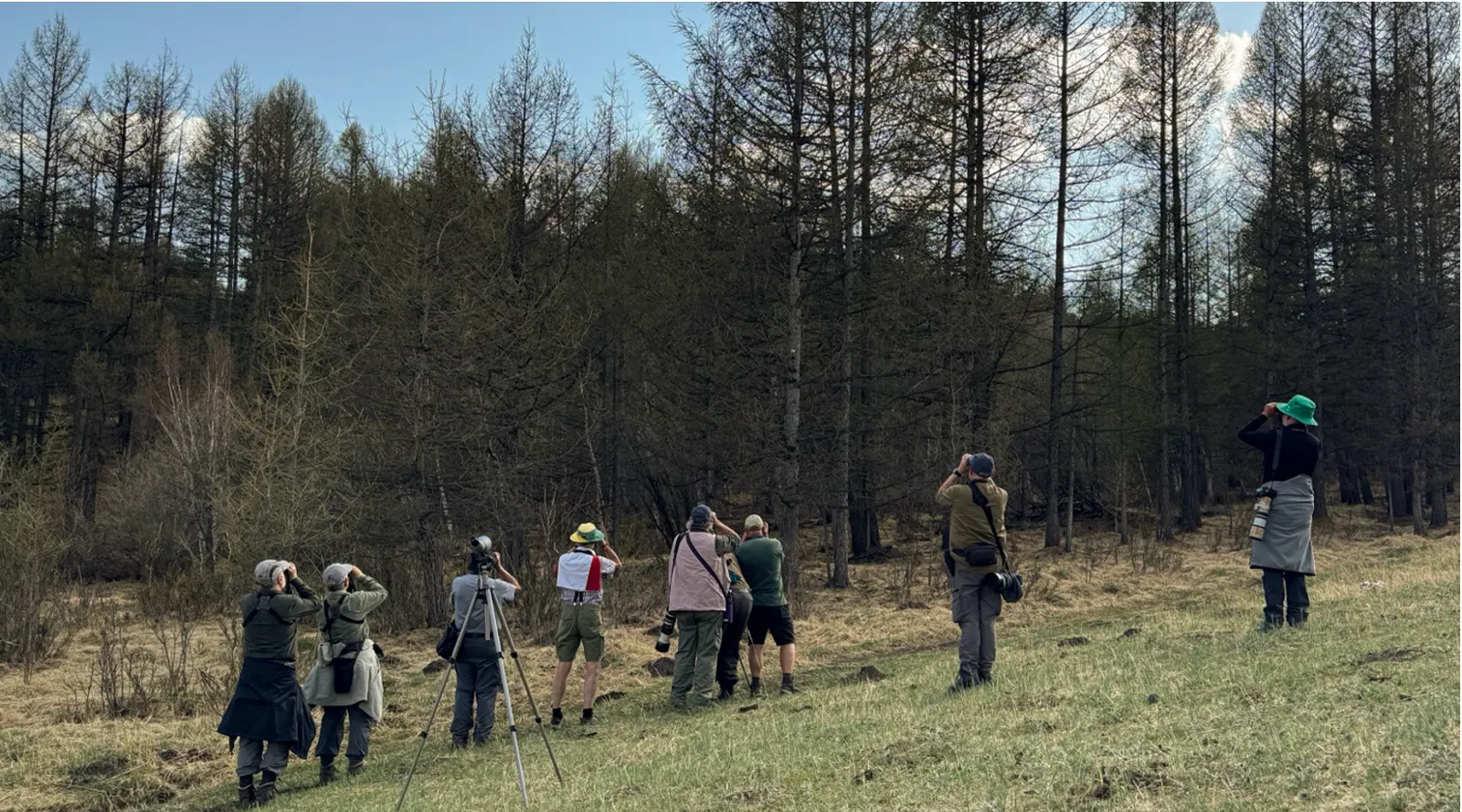
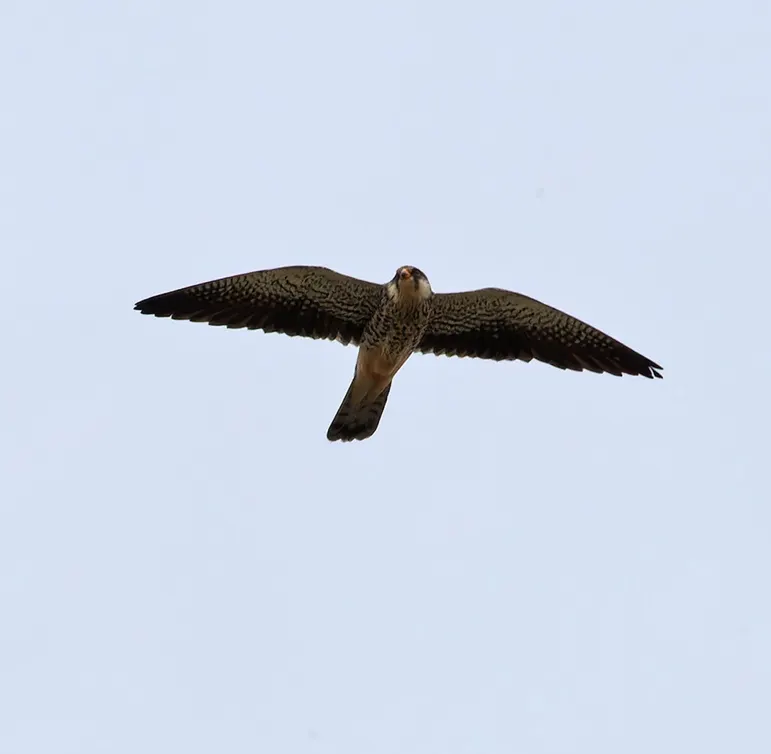
Day 3 – 14.06 Today we were moving southwest towards the steppes of Hustai National park. After negotiating the horrible UB traffic for second time we stopped at the UB ponds – several reed lined pools in the edge of the capital. The highlights here were several Swan geese families with chicks, some not very cooperative Penduline tits, our first Oriental reed warblers and then on the ground, foraging was a nice Long-tailed rose finch. Soon more of these typical Siberian birds were revealed among the willows around. At the far end of the ponds there was dense area with low willows which holds a small population of Yellow-breasted buntings. Soon one of them announced that they were here and we enjoyed really good views of one of these stunners singing from a willow tree. On the way back the group saw a pair of white-cheeked starlings – our only sighting of these for the trip. For lunch we stopped at Tuul river, stopping on the way to see nesting Whopper swans and feeding Black stork. The picnic site was very productive as a few meters from where we had lunch we found Amur falcons nest and the both male and female performed spectacular displays in front of us. Further on we found Azure tits and Azure-winged magpies feeding among the trees. The steppe around Hustai National Park was the perfect spot for studying larks – here we had four different species – Mongolian, Horned, Greater short-toed and Asian short toed, sometimes all four in the same view.
Day 4 – 15.06 The day started with dramatic change of the weather – the temperatures dropped and it started to rain. That cancelled our pre-breakfast walk, but we carried out as planned after breakfast to explore the vast steppe areas of the national park. The morning started a bit slow and birding was difficult with very low visibility at start, but we still managed to see a few good birds – first a Saker was spotted resting on a pylon and then a Blyth’s pipit, singing on a wire. Later in the morning the weather improved a bit and we stopped at a small patch of birch forest to check for woodpeckers. The quick scan did not reveal any of those, but we did manage to find Lesser whitethroat, Common whitethroat and a nice Meadow bunting. Further into the steppe habitat we came across Przevalski horses – the original predecessor of the domestic horse. At the brink of extinction once, these majestic animals were saved thanks to joint efforts and now roam freely in the park’s remote pastures. For lunch, we decided to go back to the Ger camp, where we were treated with hot soup and stew. In the afternoon we explored further into the park, reaching lonely ger camp into Tuul river valley. The only birds there were Azure tits, Penduline tit in a nest, two Great crested grebes in the river and a lot of Red-billed choughs. The weather improved and we decided to have a second visit to the patch of the taiga from the morning. The clouds being still low meant low flying raptors and not long after we started seeing Black and Himalayan griffon vultures circling low overhead. Young golden eagle made brief flight around. Lesser kestrels and Amur falcons were spotted perched on the electric pylons. Once the rain has stopped, the most common habitants of the park started with heir daily activities – Tarbagan marmots were everywhere trying to cross the road every time one of our vehicles approached. After one of this close encounters we almost ran over a pair of Daurian partridges, who didn’t seem to care much about our presence. In the forest we found Saker in a nest and two Amur falcons, but still no trace of any woodpeckers. Later in the afternoon we returned to camp and part of the group did a walk around adding a pair of Père David Snowfinches to the list.
Day 5 – 16.06 We woke up with beautiful blue sky shining over the camp. Pre-breakfast activities produced more Père David snowfinches to those who had missed them yesterday, plus the usual Black kites and Cinereous vultures. After breakfast we made our way further west towards Ogii lake, stopping on the way to Lun first, where we saw four beautiful Whte-naped cranes, Little ringed plovers, Asian short-toed larks and our first Eastern Marsh harriers. Second stop was the bird rich Bayan lake, which didn’t disappoint us, despite the short visit. Red-crested Pochard, Golden eye and Tufted ducks were the most numerous at the eastern side. Oriental reed warblers, Yellow and Citrine wagtails near the reeds. A small family of Bearded tits and more White-naped cranes. While we were studying Eastern marsh harriers a large raptor made a stumble in the group, until we made clear it was not Pallas’ fish eagle, but first calendar year White-tailed eagle. A male Hen harrier was not happy at all with it’s appearance and was trying to chase it away, for everybody’s joy J We decided to have lunch at the southern shores of the lake where among the numerous ducks, terns and Mongolian gulls, we spotted adult Pallas’s gull. A big flock of Bar-headed geese were particularly attractive to see too. Leaving with regret we headed towards the remote Ogii lake, stopping to see numerous birds of pray by the road, including Black vultures, Black kites, Upland buzzards and Steppe eagles. Arriving at the camp in the late afternoon we found Père David’s Snowfinches nesting around the camp, plus numerous Brandt’s voles. Before dinner we walked to the beach where we found nest of Upland buzzard with pretty grown up chicks. Ruddy shellducks were numerous at that side of the lake and there was a big party of Golden eye in the water.
Day 6 – 17.06 The weather cancelled our pre-breakfast walk again. After breakfast we drove around the lake adding Cormorants and Black-throated diver to the list. The far end of the lake was the most interesting with close-ups of Bar-headed geese and flock of over of 500 Swan geese, put up by a Corsac fox and flew to safety in the lake close over our head. In the water there were White-winged and Black terns, Little gull and the usual variety of ducks. A dark large raptor landed on the shore and arouse many questions about it’s identity, but it wasn’t before we saw it again on the way back to reveal it as a subadult Greater Spotted Eagle – always a pleasant surprise. Interestingly the bird was tagged with a GPS receiver. Lunch was back in the camp and in the afternoon we went to explore the other side of this large lake. The first bay revealed another surprise – Juvenile Dalmatian pelican, which had the interest of both Pujee and our two drivers. It appears this enigmatic bird is not commonly seen in Mongolia although it breeds in several remote lakes in the west of the country. Apparently the beak of these birds was traditionally used in the past to wipe the sweat off the horses after running and maybe that’s why our drivers were so curious to see it. In the same bay there were also several adult and subadult Palla’s gulls, a lot of Mongolian gulls and a careful scan through the roosting flock revealed a single Caspian gull with it’s specific head shape and somewhat slimmer bill. At the river mouth we chatted with nomadic family, who had their relatives on a visit. It was that time of the day when the light is getting particularly good for birding and we enjoyed views of White-winged and a single black tern, Little gull. The nearby flock of Black-headed gulls was carefully checked, but sadly – no Relict gulls were found among them. However more careful scan of the ducks in the next bay produced not less than seven Falcated ducks and 6 Pintail. In the afternoon we returned to camp and the photographers had good sessions with the locally nesting Choughs, Tree sparrows and the attractive red-breasted tytleri race of Barn swallows.
Day 7 – 18.06 The last day in the Northern steppes greeted us with overcast weather and showers. The southern road, we were planning to take was closed due to landslide and we headed towards UB along the same road we came in. At Bayan it was rainy, but we managed to get two of the local target birds, missed on the way in. First we had really good views of Padifield warblers in the reeds close to the road. Then we decided to drive along the north side of the lake. The mosquitoes were fierce, regrouping every time we tried to approach the shore. There were many of the ducks and waders we saw previously, plus the only two Commn cranes for this trip. At one of the stops , while battling with the mosis we heard a distinctive call from nearby bush – a stunning male Pallas’s reed bunting. Three more birds were present in the same area. The lake shore was literally packed up with birds, but the wet ground didn’t let us to approach. Soon we realized that the mosquitoes were going to win this war and decided to go back. At Lun Lake there was nothing new, but we had good views of White-napped cranes. Late afternoon we arrived at our ger camp in a secluded valley not far from the airport. After check-in we went for a walk along the edge of the surrounding birch forest. Richard’s pipits were found in the meadows just outside the camp. The highlight was probably a very obliging White-backed woodpecker feeding in a dead tree few meters away from us. Later on we added a pair of Amur falcons, Wryneck, Pine and Meadow buntings, Golden eagle and two more White-backed woodpeckers.
Day 8 – 19.06 After morning flight from UB we arrived at the euphonically named town – Dalangzadgat – the centre of Gobi-Altai province of Mongolia. At the airport we met our new drivers – Bataa and Erdne and quickly loaded their trusty old UAZkas – the only truly reliable vehicle for the rough terrains of Southern Mongolia. After short drive in the desert we stopped to check a big group of Greater sand plovers and shortly after – a pair of Oriental plovers gave a good views. Further on in the desert we flushed a party of Pallas’s sound grouse. What a start – three of the typical birds of the area were ticked off J We arrived at Khanbogd ger camp for lunch. After short siesta we met for a walk in the nearby gorge. The first birds we encountered here were the phoenicuroides race of Black-redstart – a real stunner. Mongolian finches were everywhere, feeding and drinking around the small stream. Further up we caught up with Grey-necked buntings and Godlevski’s buntings. While having a close study of a nice Grey-necked bunting that came to drink few meters from us, two young Himalayan vultures flew overhead. Other birds in the gorge included – Pied wheatears, Steppe eagle, Upland buzzard, Hoopoe, Hill pigeon, Crag martins, Rock sparrows and White-winged snowfinches. The new mammals included – Tolai hare and red-cheeked ground squirrel. It was time to go back to camp for dinner and enjoyable views of the clear Gobi sky.
Day 9 – 20.06 We had an early start and went straight to Yolin An – valley of the Lammergeyers. We parked the vehicles in the end of the road and started scanning the surrounding ridges for Altai snowcocks. The first half an hour did not produced much except some Twites and White-winged snowfinches around. It was very cold and windy, so we decided to change tactics – me and Pujee were going to head up the slope, while the others keep scanning from bellow, hoping to flush or locate some of these enigmatic mountain birds. Our efforts were in vein, although we had fantastic views from top of the mountain. Several Himalayan griffon vultures were spotted and of course Lammergeyers. Soon we head down to join the others in the valley, were we had Chinese beautiful rosefinch and common Rosefinch, Black redstarts, Rock thrush, Godlevski buntings and Mongolia’s only endemic – Koslov’s accentor. We were almost back to the vans when we noticed an excitement around the vehicles – it appeared that our drivers had found a group of snowcocks just bellow the ridge and were trying to draw our attention. Soon everyone had their eyes on five snowcocks feeding on the steep slope above. They stayed for quite a while in the same area, until they were disturbed by few Siberian ibex and went over the other side of the ridge. At around lunch the weather deteriorated and we had back to camp for lunch, stopping briefly for one breeding male Greater sand plover and small flock of Himalayan griffon vultures perched on a rock. After lunch we explored further into a side valley behind the camp, where we had more Mongolian finches, Pied wheatears, Rock thrush, Black redstart, Greynecked and Godlewski’s buntings. Birds of prey were Upland buzzard, Black vulture, Golden eagle and Saker falcon.
Day 10 – 21.06 Today we were taking a spectacular journey east towards Khongorin els – the famous Gobi Sand Dunes It was going to take us almost the whole day driving through the rocky gorges of the Three beauties and the sands of Gobi. On the way we had more of the common species of the area – Horned and Asian short-toed larks, Mongolian finches, Black and Himalayan vultures. Passing near a small agricultural area, we decided to stop and check the wooded patch around. This proved to be a good move. As soon as we stopped we noticed a pair of Isabeline shrikes and then a bright yellow bird moved quickly in the trees – Black-napped oriole. While trying to get better views we revealed a Tree pipit in the same tree. For lunch we stopped at Tohom Lake, which was almost gone and the only birds around were the usual Horned and Asian short-toed larks, several dozens Ruddy shellducks and few Demoaselle cranes . Further on we found another fenced agricultural area, which looked abandoned and decided to check it. There was a small water reservoir next to it which holded several Little ringed plovers and there was flock of Rock sparrows and Isabeline wheatears. The green area was difficult to access and we scanned from outside without success. We were about to leave when a calling warbler caused excitement. It was Raddes warbler, but unfortunately it wasn’t showing. While trying to get decent views, without breaking in, three more birds were found in the same bush – female common Rosefinch, a Tree pipit and Pallas’s grasshopper warbler – a real oasis for late migrants. Next stop was a small area with scattered almonds, close to the mountains – good habitat for Henderson’s ground jay – one of the specialties in the area. Here we found singing Asian Desert warbler and not long after – brief view of Henderson’s ground jay. In the final part of the journey we had the enormous 160 km long Gobi Sand dune on our left and stopped on several occasions to photograph the surrounding landscapes. In the late afternoon we reached our new camp, where we decided to splurge in the newly build chalets. Dinner was fantastic too as is the view of the Gobi night sky later that evening.
Day 11 – 22.06 We woke up to the calls of Desert wheatears and after delicious breakfast, we drove to the nearby stretch of the sand dunes. Here among the remains of an ancient Saxaul forest we looked for another local specialty – Saxaul sparrow. Almost immediately after we parked the cars we found several pairs, along with Black-faced bunting and Steppe grey shrike. While walking towards the sand dune we added Demoiselle cranes and Upland buzzard. Small colony of Lesser kestrels was out hunting over our heads. Ruddy shelducks were numerous in the grassy bit around the river. Having reached the Great sand dune, we were stunned by it’s size – reaching hundreds of meters height and sat down to enjoy this great scenery. After another tasty lunch in camp we headed for another Henderson’s ground jay site not far from the camp. As soon as we enter the small valley we saw movement in the base of an almond bush and soon we have the ground jay in sight. It is amazing to look how fast it runs between the bushes appearing hundreds of meters away from where previously seen. Other birds in the area are Desert wheatears, Hill pigeon and Lesser kestrels. The late afternoon we climbed on top a ridge overlooking our distant camp to look for Black-tailed gazelles, but the only sound in the vast steppe around was another singing Asian desert warbler. The view from the top was breathtaking – our camp in the middle of the desert with the huge sand dune in the background. Time to go back to camp for another fine dinner and chilled white wine.
Day 12 – 23.06 That day we were heading back to Dalangzadgad. It is a long journey – 230 km on a rough terrain. First part of the journey we passed the rocky “Eastern beauty” – Bearded vulture territory and we had close encounter with one of these as we observed it from not more than 20 meters – another full frame opportunity for the photographers. After the mountain pass we had two more flying low over plus some Mongolian larks, Demoiselle cranes and a very dark Upland buzzard. In the plains on the other side of the mountain there was a big flock of Goitered gazelles and while watching them we spotted a pair of Oriental plovers and few Pallas’s sandgrouse. Around lunch we made our way to the rocky Gegeet gorge. The drizzle stopped just when we arrived and we flushed a Woodcock. A quick walk up produced numerous Godlewski’s buntings bating and feeding on the ground, Pied wheatears, Beautiful rosefinch and Crag martins. Chukar partridges called from a rock and a pair Saker falcons mobbed the resident Bearded vulture. We just had our lunches in the gorge when it started to rain heavily. The rain continued through the afternoon and at several spots we had to cross flash flooded areas, but the sturdy UAZes and our skillful drivers drove us safely to our new camp. It had not rained here, so we made a short walk around camp before dinner where the local Isabelines shrikes were hunting and there were numerous Asian short-toed larks. Dinner was delicious and it came with glasses of complimentary red wine.
Day 13 – 24.06 As our UB flight was in the evening, we had time to explore more of the Dalangzagdad surroundings. In the morning we revisited the pond in the town – nothing new here – Crested, Horned and Asian – short toed larks, Little ringed plovers with chicks, a Hoopoe family, Citrine wagtail and Mongolian finch. Next we stopped at a tree nursery. This place is a hot-spot on migration, but now being late and hot there was not much. However we managed to see Daurian starling and a Common cuckoo. We went back to camp for lunch, followed by heavy rain storm which delayed our afternoon trip. As it cleared we headed to the hills south of town where several valleys lined with almond bushes are home of Henderson’s ground jay. As soon as we arrived we spotted four birds and watched them foraging, burying almonds and flying around undisturbed. There was also Rufus-tailed rock thrush and Common cuckoo. We went back to camp for a hot shower and pack up for the flight back north. The Fokker took off at 21.30 and at UB we were greeted by our old friends Nagi and Taivan who took us to our central hotel at midnight – only few hour before the morning flights back home.
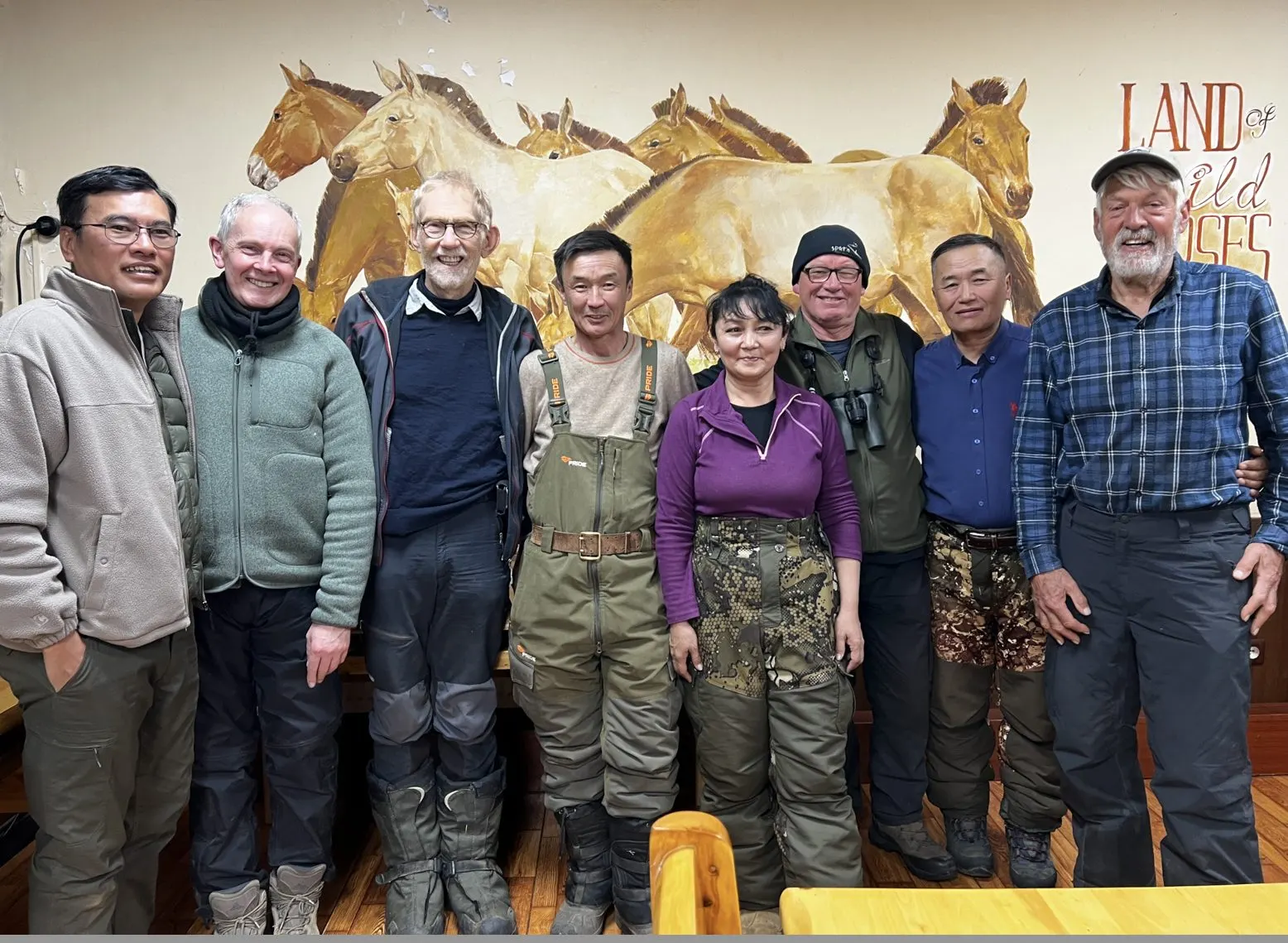
Acknowledgements – thanks a lot everyone for being part of a great trip. Special thanks to Puji, who took us everywhere and shared his local knowledge with us. Thanks to Simon for being so professional as usual. Thanks to Bogi, who took us around Terelj the first day. Thanks to Nagi, Taivan, Bataa and Erdne for the great driving. Thanks to all the guys in ger camps who always gave us warm welcome. Thanks to all the participants for their company, enthusiasm and great sense of humor.
Prepared by Dimitar Petrakiev
First published on wildlifemongolia.com. Text and photos by the report's author.