
Overview
Mongolia still retains vast areas of relatively unspoiled steppe, semi-desert and desert habitat, which support important populations of species such as Mongolian Saiga Saiga tatarica mongolica, Goitered Gazelle Gazella subgutturosa, Wild camel Camelus ferus, Wild ass Equus hemionus hemionus, Przewalski's Horse or Takhi Equus ferus przewalskii, Pallas's Steppe Cat Felis manul and Gobi Bear Ursus gobiensis.
The remaining steppe habitats in Mongolia form the core of the Daurian Steppe Global 200 Ecoregion, which is recognised by WWF as the best and most intact example of an undisturbed steppe ecosystem in the world, and one of the last areas in the Palearctic to still support stable herds of larger vertebrates (WWF 2008).
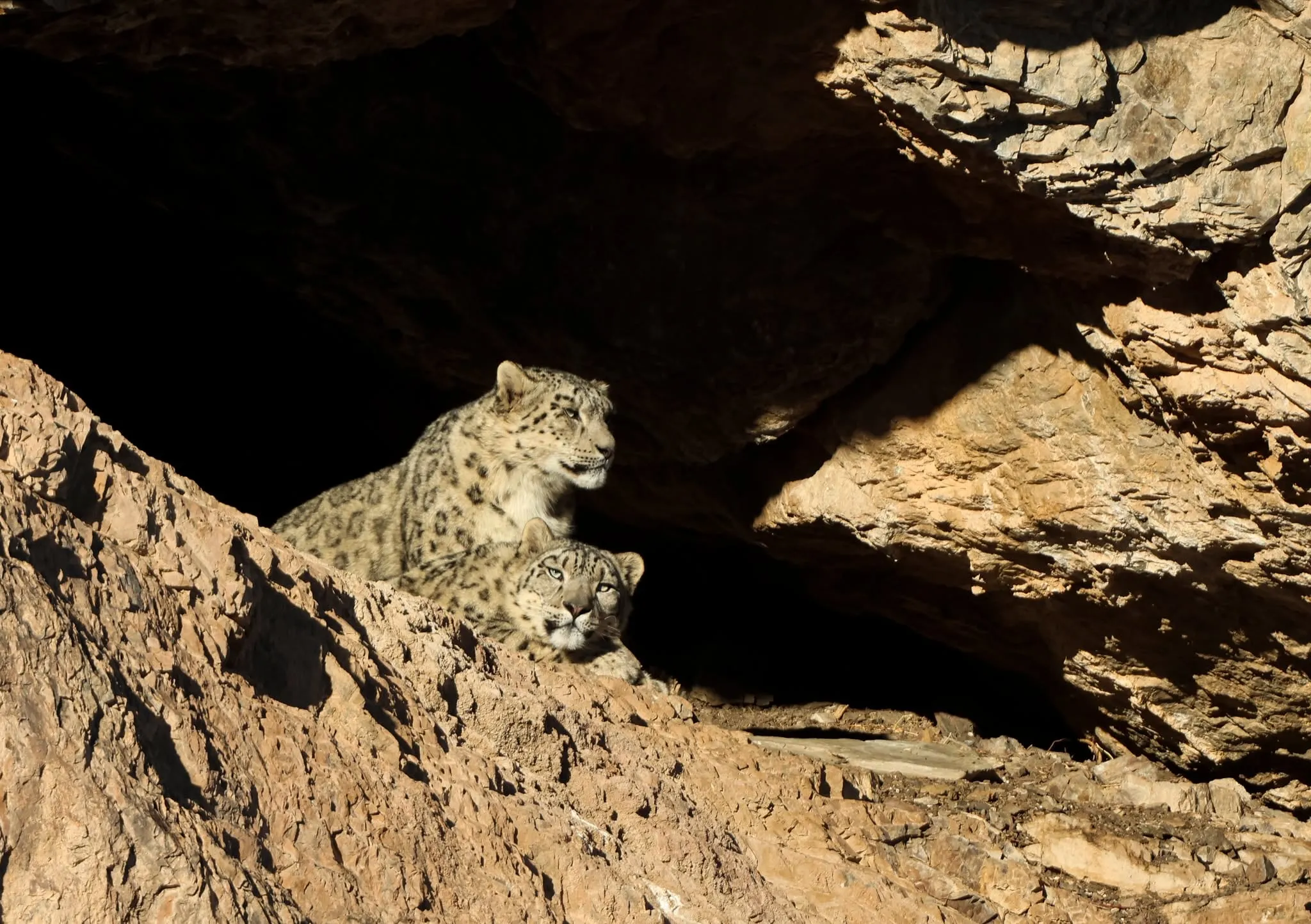
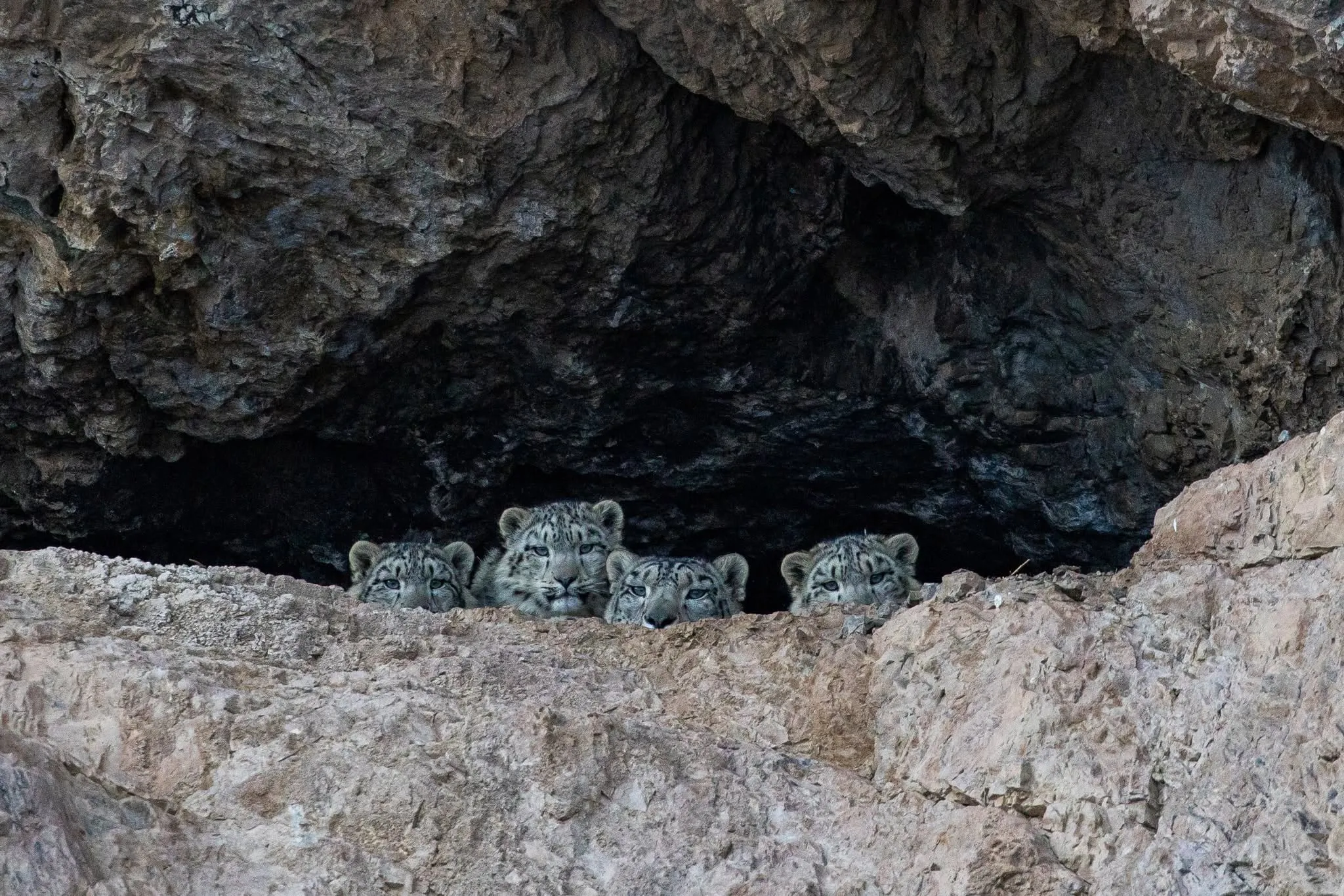
Our main touring area is the mountainous region of Umnugovi Province in southern Mongolia, home to the magnificent Snow Leopard Uncia uncia, the legendary “spirit of the mountains” and a dream sighting for wildlife enthusiasts from around the world.
Roaming freely across these rugged mountains, snow leopards prey on wild sheep Ovis ammon and Siberian ibex Capra sibirica, and occasionally take domestic livestock as well. Yet, for generations, local herders have shared these mountains with snow leopards, continuing to live alongside this elusive and magnificent predator.
The Alashan Desert, one of the driest and most water-scarce regions, lies in southern Mongolia. Surprisingly, despite its harsh desert environment, it is home to 10 of Mongolia's 12 species of jerboas. Among these are some of the world's most fascinating and elusive small desert mammals, including the remarkable Long-eared Jerboa Euchoreutes naso, Kozlov's Pygmy Jerboa Salpingotus kozlovi, and Thick-tailed Pygmy Jerboa Salpingotus crassicauda.
The Gobi Desert is also home to the beautiful and elusive Marbled Polecat Vormela peregusna. Small in size but remarkably agile and quick, this striking little predator is another fascinating species that captures the interest of wildlife enthusiasts, photographers and researchers alike.
Beyond the Altai: where true wilderness still lives
Discover the hidden wildlife treasures of the Gobi – a journey into one of the world's last great wilderness regions.
Join us on an extraordinary expedition into the remote deserts and mountains of southwestern Mongolia, where some of the rarest and most elusive wildlife on Earth still survives in its natural habitat.
This 15-day adventure takes you deep into the heart of the Gobi, exploring vast desert plains, rugged mountain ranges, remote valleys and isolated oases. Travelling in a comfortable Toyota Land Cruiser 4WD, we search for some of Mongolia's most iconic and endangered mammals, including the Wild Bactrian Camel, the Gobi Bear and the magnificent Snow Leopard.
Our expedition also offers opportunities to encounter Saiga, Argali Wild Sheep, Pallas's Cat, Goitered Gazelle, Asiatic Wild Ass and Grey Wolf, as well as fascinating desert specialists such as the Long-eared Jerboa and several rare gecko species and other reptiles.
Far from the usual tourist routes, this is a genuine wilderness expedition designed for wildlife enthusiasts, nature photographers, researchers and adventurous travellers who wish to experience Mongolia's extraordinary biodiversity.
The itinerary is flexible and can be adjusted in consultation with participants, depending on their interests, domestic flight schedules, weather conditions and other local circumstances.
There are places on Earth where nature still reigns supreme, where vast landscapes remain almost untouched by human presence, and where encounters with wildlife are rare and unforgettable.
Beyond the Altai Mountains lies one such extraordinary wilderness – a vast, remote desert that few people have ever had the opportunity to explore.
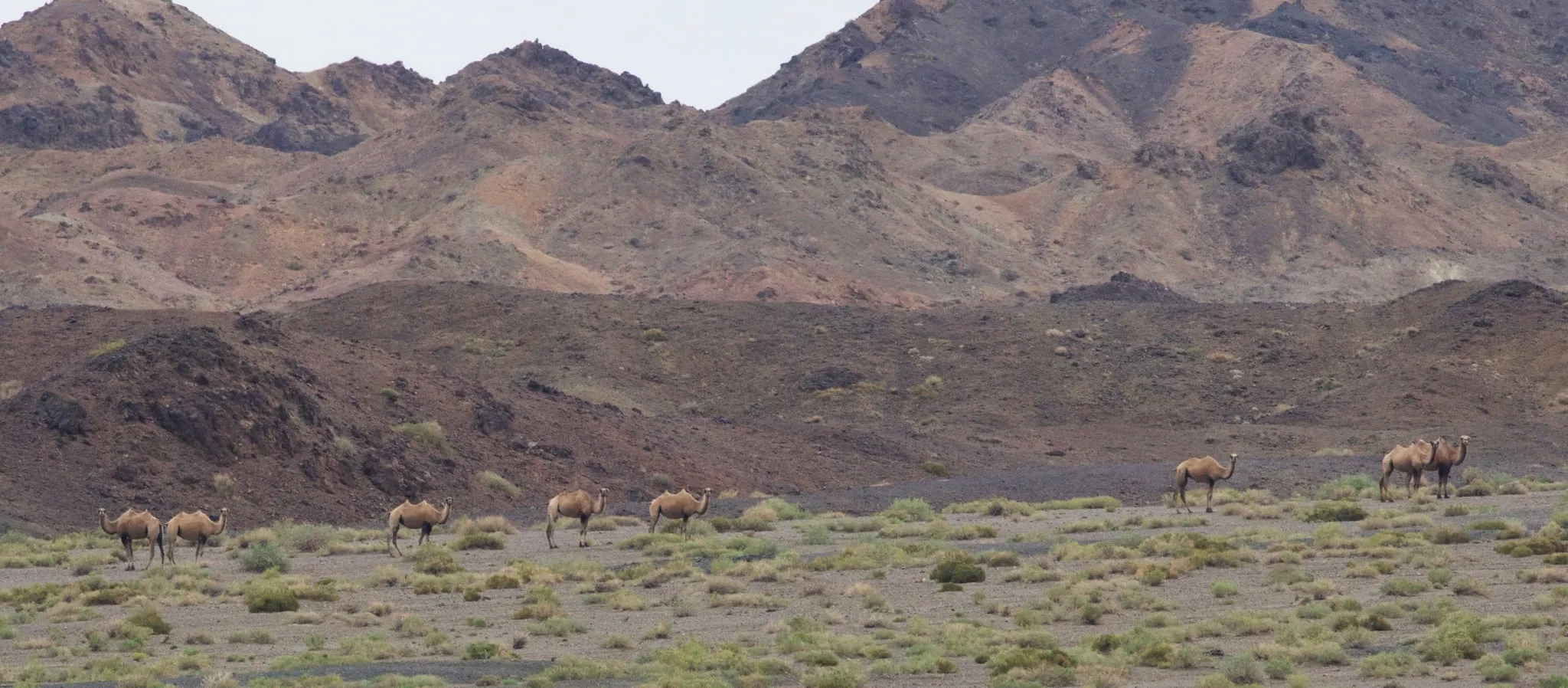
This is the homeland of some of the world's most remarkable and elusive wildlife, including the Wild Bactrian Camel (Camelus ferus), the Gobi Bear (Ursus arctos gobiensis) and the Saiga Antelope (Saiga tatarica mongolica).
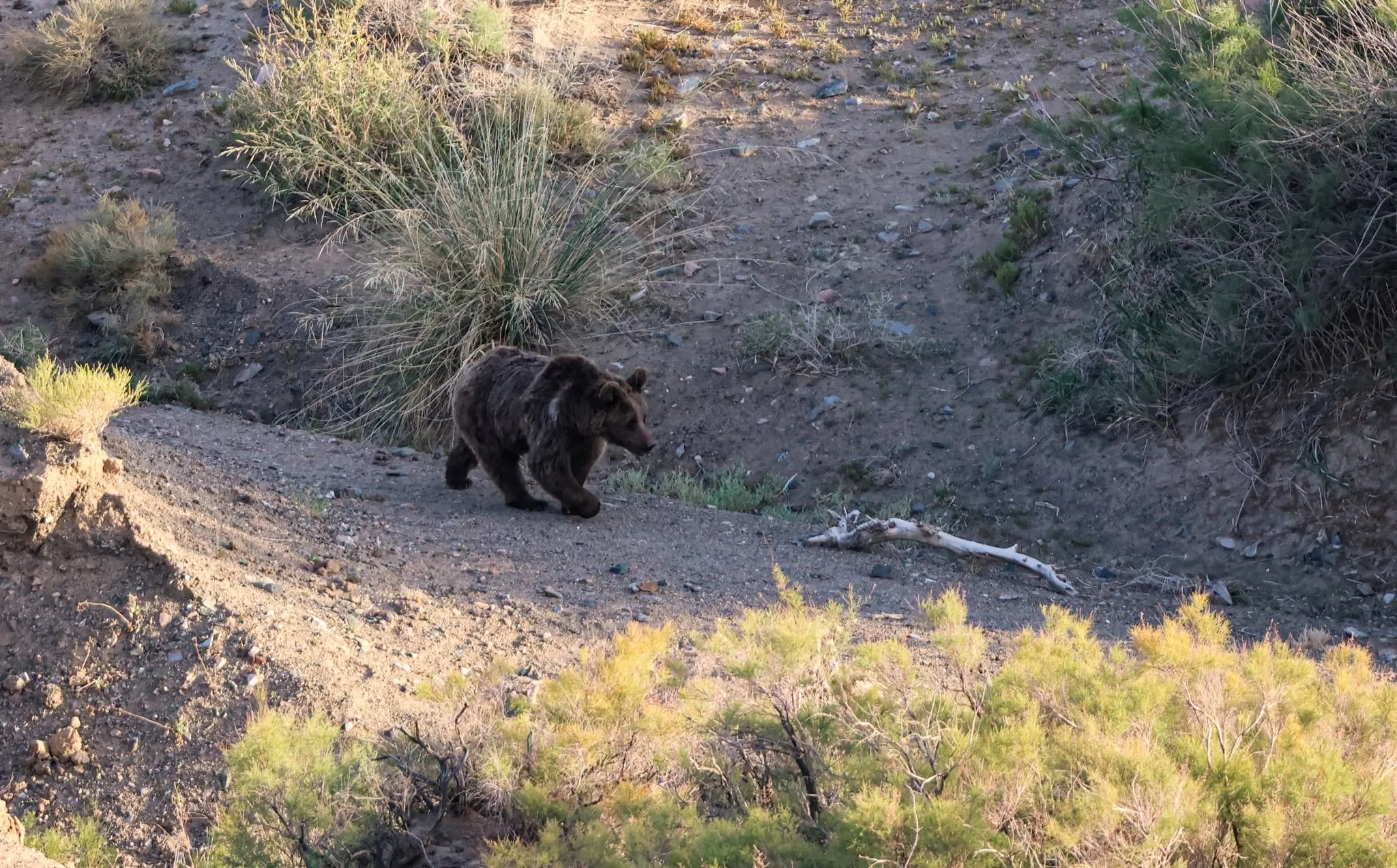
Of all these magnificent creatures, the Gobi Bear is undoubtedly the most difficult to encounter. At first glance, it may appear somewhat awkward and cumbersome, yet it can move with astonishing speed, vanishing into the wilderness in moments. Although its eyesight and hearing are relatively limited, its extraordinary sense of smell helps it detect danger from afar. During my six expeditions into this remote habitat, I have been fortunate enough to encounter this elusive bear on only two occasions.
Water is among the rarest treasures of this arid land. Yet, hidden across the immense desert, often separated by distances of 20 kilometres or more, lie beautiful, life-sustaining oases. These isolated pockets of water and greenery create remarkable islands of life in an otherwise harsh and seemingly endless desert.
Here, native desert trees and shrubs form beautiful groves of Poplar (Populus diversifolia), Saxaul (Haloxylon ammodendron) and Tamarisk (Tamarix ramosissima), accompanied by dense stands of Common Reed (Phragmites communis).
These oases also sustain two particularly important desert plants: Siberian Nitre Bush (Nitraria sibirica), one of the Gobi Bear's favoured food plants, and Mongolian Ephedra (Ephedra przewalskii). Both are also valuable food sources for the Wild Bactrian Camel, helping sustain these extraordinary survivors in one of the world's harshest environments.
The Saiga: a survivor of the Ice Age
The Saiga Antelope, a remarkable relic of the Ice Age, inhabits a different landscape within this vast wilderness. Its home is the immense open valleys and mountain corridors stretching between the Altai ranges.
With its extraordinary speed and agility, the Saiga can escape danger in the blink of an eye, racing across the open landscape with breathtaking grace. To witness these ancient survivors in their natural habitat is one of the truly unforgettable experiences of the expedition.
The great wildlife of the Gobi
Our journey takes us deep into the remote mountains, expansive valleys and endless open spaces of the Gobi Desert, where an extraordinary diversity of wildlife survives against all odds.
Here, we search for the magnificent Argali Wild Sheep (Ovis ammon), renowned for its enormous, sweeping horns and majestic appearance. We may also encounter the elegant Goitered Gazelle (Gazella subgutturosa), one of the fastest and most graceful antelopes of the desert and steppe.
The Mongolian Wild Ass (Equus hemionus hemionus) roams these immense open landscapes, while the Grey Wolf (Canis lupus) survives through remarkable strength, endurance and hunting skills.
We also look for the Great Gerbil (Rhombomys opimus), the largest rodent species found in Mongolia, an important inhabitant of this fascinating desert ecosystem.
Hidden deep within the Gobi lives another exceptionally secretive predator: the Eurasian Wildcat (Felis silvestris). Although this elusive feline inhabits the region, it remains one of the few Gobi animals I have yet to encounter in the wild. Perhaps this expedition will finally bring that long-awaited moment.
The tiny acrobats of the desert night
The Gobi is not only a land of impressive large mammals. It is also home to some of the most fascinating and charming little creatures on Earth.
Among them are the extraordinary Long-eared Jerboa (Euchoreutes naso) and the tiny Kozlov's Pygmy Jerboa (Salpingotus kozlovi).
Our team has twice collaborated with the BBC on documentary films exploring the remarkable life of the Long-eared Jerboa.
This little desert mammal is a true wonder of evolution. Russian researchers have reported its astonishing ability to leap high into the air to catch nocturnal moths in flight. Its enormous ears provide exceptional hearing, allowing it to detect the faintest sounds in the darkness of the desert night.
Watching these tiny, long-eared acrobats emerge from their burrows and move across the desert sand is an enchanting experience – a reminder that even the smallest creatures have extraordinary stories to tell.
The hidden world of Gobi reptiles
The isolated desert oases are also home to a fascinating variety of rare reptiles, many of which are perfectly adapted to survive in this extreme environment.
Among the species we may encounter are the Tatar Sand Boa (Eryx tataricus), a remarkable member of Mongolia's snake fauna; the Gobi Naked-toed Gecko, also known as the Yangihissar Gecko (Cyrtopodion elongatus); and the Mongolian Rock Agama (Laudakia stoliczkana), one of the largest lizards found in Mongolia.
Another particularly fascinating species is Przewalski's Wonder Gecko (Teratoscincus przewalskii), an unusual desert gecko famous for its distinctive habit of holding its tail upright, almost like a little dog.
An expedition beyond the ordinary
This is far more than a conventional wildlife-watching holiday. It is an opportunity to venture into one of the last great desert wildernesses, discover its hidden oases, explore its immense open landscapes and encounter wildlife that few people in the world have ever seen in its natural habitat.
Every journey into this remote land brings its own surprises. Every sighting is special. And every encounter reminds us how extraordinary, fragile and precious the natural world can be.
Come with us beyond the Altai – into the heart of the Gobi, where true wilderness still lives.
Route
1 Day numbers on the map match this list. Route, with arrows showing the direction. Start and finish. Domestic flight.
- Day 1 Ulaanbaatar Arrive; Mongolica Hotel
- Day 2 Altai Gobi-Altai provincial centre; domestic flight from Ulaanbaatar
- Day 2 Sharga Gobi (approx.) Saiga; wilderness camp, or on to Togrog Soum
- Day 3 Bayantooroi Research station of the Great Gobi Strictly Protected Area
- Day 3–5 Atas Chingis Mountain (approx.) Wild Bactrian Camel and Gobi Bear country
- Day 5 Baruun Tooroi (approx.) Overnight
- Day 6 Toli Bulag (approx.) Jerboas, geckos and snakes
- Day 7–13 Tost-Tosonbumba Mountains (approx.) Snow Leopard and Pallas's Cat; camps and herder gers
- Day 7–13 Gurvan Saikhan Mountains Argali, Goitered Gazelle and Khulan
- Day 14–15 Ulaanbaatar Mongolica Hotel; departure on day 15
Also on the way: Tseel Soum (day 3), Shar Khuls (day 6), Gurvantes (day 7), Dalanzadgad (day 14).
Positions on the map are approximate. The route can change with the season, the roads and your wishes.
Day by day
- Day 1
Arrival in Ulaanbaatar
Arrive in Ulaanbaatar, the capital of Mongolia.
Transfer to the Mongolica Hotel and enjoy some time to relax before beginning our expedition into the Gobi wilderness.
- Day 2
Ulaanbaatar – Gobi-Altai – Sharga Gobi
Take a domestic flight from Ulaanbaatar to Gobi-Altai Province, where our overland expedition begins.
From the provincial centre, we continue by Toyota Land Cruiser towards the vast Sharga Gobi, an important habitat for the Mongolian Saiga (Saiga tatarica mongolica).
Depending on our arrival time and road conditions, we may explore the valley in search of Saiga and spend the night camping in the wilderness. If time permits, we continue to Togrog Soum for an overnight stay.
Target wildlife Saiga.
- Day 3–5
Crossing the Altai Mountains to the Great Gobi
Our journey continues across the spectacular Altai Mountains, passing through Tseel Soum before reaching Bayantooroi Research Station.
Bayantooroi is an important administrative and research centre of the Great Gobi Strictly Protected Area.
After refuelling and preparing for the next stage of our journey, we venture into the remote landscapes surrounding Atas Chingis Mountain.
This vast and isolated region forms part of the habitat of two of Mongolia's most extraordinary mammals:
- Wild Bactrian Camel (Camelus ferus)
- Gobi Bear (Ursus arctos gobiensis)
We explore the surrounding desert valleys, mountain slopes and remote water sources, searching for signs of these exceptionally rare animals.
Our expedition then continues towards Baruun Tooroi, where we spend the night.
Target wildlife Wild Bactrian Camel, Gobi Bear and other desert mammals.
- Day 6
Baruun Tooroi – Shar Khuls – Toli Bulag
We travel through the remote desert landscapes of Baruun Tooroi and Shar Khuls before reaching Toli Bulag.
This region is particularly interesting for naturalists and wildlife photographers, offering opportunities to discover some of the Gobi's most unusual and specialised small animals and reptiles.
Species we may encounter include:
- Long-eared Jerboa (Euchoreutes naso)
- Przewalski's Wonder Gecko (Teratoscincus przewalskii)
- Tatar Sand Boa (Eryx tataricus)
- Gobi Naked-toed Gecko, also known as the Yangihissar Gecko (Cyrtopodion elongatus)
These remarkable desert specialists are adapted to survive in some of the harshest environments of the Gobi.
Target wildlife Small desert mammals, geckos and snakes.
- Day 7–13
Toli Bulag – Gurvantes – Tost-Tosonbumba Mountains – Gurvan Saikhan Mountains
We continue towards Gurvantes Soum and the magnificent Tost-Tosonbumba Mountain Range, one of Mongolia's most important landscapes for Snow Leopard conservation.
The Tost Mountains are internationally recognised for their outstanding importance as Snow Leopard habitat. This remote mountain wilderness provides an exceptional opportunity to explore the natural environment of one of the world's most elusive big cats.
Over the following days, we explore the Tost-Tosonbumba Mountains and the Gurvan Saikhan Mountain Range, searching for wildlife across rocky slopes, mountain valleys and desert foothills.
Our main target species include:
- Snow Leopard (Panthera uncia)
- Pallas's Cat / Manul (Otocolobus manul)
- Argali Wild Sheep (Ovis ammon)
- Goitered Gazelle (Gazella subgutturosa)
- Asiatic Wild Ass / Khulan (Equus hemionus hemionus)
- Grey Wolf (Canis lupus)
In addition to wildlife observation, we experience the spectacular landscapes and remarkable ecological diversity of Mongolia's southern Gobi.
The schedule during these seven days will remain flexible, allowing us to spend more time in areas where wildlife activity and observation opportunities are most promising.
Depending on wildlife movements, weather and local conditions, accommodation will alternate between wilderness camping and traditional ger accommodation with local herding families.
Target wildlife Snow Leopard, Pallas's Cat, Argali, Goitered Gazelle, Khulan and Grey Wolf.
- Day 14
Gurvan Saikhan / Gurvantes region – Dalanzadgad – Ulaanbaatar
We conclude our Gobi expedition and travel towards Dalanzadgad, the provincial capital of Ömnögovi Province.
From there, we continue by road to Ulaanbaatar and transfer to the Mongolica Hotel.
- Day 15
Departure from Mongolia
Transfer to the airport for your international departure.
Your expedition into Mongolia's extraordinary desert wilderness comes to an end, leaving you with unforgettable memories of its remarkable wildlife and spectacular landscapes.
The wildlife we hope to encounter
Iconic and endangered mammals
- Wild Bactrian Camel (Camelus ferus)
- Gobi Bear (Ursus arctos gobiensis)
- Snow Leopard (Panthera uncia)
- Mongolian Saiga (Saiga tatarica mongolica)
Other remarkable mammals
- Pallas's Cat (Otocolobus manul)
- Argali Wild Sheep (Ovis ammon)
- Goitered Gazelle (Gazella subgutturosa)
- Asiatic Wild Ass / Khulan (Equus hemionus hemionus)
- Grey Wolf (Canis lupus)
Desert specialists and reptiles
- Long-eared Jerboa (Euchoreutes naso)
- Przewalski's Wonder Gecko (Teratoscincus przewalskii)
- Tatar Sand Boa (Eryx tataricus)
- Gobi Naked-toed Gecko / Yangihissar Gecko (Cyrtopodion elongatus)
Why join this expedition?
- Explore some of Mongolia's most remote and least disturbed desert landscapes.
- Search for the Wild Bactrian Camel and the critically endangered Gobi Bear in their natural habitat.
- Discover the mountain wilderness of the Snow Leopard.
- Observe fascinating desert mammals, reptiles and other specialised wildlife.
- Travel through the Great Gobi Strictly Protected Area and the internationally important Tost-Tosonbumba Mountains.
- Experience authentic wilderness camping and traditional Mongolian herder hospitality.
- Enjoy a genuine wildlife expedition led by people with extensive knowledge of Mongolia's natural landscapes.
A journey beyond the ordinary
The Gobi is far more than a vast desert. It is a world of extraordinary biodiversity, dramatic landscapes and remarkable wildlife that has adapted to survive in one of the planet's most challenging environments.
Join us in exploring this extraordinary wilderness and searching for some of the rarest mammals on Earth.
Mongolia's wild heart is waiting to be discovered.